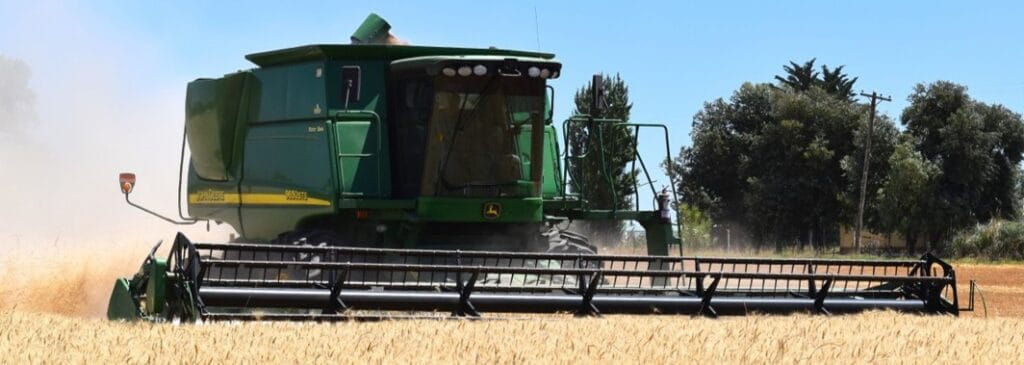
Agricultural Products Consulting to Grow with Confidence
Agriculture in Latin America offers significant growth opportunities—but success rarely comes from applying the same strategy across every country, crop, channel, or customer segment.
Farmer needs differ. Distributor capabilities vary. Regulation, import costs, agronomic practices, financing, climate exposure, product adoption, and competitive intensity can change significantly from one market to another.
For more than 25 years, Midas Consulting has helped agricultural companies understand these differences and turn them into practical growth strategies.
Whether you compete in crop protection, fertilizers, seeds, biologicals, adjuvants, agricultural machinery, irrigation, precision agriculture, animal health, or related technologies, we help you answer the decisions that matter:
- Which markets, crops, regions, and customer segments should you prioritize?
- What do farmers, advisers, distributors, cooperatives, and large producers value?
- How should you position your offer against established and emerging competitors?
- Which distributors or strategic partners can genuinely develop your business?
- What commercial model, pricing strategy, and route to market will support profitable growth?
- How could regulation, climate, technology, or competitor reactions change your plans?
You receive more than market information. You receive a defensible growth strategy grounded in local evidence and designed for execution.
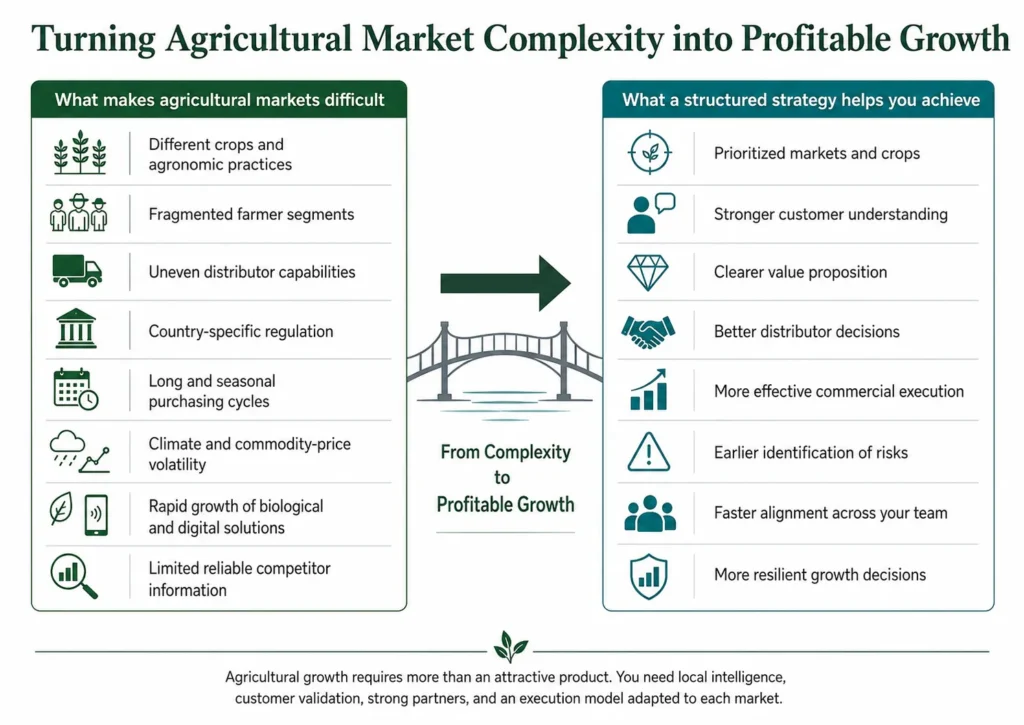
Figure 1: Agricultural growth requires more than an attractive product. You need local intelligence, customer validation, strong partners, and an execution model adapted to each market.
Agricultural Decisions We Help You Make
Your agricultural strategy should begin with the decision, not with a generic market report.
We tailor each engagement around the questions your team needs to resolve.
Where should you play?
We help you compare countries, regions, crops, applications, customer segments, and product categories using criteria such as:
- Market size and expected growth
- Crop acreage and production patterns
- Customer needs and adoption barriers
- Channel structure and distributor access
- Competitive intensity
- Regulation and registration requirements
- Pricing, margins, and willingness to pay
- Import, logistics, and service requirements
- Strategic fit with your capabilities
- Execution feasibility and risk
The result is a prioritized opportunity map that helps your team focus resources where you have the strongest combination of market attractiveness and ability to win.
How can you win?
Once you know where to compete, we help you clarify:
- Which customers should be prioritized
- Which unmet needs are commercially relevant
- Why customers should choose your product
- How your offer compares with alternatives
- Which proof points support your positioning
- What adaptations may be required
- Which channels and influencers shape the decision
- How sales, technical, marketing, and distributor teams should work together
How should you enter or expand?
Depending on your objectives, we can help you evaluate:
- Direct sales
- Exclusive or non-exclusive distributors
- Multiple regional distributors
- Local representatives
- Strategic alliances
- Licensing
- Joint ventures
- Local production or formulation
- Acquisition of an established company
- Hybrid models that evolve as the market develops
Our role is not to recommend the most ambitious model. It is to help you select the model that best balances control, investment, speed, risk, and commercial potential.
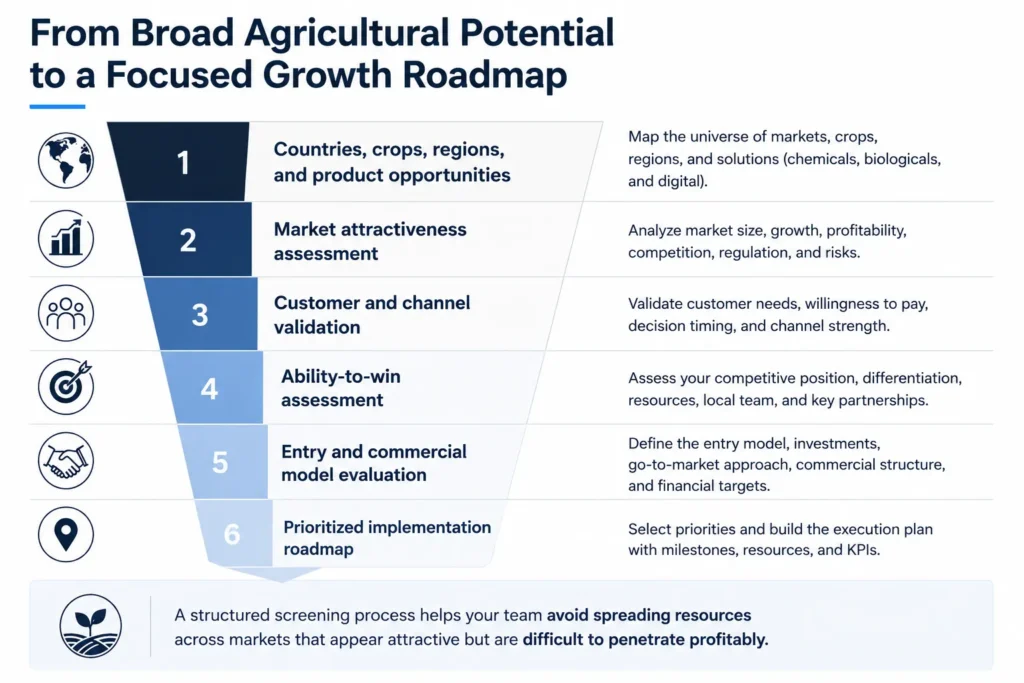
Figure 2: A structured screening process helps your team avoid spreading resources across markets that appear attractive but are difficult to penetrate profitably.
When Agricultural Products Consulting Creates the Most Value
You may benefit from an external perspective when:
- You are considering entering one or more Latin American markets.
- Your sales are growing more slowly than the market.
- You need to identify the most attractive crops or application segments.
- Your current distributor is underperforming.
- You need to replace, complement, or renegotiate with a distributor.
- Your team is uncertain about farmer needs or purchasing criteria.
- Your product is technically strong, but the value proposition is unclear.
- New biological, digital, or lower-cost alternatives are changing the category.
- Your competitors appear to have stronger prices, margins, coverage, or commercial execution.
- You are considering a partnership, license, joint venture, or acquisition.
- Different members of your team hold conflicting views about the market.
- You need to pressure-test a launch or investment before committing significant resources.
- Climate, regulation, technology, or commodity-price uncertainty could materially affect your strategy.
Executive takeaway: When the cost of making the wrong commercial decision is high, a structured fact base can be considerably less expensive than learning through failed execution.
Our Agricultural Products Consulting Services
Your challenge may require one focused workstream or an integrated program combining several capabilities.
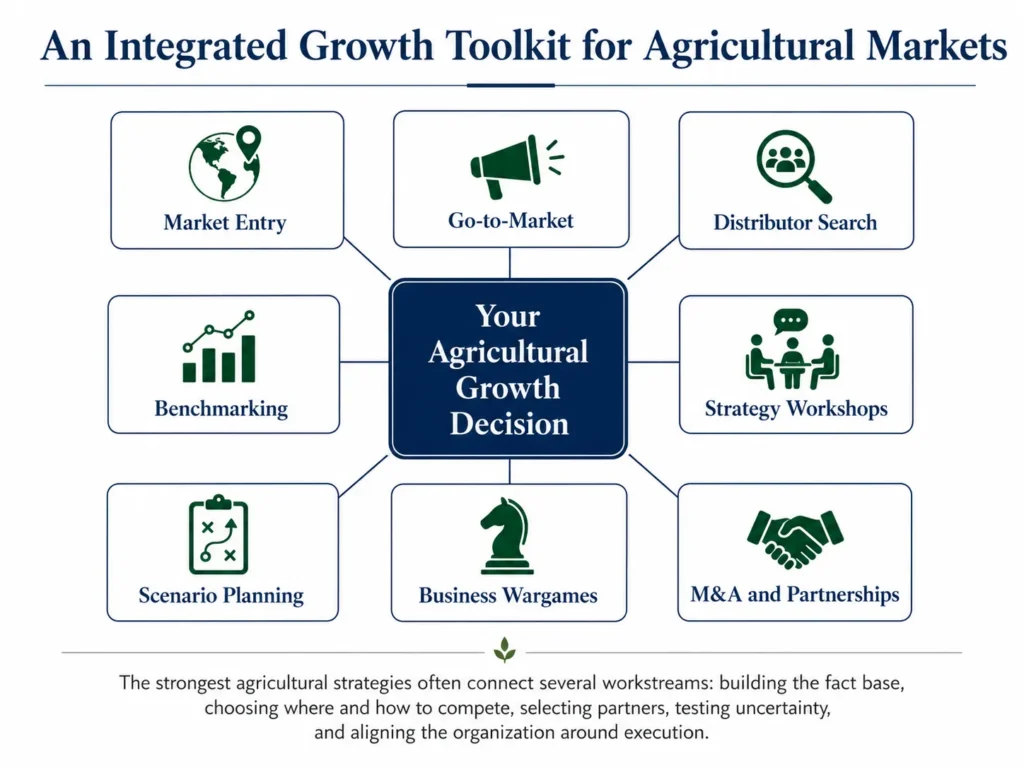
Figure 3: The strongest agricultural strategies often connect several workstreams: building the fact base, choosing where and how to compete, selecting partners, testing uncertainty, and aligning the organization around execution.
Market Entry Consulting for Agricultural Products
We help you compare countries, regions, crops, segments, and entry models before you commit capital or management attention.
You gain:
- Market attractiveness assessment
- Country or regional prioritization
- Customer and channel analysis
- Competitive landscape
- Regulatory and execution considerations
- Entry-mode recommendation
- Phased implementation roadmap
Go-to-Market Consulting for Agricultural Products
We help you convert market potential into a practical commercial model built around your customers, competitors, channels, economics, and execution capabilities.
You gain:
- Priority customer segments
- Customer decision journey
- Value proposition
- Product and service requirements
- Channel strategy
- Pricing and commercial logic
- Sales and marketing priorities
- Implementation roadmap and metrics
Distributor Search Consulting for Agricultural Products
A distributor with a strong name is not necessarily the right distributor for your business.
We help you define the partner profile, map candidates, validate their real capabilities, approach priority companies, compare alternatives, and prepare for negotiations.
We assess factors such as:
- Crop and customer access
- Geographic coverage
- Technical sales capabilities
- Portfolio fit and potential conflicts
- Field-force quality
- Logistics and inventory capacity
- Regulatory capabilities
- Financial strength
- Reputation and compliance
- Management commitment
- Willingness to invest
- Strategic alignment with your objectives
Benchmarking Consulting for Agricultural Products
Public information rarely explains why one competitor grows faster, operates at a lower cost, achieves better distributor engagement, or earns stronger margins.
Our benchmarking work helps you reconstruct the practices and performance drivers behind the visible results.
Depending on your decision, we can examine:
- Prices and commercial conditions
- Distributor margins and incentives
- Sales-force structures
- Territory coverage
- Service models
- Product portfolios
- Launch processes
- Technical support
- Marketing investments
- Operating costs
- Organizational models
- Innovation and development practices
We normalize relevant differences so your team does not compare companies, countries, or business models on a misleading basis.
Strategy Consulting and Executive Workshops
Agricultural strategy often requires coordination across regional management, country teams, sales, marketing, technical, regulatory, supply chain, and finance.
We design and facilitate executive workshops that help your team:
- Build a shared view of the market
- Challenge assumptions
- Evaluate strategic alternatives
- Make explicit trade-offs
- Prioritize initiatives
- Assign ownership
- Agree on metrics and milestones
- Translate strategy into an actionable roadmap
We do not impose a generic workshop template. The exercises, evidence, and decisions are adapted to your strategic context.
Scenario Consulting for Agricultural Products
Agricultural strategies are exposed to uncertainty from weather, regulation, commodity prices, exchange rates, supply chains, technology, customer adoption, and competitive disruption.
Scenario consulting helps your team prepare for several plausible futures rather than relying on a single forecast.
You gain:
- Critical uncertainties
- Credible future scenarios
- Implications for demand, pricing, channels, and competition
- Strategic options that remain attractive across scenarios
- Contingency actions
- Early-warning indicators
- Decision triggers
- Management responses and ownership
Wargame Consulting for Agricultural Products
Your strategy does not operate in isolation. Competitors, distributors, customers, regulators, and other market actors may react to your launch, entry, pricing decision, partnership, or acquisition.
A business wargame helps your team simulate those reactions before resources are committed.
You gain:
- Challenged strategic assumptions
- Likely competitor and channel reactions
- Second-round market effects
- Strategic vulnerabilities
- Prepared countermoves
- Early-warning signals
- Faster and more resilient decisions
M&A, Licensing, and Strategic Partnerships Consulting for Agricultural Products
Organic growth is not always the fastest or strongest route.
We help companies evaluate acquisitions, licensing opportunities, joint ventures, and strategic partnerships across Latin America, Spain, and Portugal.
Depending on your requirements, we can support:
- Acquisition strategy
- Target profile definition
- Long-list and short-list development
- Target screening
- Strategic and commercial due diligence
- Market and competitor validation
- Valuation support
- Approach strategy
- Negotiation preparation
- Partner and license evaluation
- Post-deal growth priorities
How Our Agricultural Consulting Process Works
Every engagement is tailored, but most projects follow six practical stages.
1. Clarify the decision
We begin by defining the decision your team must make, the alternatives being considered, the success criteria, and the risks of getting it wrong.
This keeps the project focused on management action rather than information accumulation.
2. Build the initial fact base
We review relevant internal information, existing research, previous strategies, product economics, customer data, distributor performance, and management assumptions.
We also identify the information gaps that must be resolved before your team can make a defensible decision.
3. Conduct market and stakeholder research
Depending on the engagement, research may include:
- Market and trade data
- Regulatory and policy information
- Competitor intelligence
- Farmer, producer, or customer interviews
- Distributor and channel interviews
- Agronomist, adviser, cooperative, or expert interviews
- Former employee or industry-expert perspectives, where appropriate
- Pricing and commercial-condition research
- Distributor validation
- Site or market visits
- Internal executive interviews
We triangulate different sources rather than relying on one database, one interview, or one market estimate.
4. Analyze the strategic alternatives
We compare the available options using explicit criteria.
That may include market attractiveness, ability to win, strategic fit, required investment, expected returns, channel access, competitive response, timing, regulatory exposure, and execution risk.
5. Co-create the recommendation
We work with your team to test the findings, challenge assumptions, and refine the recommendation.
This collaborative approach helps ensure that the strategy reflects both external evidence and your organization’s capabilities.
6. Translate the strategy into action
The final deliverable may include:
- Prioritized opportunities
- Recommended strategic choices
- Distributor or partner shortlists
- Go-to-market model
- Value proposition
- Commercial roadmap
- Risks and mitigation actions
- Early-warning indicators
- Implementation milestones
- Owners and governance
- Management presentation
- Supporting database and evidence files
Our objective is to leave your team with a clear decision and an actionable path forward—not simply a report.
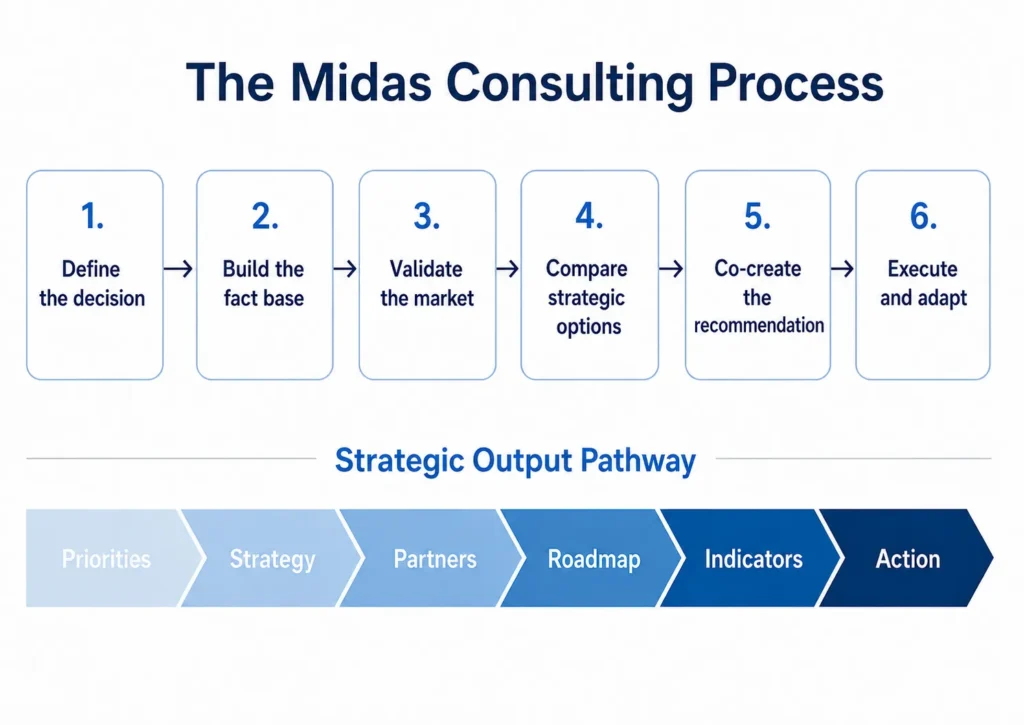
Figure 4: Our process connects market evidence with executive decision-making and practical implementation.
How We Build Reliable Agricultural Market Intelligence
Agricultural markets can be difficult to research. Public data may be incomplete, outdated, aggregated at the wrong level, or inconsistent across sources.
Market size alone may not tell you:
- Which crops drive real product demand
- How purchasing decisions are made
- How much distributors invest behind each brand
- Which products are actually gaining adoption
- What discounts or commercial conditions are offered
- Why farmers switch—or refuse to switch
- How agronomic advisers influence the decision
- Which competitors are likely to react
- Whether a distributor is genuinely interested in your category
For that reason, our conclusions are normally built through triangulation.
We combine several of the following:
- Official and institutional data
- Import and export information
- Company and product information
- Channel and customer interviews
- Expert perspectives
- Distributor validation
- Competitor analysis
- Pricing research
- Internal company data
- Cross-country comparisons
- Midas’s accumulated project experience
When an estimate cannot be independently verified, we identify it as an estimate and explain the assumptions behind it. When reliable evidence is limited, we make that limitation visible rather than presenting false precision.
This evidence discipline helps your leadership team distinguish between:
- Confirmed facts
- Supported estimates
- Informed hypotheses
- Issues that require additional validation
Our Evidence Standard
We do not assume that one source tells the whole story.
Whenever feasible, important conclusions are tested against multiple sources, interviews, and analytical methods. We document relevant assumptions, identify information gaps, and distinguish verified evidence from management judgment.
Our recommendations represent the best conclusion supported by the available evidence at the time of the project. They are designed to improve the quality of your decision—not to imply certainty where the market does not provide it.
Agricultural Markets Are Not One Homogeneous Opportunity
Latin America should not be treated as a single agricultural market.
Countries differ in:
- Crop mix and farm structure
- Climate and production systems
- Product registration
- Import requirements
- Taxation and foreign-exchange exposure
- Distributor concentration
- Cooperative structures
- Technical-adviser influence
- Credit and financing
- Digital adoption
- Sustainability requirements
- Competitive behavior
- Commercial practices
- Logistics and after-sales needs
The same product may require a different customer segment, message, distributor model, price architecture, technical-support model, or launch sequence in each country.
Our regional work can cover:
- Argentina
- Brazil
- Chile
- Colombia
- Mexico
- Peru
- Central America
- The Caribbean
- Other Latin American markets
- Spain and Portugal
- Selected international markets when the assignment requires a broader comparison
A regional strategy should create scale where scale is valuable, while preserving local adaptation where customer needs and market conditions differ.
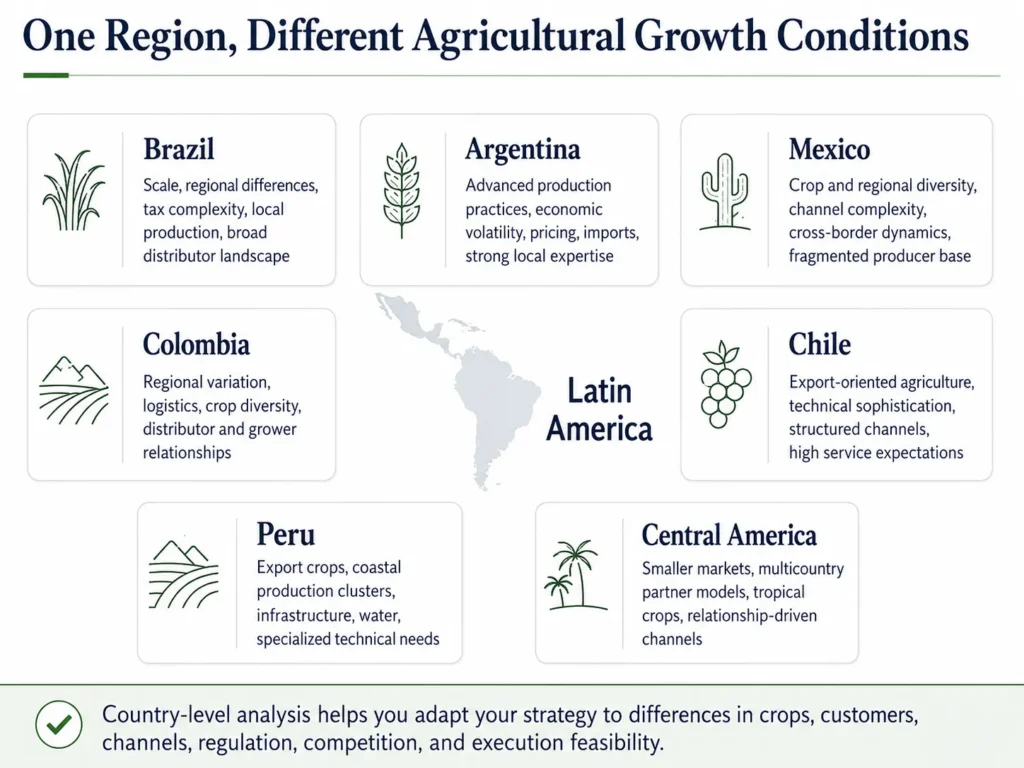
Figure 5: Country-level analysis helps you adapt your strategy to differences in crops, customers, channels, regulation, competition, and execution feasibility.
A Practical Example: Prioritizing Agricultural Growth Across Several Markets
The situation
An international agricultural-products company wanted to accelerate growth across Latin America.
The company faced several possible countries, crops, and product opportunities, but management needed a clearer basis for deciding where to invest first. Market information was uneven, the competitive situation varied by country, and attempting to pursue every opportunity simultaneously would have diluted resources.
What we did
Midas developed a structured market analysis that compared:
- Countries
- Product categories
- Priority crops
- Market potential
- Competitive intensity
- Customer needs
- Channel access
- Strategic fit
- Execution feasibility
We complemented available market information with local research and management input, then ranked the opportunities according to attractiveness and the company’s ability to compete.
The recommendation
Rather than recommending simultaneous expansion across every identified market, we proposed a phased approach.
The first phase focused on the countries, products, and crops where the company had the strongest combination of customer relevance, competitive advantage, partner access, and implementation feasibility.
The remaining opportunities were sequenced according to the capabilities and market conditions that would need to be developed first.
The outcome
The company used the resulting priorities and roadmap to support its entry into selected Central American markets and strengthen its position in Chile.
The project also gave management a repeatable framework for evaluating future agricultural growth opportunities.
Important context: Client identity and commercially sensitive details are withheld to protect confidentiality. Outcomes reflect the specific conditions of this engagement and should not be interpreted as a guarantee of equivalent results in another market or company.
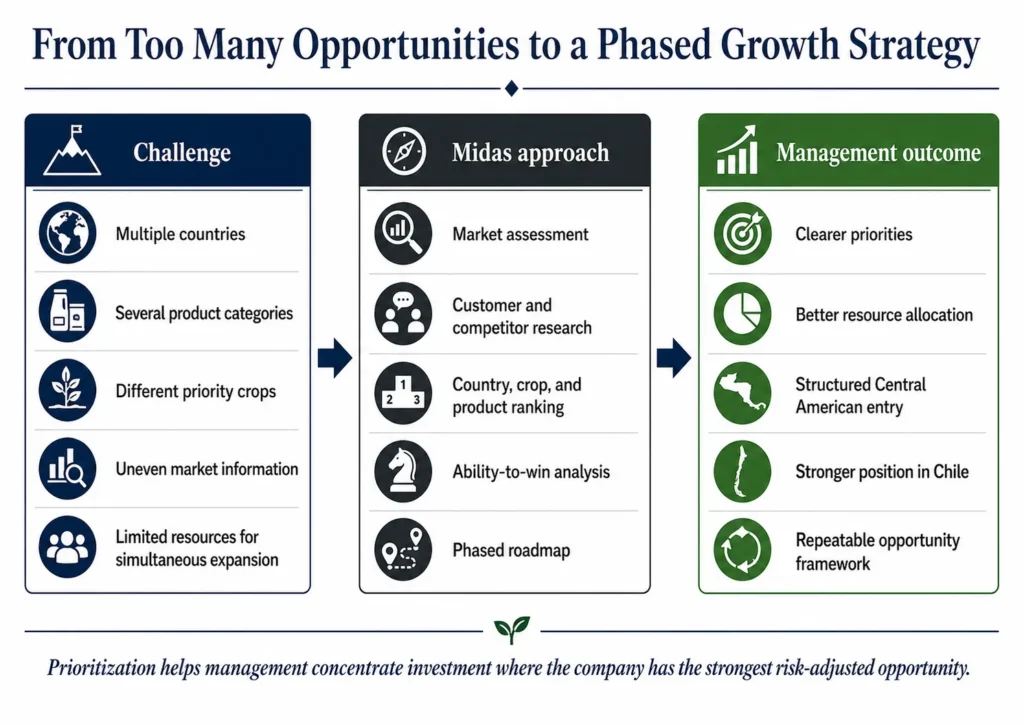
Figure 6: Prioritization helps management concentrate investment where the company has the strongest risk-adjusted opportunity.
What You Can Expect from Midas Agricultural Products Consulting
Relevant agricultural experience
We have worked with companies across agricultural inputs, machinery, technologies, and related B2B markets.
That experience helps us understand the interaction between technical product performance, agronomic credibility, customer economics, distributor motivation, and commercial execution.
More than 25 years working across Latin America
We understand that regional scale and local differences must be addressed simultaneously.
Our recommendations reflect the realities of country-level competition, channel structures, customer behavior, regulation, and execution.
Executive and analytical perspective
Our consultants combine research skills with practical management experience.
We understand that your decision must work financially, commercially, organizationally, and operationally—not only look attractive in a presentation.
Tailored research
We do not begin with a standard report and change the logo.
The methodology, interview sample, analytical framework, and deliverables are designed around your decision, category, geography, and available evidence.
Direct access to senior professionals
Senior consultants remain involved throughout the engagement, including problem definition, analysis, interviews, strategic interpretation, and management discussions.
Collaboration with your team
We work closely with your executives and local teams to challenge assumptions, incorporate internal knowledge, and build ownership of the recommendation.
Confidentiality and discretion
Agricultural strategy projects frequently involve sensitive information about products, prices, distributors, competitors, acquisitions, and future investments.
We protect client confidentiality and may anonymize testimonials, examples, and company information when disclosure has not been authorized.
Clear communication about limitations
No consulting firm can eliminate market uncertainty.
Research access, interview participation, market transparency, and the reliability of third-party data can affect the level of precision available. We explain those limitations and avoid presenting estimates as established facts.
What Our Clients Say
“Midas delivered practical, high-impact ideas that helped us expand market share in a competitive environment.”
Marketing Manager
Agricultural Products Company
Client name withheld due to confidentiality
“Midas was highly effective, giving us the insights and tools we needed to co-create a robust strategy for complex markets.”
Chief Financial Officer
Agricultural Products Company
Client name withheld due to confidentiality
“Midas combined deep market experience with thorough analysis, collaborating seamlessly across our teams to deliver actionable results.”
Global Product Manager
Agricultural Products Company
Client name withheld due to confidentiality
Selected Agricultural Products Consulting Experience
We have supported agricultural companies across different products, markets, and growth decisions. The logos shown below represent selected client relationships; the scope and timing of each engagement differed.

Strategic Intelligence Behind Our Recommendations
Strong agricultural strategies require more than market data.
Your team must interpret weak signals, understand competitors and channels, test strategic assumptions, prepare for uncertainty, and turn fragmented evidence into decisions.
Midas Consulting’s applied strategic intelligence work brings together executive frameworks, practical research, and lessons developed through real-world consulting engagements.
This body of work supports our agricultural consulting in areas such as:
- Competitive intelligence
- Market and customer analysis
- Business wargaming
- Scenario planning
- Regional strategy
- Strategic decision-making under uncertainty
- Strategy execution
- Early-warning indicators
- Competitor response analysis
Selected Institutional Resources
Our agricultural consulting methodology is grounded primarily in client-specific research and Midas Consulting’s project experience. We also consult relevant institutional sources when they can improve the market, policy, sustainability, technology, and economic context of an engagement.
Recommended resources include:
- Food and Agriculture Organization of the United Nations — The State of Food and Agriculture
- OECD — Responsible Business Conduct in the Agriculture Sector in Latin America and the Caribbean
- World Bank — Agriculture and climate resilience resources for Latin America and the Caribbean
- Inter-American Institute for Cooperation on Agriculture
These institutional resources provide context. They do not replace primary customer, distributor, competitor, and market research for a specific commercial decision.
Frequently Asked Questions About Our Agricultural Products Consulting
What types of agricultural companies does Midas Consulting support?
We support companies involved in crop protection, seeds, fertilizers, adjuvants, biologicals, agricultural machinery, irrigation, precision agriculture, digital solutions, animal health, and related technologies and services.
The precise methodology depends on the product, market, customer, regulatory requirements, and strategic decision.
Which countries do you cover with your agricultural products consulting?
Our core experience covers Latin America, including Argentina, Brazil, Chile, Colombia, Mexico, Peru, Central America, and other regional markets. We also work in Spain, Portugal, and selected international markets when a project requires broader comparison or partner identification.
Can you estimate the size of an agricultural market?
Yes, when sufficient evidence is available.
Depending on the category, we may combine official statistics, planted area, crop patterns, recommended application rates, adoption assumptions, import information, company data, channel interviews, pricing, and expert validation.
We clearly explain assumptions and normally provide ranges or scenarios when the available information does not support a single precise figure.
Can you interview farmers and other market participants?
Yes. Depending on the project, we may interview farmers, large producers, agronomists, technical advisers, distributors, cooperatives, retailers, former industry executives, regulators, associations, and other informed participants.
Interview access depends on the market, topic, timing, and willingness of qualified participants to take part.
Can you help us find an agricultural distributor?
Yes. We can define the ideal distributor profile, map potential partners, assess their capabilities and portfolio fit, validate interest, approach selected companies, compare alternatives, and support your preparation for negotiations.
We do not evaluate distributors only by size or brand recognition. We consider their customer access, execution capabilities, incentives, reputation, compliance, investment appetite, and strategic alignment with your company.
Can you help us evaluate our current distributor?
Yes. We can assess performance, market coverage, customer access, portfolio attention, technical capabilities, commercial execution, investment, management commitment, and alignment with your objectives.
Depending on the situation, the recommendation may involve improving the relationship, changing responsibilities, adding a complementary partner, renegotiating the agreement, or beginning a replacement search.
Do you provide regulatory advice with your agricultural products consulting?
We analyze the commercial and strategic implications of regulation and may incorporate regulatory specialists when appropriate.
Midas Consulting does not replace qualified legal, tax, registration, environmental, or technical advisers. When formal professional advice is required, we recommend that the relevant conclusions be reviewed by appropriately licensed specialists in each jurisdiction.
Can you help us with agricultural biologicals?
Yes. Biological products may require specific analysis of farmer awareness, agronomic evidence, technical-adviser influence, compatibility with existing practices, registration, pricing, channel incentives, trial generation, adoption barriers, and positioning against conventional alternatives.
The strategy should reflect the product’s actual evidence, application, crop, customer economics, and local market maturity.
How long does an agricultural products consulting project take?
Timing depends on the number of countries, product categories, interviews, research questions, and deliverables.
A focused market or distributor assessment may require several weeks. A multicountry strategy, detailed benchmarking exercise, or integrated market-entry program may require several months.
We define the scope, phases, milestones, and expected timing in the proposal.
What information will you need from our company?
Useful inputs may include:
- Strategic objectives
- Product and portfolio information
- Current sales and market presence
- Pricing and economics
- Customer and distributor information
- Previous research
- Regulatory status
- Competitive hypotheses
- Internal performance data
- Management concerns
- Decision deadlines
We begin with the information available and identify which additional evidence is genuinely needed.
How do you protect confidential information?
We treat client information as confidential and can work under a nondisclosure agreement.
Access to sensitive information is limited to relevant project participants. Client names, case details, testimonials, and results may be anonymized when public disclosure has not been authorized.
Do you guarantee specific commercial results?
No responsible consulting firm should guarantee a particular sales, market-share, transaction, or market-entry result.
Commercial outcomes depend on factors that may include product performance, management decisions, execution quality, investment, customer response, distributor commitment, competitor actions, regulation, climate, and economic conditions.
Our role is to improve the evidence, choices, preparation, and execution behind your decisions.
Can the agricultural products consulting project be completed in phases?
Yes. A phased approach can reduce risk and preserve flexibility. For example, your company may begin with market prioritization, continue with customer and competitor validation, and then move into distributor search, go-to-market design, a strategy workshop, or implementation support.
Each phase can include clear decision gates before further resources are committed.
Our Commitment to You
You will receive a recommendation designed around your decision—not a generic description of the agricultural market.
We will:
- Ask difficult questions when assumptions need to be challenged
- Use multiple sources when important conclusions require validation
- Explain the logic behind our recommendations
- Make relevant uncertainties and limitations visible
- Protect your confidential information
- Work collaboratively with your team
- Focus on actions that management can implement
Our objective is to help you make a stronger decision and move forward with greater clarity.
Ready to Turn Agricultural Complexity into Growth?
Whether you are entering a new country, launching a product, reviewing your distributor network, evaluating an acquisition, or redefining your regional strategy, the first step is to clarify the decision and the evidence you need.
Schedule a focused conversation
Tell us about the growth decision, market, product, or commercial challenge you are evaluating.
Receive a tailored proposal
We will recommend a scope, methodology, timing, and set of deliverables built around your priorities.
Build the evidence
Together, we will validate the market, customers, channels, competitors, partners, and risks that matter to your decision.
Move from insight to action
You will receive clear recommendations, priorities, and an implementation roadmap your team can use.
Let’s discuss how Midas Consulting can help you grow in agricultural markets.
About Midas and its Agricultural Products Consulting
Midas Consulting is a strategy and market intelligence consulting firm that helps companies grow, compete, and make stronger investment decisions across Latin America and selected international markets.
For more than 25 years, we have supported companies with market entry, go-to-market strategy, distributor search, benchmarking, strategy consulting, scenario planning, business wargaming, and M&A-related decisions.
Our work combines local research, competitive intelligence, executive experience, and collaborative strategy development.