Mining Products and Equipment Consulting for Open-Pit and Underground Growth.
Selling products and equipment to mining companies is rarely a conventional industrial sales process.
Your company may manufacture pumps, drilling rigs, drill bits, ventilation equipment, consumables, safety gear, chemicals, filtration systems, pipes, valves, electrical products, monitoring technologies, or other solutions used in open-pit and underground mines.
But technical performance alone does not guarantee market success.
Your solution may need to be:
- Relevant to the mine’s geology, process, equipment, and operating conditions
- Accepted by engineering, operations, maintenance, safety, and procurement
- Registered and qualified as an approved product or supplier
- Tested in the field
- Supported by local inventory, service, and spare parts
- Available at remote sites
- Economically attractive over its operating life
- Reliable enough to protect production and worker safety
- Difficult for an incumbent supplier to displace
Midas Consulting helps companies that sell products, equipment, technology, and services to mining companies understand this complete commercial system and turn market opportunities into profitable growth.
For more than 25 years, we have supported companies supplying mining and other technically demanding industries across Latin America and selected international markets.
We help you answer questions such as:
- Which countries, mining regions, minerals, mine types, and operating sites should you prioritize?
- Is the most attractive opportunity in new projects, operating mines, expansions, maintenance, replacement, or productivity improvement?
- How does demand differ between open-pit and underground mining?
- Which equipment fleets, processing systems, or mine operations use your product?
- Who specifies, tests, approves, purchases, installs, operates, and maintains it?
- What must your company do to become an approved mine-site supplier?
- Which technical and economic factors cause mines to change suppliers?
- How should you position your solution against established OEMs, local suppliers, and lower-cost alternatives?
- Can you defend a higher price through productivity, availability, safety, energy efficiency, or longer service life?
- Should you sell directly, through an OEM, dealer, distributor, service company, EPCM, or specialized local partner?
- Which partners can provide customer access, site support, inventory, repairs, and emergency response?
- How should your strategy change across copper, gold, lithium, iron ore, silver, coal, and other mining segments?
- How could commodity cycles, mine expansions, water constraints, safety requirements, automation, or competitor reactions affect demand?
- Should you enter organically, partner, manufacture locally, license technology, or acquire an established supplier?
You receive more than a broad mining-market report.
You receive a clearer understanding of where product-specific demand exists, which mine sites and accounts deserve priority, what could block adoption, and what your company needs to do to win and retain valuable business.
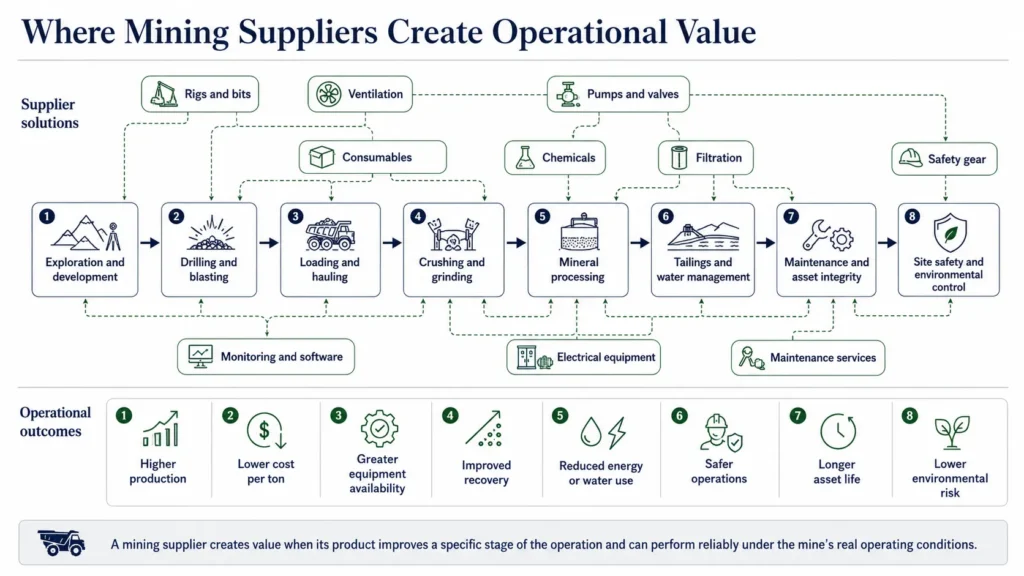
Figure 1. A mining supplier creates value when its product improves a specific stage of the operation and can perform reliably under the mine’s real operating conditions.
Your Market Is Defined by the Mining Operation
“Mining” is too broad to be a useful market definition.
The same pump, consumable, safety product, or monitoring system may face different requirements depending on:
- Mineral
- Mine type
- Geology
- Ore characteristics
- Altitude
- Temperature
- Dust
- Water availability
- Corrosion
- Abrasion
- Production method
- Processing technology
- Installed equipment
- Site maturity
- Maintenance philosophy
- Safety classification
- Geographic location
A pump used for dewatering an underground mine competes in a different operational environment from one used in tailings, mineral processing, or open-pit water management.
A ventilation product may be essential underground but less relevant in a surface operation.
A drill bit used in hard-rock underground development may face different performance and economics from a bit used in open-pit blast-hole drilling.
A filtration system may protect hydraulic equipment, engines, processing systems, or water circuits, each with different:
- Contamination risks
- Maintenance intervals
- Failure consequences
- Technical specifications
- Buyers
- Competitors
- Value drivers
We therefore define your market through the mine operation and application.
We seek to understand:
- Which mine process uses your product?
- Which assets or equipment require it?
- What operating problem does it solve?
- How frequently is it consumed, maintained, or replaced?
- Which technical conditions determine performance?
- What happens if the product fails?
- Who specifies and approves it?
- Which incumbent products or technologies compete with it?
- How difficult is it for the mine to change suppliers?
- How much of the theoretical opportunity is commercially accessible?
This creates a more defensible opportunity assessment than applying a general mining-sector growth rate to your sales forecast.
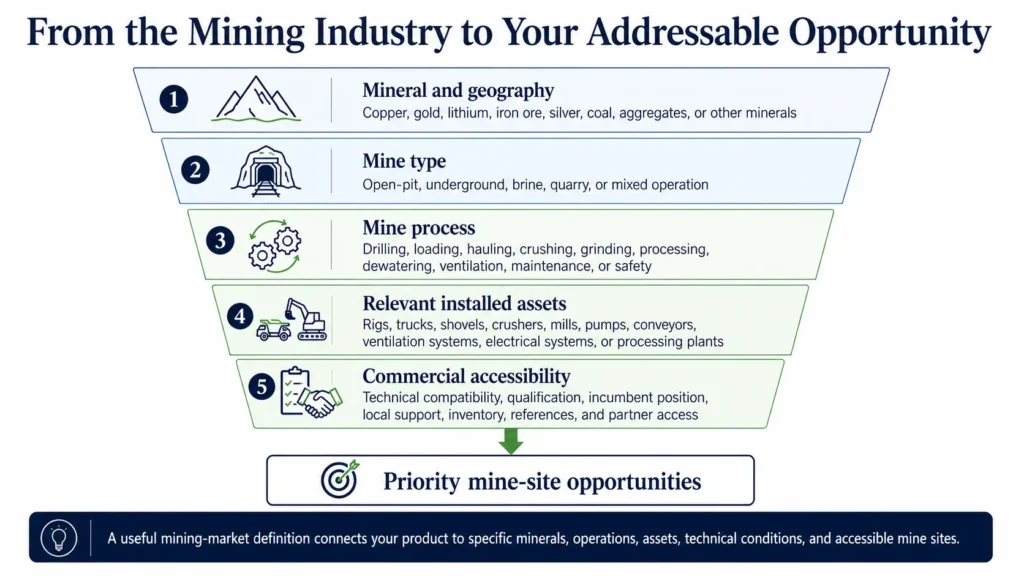
Figure 2. A useful mining-market definition connects your product to specific minerals, operations, assets, technical conditions, and accessible mine sites.
Open-Pit and Underground Mining Require Different Commercial Strategies
Open-pit and underground mines may extract the same mineral but operate through different equipment, processes, risks, and supplier requirements.
Open-pit mining
Relevant products and services may support:
- Blast-hole drilling
- Explosives and blasting
- Shovels and excavators
- Haul trucks
- Tires and wear parts
- Roads and dust suppression
- Conveyors
- Crushing
- Dewatering
- Fleet monitoring
- Slope stability
- Worker safety
- Maintenance facilities
Open-pit operations may place particular emphasis on:
- Fleet productivity
- Fuel and energy consumption
- Haulage efficiency
- Tire and component life
- Road conditions
- Equipment availability
- Dust control
- Large-scale material movement
- Weather exposure
Underground mining
Relevant products and services may support:
- Development drilling
- Production drilling
- Ground support
- Ventilation
- Cooling
- Dewatering
- Material handling
- Underground vehicles
- Communications
- Refuge chambers
- Gas detection
- Lighting
- Fire protection
- Worker tracking
- Safety and emergency response
Underground operations may place greater emphasis on:
- Ventilation and air quality
- Space constraints
- Heat
- Water
- Geotechnical conditions
- Worker safety
- Equipment dimensions
- Remote or autonomous operation
- Communications
- Emergency response
Your product’s value proposition, proof requirements, distribution model, service capability, and priority accounts may therefore differ substantially across mine types.
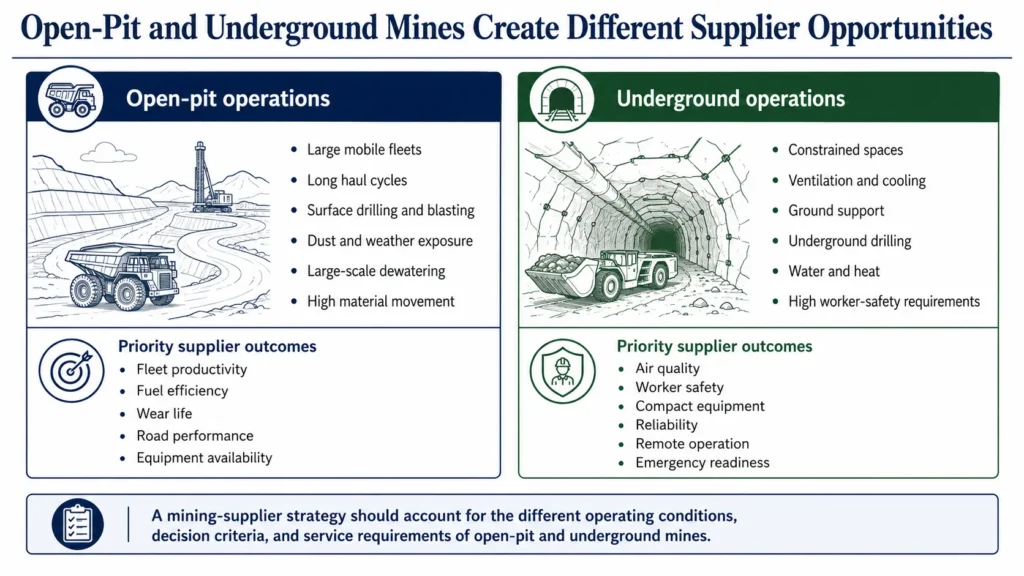
Figure 3. A mining-supplier strategy should account for the different operating conditions, decision criteria, and service requirements of open-pit and underground mines.
Demand Comes from Mine Development, Operations, and Asset Life Cycles
Mining-product demand is generated through several different mechanisms.
New mine development
New mines can create opportunities for:
- Major equipment
- Processing systems
- Pipelines
- Electrical infrastructure
- Ventilation
- Safety systems
- Digital technologies
- Initial consumables
- Service agreements
However, announced projects may be delayed or cancelled because of:
- Commodity prices
- Permits
- Financing
- Social license
- Environmental approval
- Infrastructure
- Water
- Power
- Engineering changes
- Ownership changes
Mine expansions
Existing mines may add:
- Production capacity
- New pits
- Underground levels
- Processing lines
- Tailings capacity
- Water systems
- Power infrastructure
- Automation
- Fleet equipment
Expansions may be more accessible than greenfield projects because the operator, site, installed equipment, and operating needs are already visible.
Operating mines
Existing mines create recurring demand for:
- Consumables
- Wear parts
- Filters
- Pumps
- Safety equipment
- Drilling products
- Chemicals
- Spare parts
- Maintenance
- Repair
- Monitoring
- Replacement
- Optimization
Planned shutdowns and maintenance
Processing plants, crushers, mills, conveyors, pumps, and other systems may concentrate purchasing around planned maintenance windows.
Operational improvement programs
Demand may also come from initiatives focused on:
- Cost per ton
- Recovery
- Equipment availability
- Water use
- Energy use
- Safety
- Automation
- Predictive maintenance
- Emissions
- Tailings management
Your strategy should distinguish among these demand engines because each has different timing, stakeholders, commercial processes, and probability of conversion.
Mining Investment Is Not the Same as Supplier Demand
A large mine-development budget may create limited demand for your category if another supplier is specified, the procurement package is controlled by an EPCM, or the product represents only a small part of the project.
An operating mine may generate a more attractive recurring opportunity through replacement, maintenance, consumables, and productivity improvement.
We help you translate mining investment and operating assets into product-specific demand.
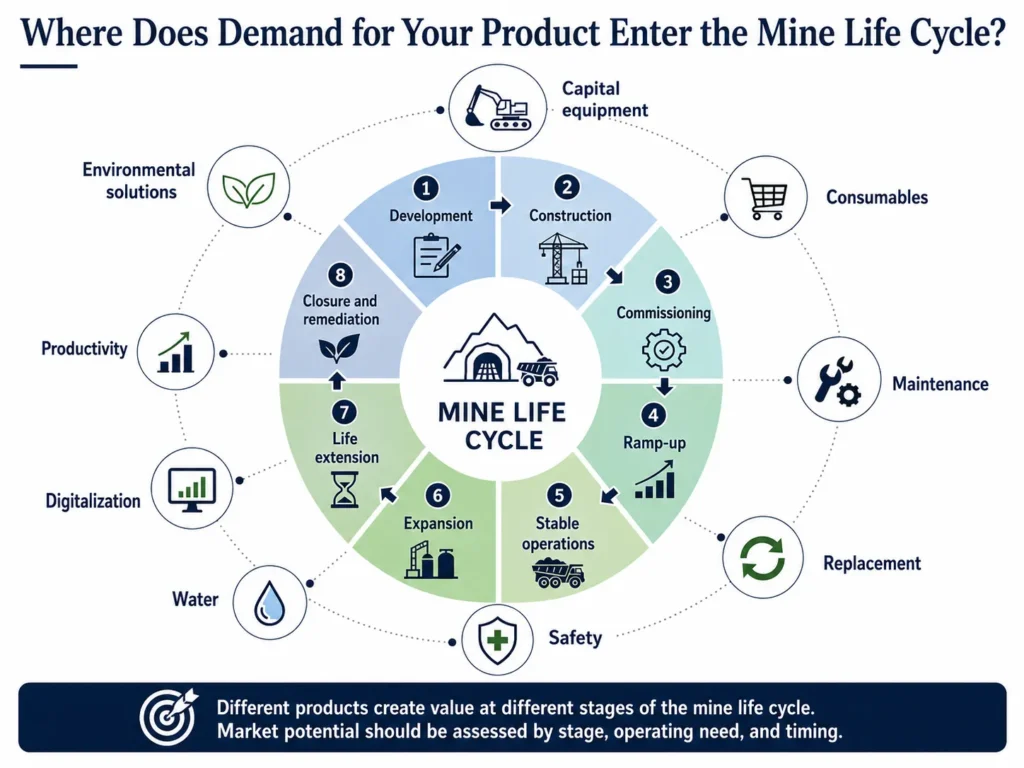
Figure 4. Different products create value at different stages of the mine life cycle. Market potential should be assessed by stage, operating need, and timing.
The Installed Fleet Can Matter More Than the Project Pipeline
For many mining suppliers, the installed equipment base is the most important source of recurring demand.
A mine’s installed base may include:
- Drilling rigs
- Loaders
- Haul trucks
- Shovels
- Crushers
- Mills
- Conveyors
- Pumps
- Compressors
- Ventilation equipment
- Electrical systems
- Processing equipment
- Safety systems
- Monitoring technologies
These assets generate demand through:
- Operating hours
- Component wear
- Preventive maintenance
- Failures
- Rebuilds
- Technology upgrades
- Regulatory changes
- Capacity expansion
- Changes in ore or operating conditions
We help suppliers estimate:
- Relevant installed units
- Equipment age
- Utilization
- Maintenance intervals
- Replacement rates
- Compatible products
- Consumable intensity
- Aftermarket potential
- Incumbent supplier position
- Service and spare-parts requirements
Illustrative models may include:
Consumables
Relevant equipment units × operating hours × consumption per operating hour
Replacement components
Installed units × annual replacement rate × product value
Drill bits
Meters drilled × bit consumption per meter
Filters
Equipment population × filters per service × annual service frequency
Pumps
Installed pumps × replacement or rebuild rate + new applications
The calculation must then be adjusted for:
- Fleet utilization
- Mine plan
- Maintenance practices
- Component rebuilding
- Alternative products
- Existing contracts
- Supplier standardization
- Commercial accessibility
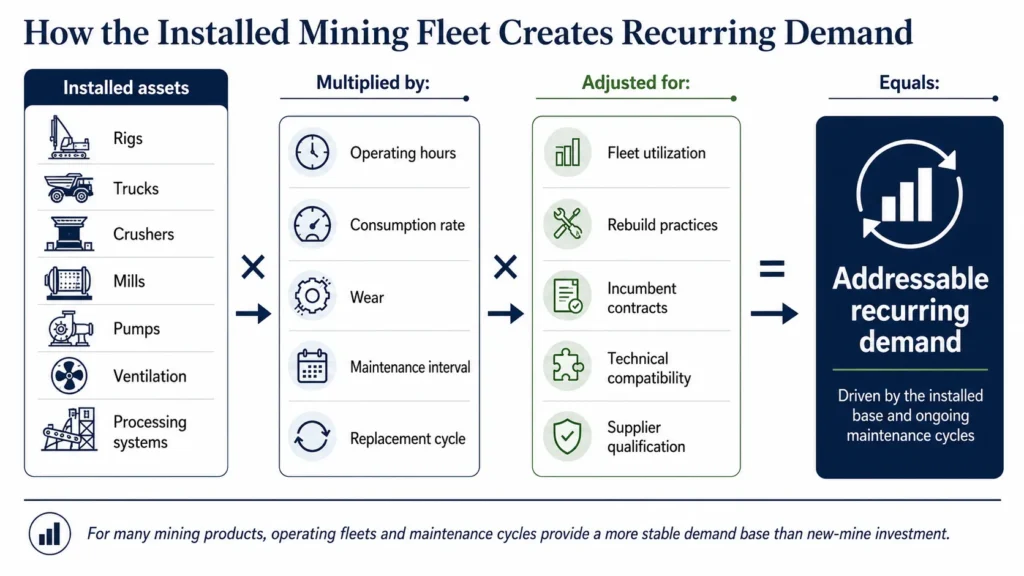
Figure 5. For many mining products, operating fleets and maintenance cycles provide a more stable demand base than new-mine investment.
Mine-Site Qualification Can Be the Real Barrier to Entry
A mine may recognize the potential value of your product and still be unable or unwilling to purchase it.
Approval processes may include:
- Supplier registration
- Financial and compliance review
- Safety documentation
- Quality-system evaluation
- Technical specifications
- Product certification
- Sample assessment
- Laboratory tests
- Field trials
- Mine-site audits
- Environmental review
- Insurance
- Local-content requirements
- Reference checks
- Approved-brand lists
Qualification may differ by:
- Mining company
- Mine site
- Country
- Mineral
- Application
- Product criticality
- Safety risk
- Operating department
A safety-critical underground product may face significantly higher approval barriers than a noncritical workshop consumable.
A product approved at one mine may not be automatically accepted at another mine owned by the same company.
We help you determine:
- Which qualifications are required
- Which functions own the process
- Which documentation is missing
- Which mines are open to alternatives
- Where trials are realistic
- Which reference sites would create credibility
- What local support is expected
- How long the process may take
- Which opportunities do not yet justify the investment
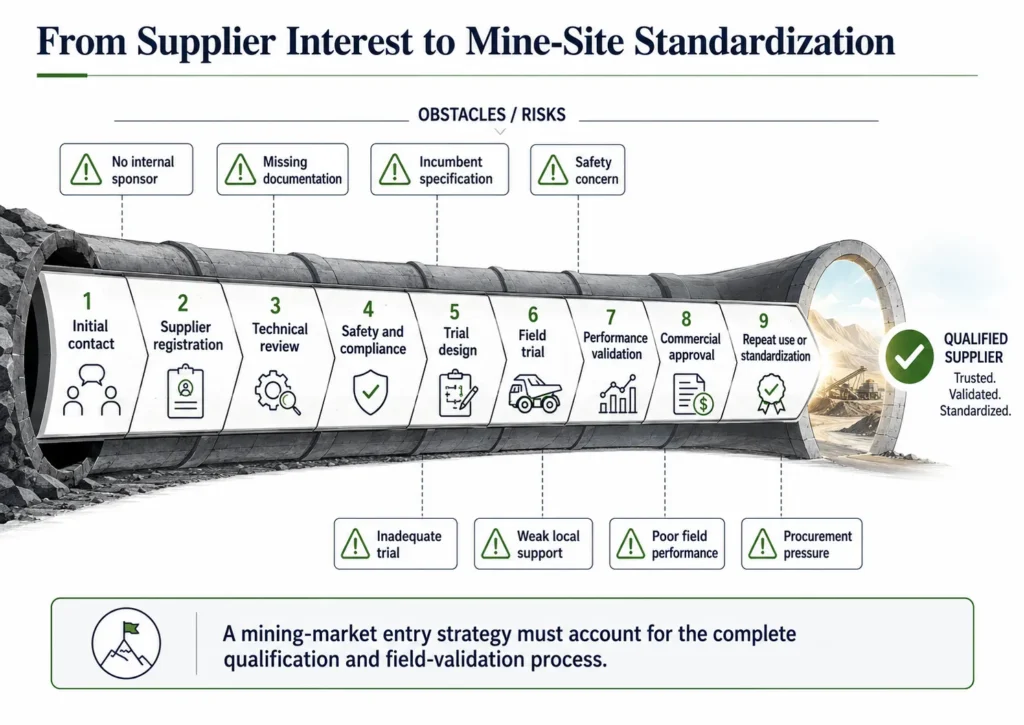
Figure 6. A mining-market entry strategy must account for the complete qualification and field-validation process.
The Mining Buying Center Extends Beyond Procurement
Mining decisions frequently involve:
- Mine management
- Operations
- Maintenance
- Reliability
- Engineering
- Processing
- Geology
- Drilling and blasting
- Ventilation
- Safety
- Environmental teams
- Supply chain
- Procurement
- Finance
- Corporate technical teams
- EPCMs
- Contractors
- Equipment dealers
- Service companies
Each participant may evaluate a different part of the decision.
Operations may ask:
- Will it improve production?
- Could it disrupt the mine plan?
- Is it reliable under site conditions?
- How quickly can failures be resolved?
Maintenance and reliability may ask:
- Does it reduce downtime?
- What is its service life?
- Is it easy to repair?
- Are spare parts available at the site?
- Can the supplier respond remotely and on site?
Engineering may ask:
- Does it meet the specification?
- Is it compatible with the existing system?
- What modifications are required?
- Is it proven in comparable mines?
Safety may ask:
- Is it certified?
- Does it reduce worker risk?
- What procedures and training are needed?
- What happens in an emergency?
Procurement may ask:
- What is the price?
- Is the supplier approved?
- Are alternatives available?
- What are the lead times and commercial terms?
- Can the supplier meet localization requirements?
Mine management may ask:
- Does the solution lowers cost per ton?
- Does it protect production?
- Can it be supported for the life of the mine?
- Is the supplier dependable?
We map:
- Who owns the problem
- Who specifies the product
- Who sponsors the trial
- Who approves the supplier
- Who controls the budget
- Who uses and maintains the product
- Who can block adoption
- Which evidence each stakeholder requires
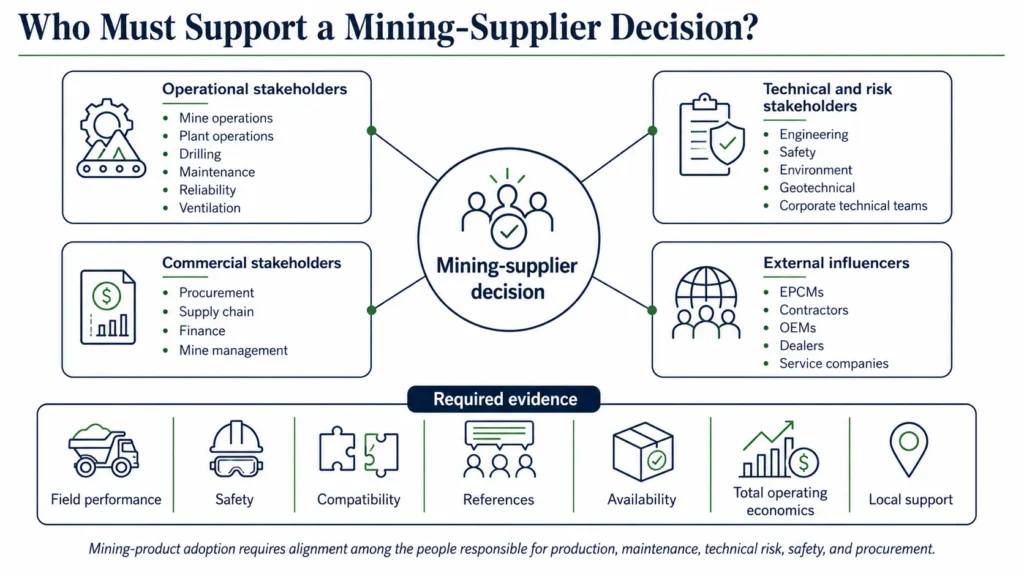
Figure 7. Mining-product adoption requires alignment among the people responsible for production, maintenance, technical risk, safety, and procurement.
Mining Customers Buy Production, Reliability, and Safety Outcomes
Mining suppliers often communicate through product specifications:
- Flow
- Pressure
- Hardness
- Wear resistance
- Penetration rate
- Ventilation volume
- Filtration efficiency
- Load capacity
- Detection accuracy
- Temperature range
- Chemical concentration
These specifications matter.
However, mining customers ultimately evaluate what the product does for the operation.
Your solution may affect:
- Tons moved
- Meters drilled
- Recovery
- Plant throughput
- Equipment availability
- Mean time between failure
- Maintenance hours
- Energy consumption
- Water use
- Worker exposure
- Safety incidents
- Unplanned downtime
- Productive shift time
- Cost per ton
- Mine-plan adherence
A higher-priced product may create better economics when it:
- Lasts longer
- Reduces equipment failures
- Improves drilling speed
- Reduces changeouts
- Increases recovery
- Lowers water or energy use
- Improves ventilation
- Reduces worker exposure
- Simplifies maintenance
- Protects production
We help you translate technical performance into operating and financial value.
A strong mining value proposition connects:
Product capability → Mine-site performance → Operating or safety outcome → Economic value
For example:
Longer-lasting drill bit
→ More meters drilled between changes
→ Less nonproductive time
→ Lower drilling cost per meter
Or:
More reliable dewatering pump
→ Fewer interruptions and faster water removal
→ More stable access to working areas
→ Lower production and safety risk
Or:
Higher-efficiency ventilation equipment
→ Required airflow with lower power consumption
→ Safer working conditions and reduced energy use
→ Lower operating cost and improved underground productivity
The Lowest Product Price May Produce the Highest Cost per Ton
A lower-priced product can become more expensive when it creates downtime, frequent replacement, lower productivity, safety exposure, or additional maintenance.
We help you build the economic case around the mine’s real operating conditions.
Total Cost of Ownership Must Reflect Mine-Site Reality
Mining suppliers frequently claim that their products provide a lower total cost of ownership.
That claim is only credible when it reflects actual site conditions.
A defensible analysis may include:
- Product price
- Freight
- Import duties
- Installation
- Commissioning
- Energy
- Consumables
- Maintenance
- Spare parts
- Product life
- Changeout time
- Equipment downtime
- Production loss
- Safety risk
- Disposal
- Required inventory
- Field service
- Training
The economics may vary substantially by mine.
Downtime at a bottleneck crusher may have a very different cost from downtime in noncritical auxiliary equipment.
A component used at a remote high-altitude mine may require more safety stock and longer lead times than the same component used near an urban industrial center.
We help you determine:
- Which cost drivers matter
- Which operating assumptions are defensible
- How the result differs by mine type and application
- What evidence customers will trust
- Where premium pricing is justified
- Where the value proposition requires stronger validation
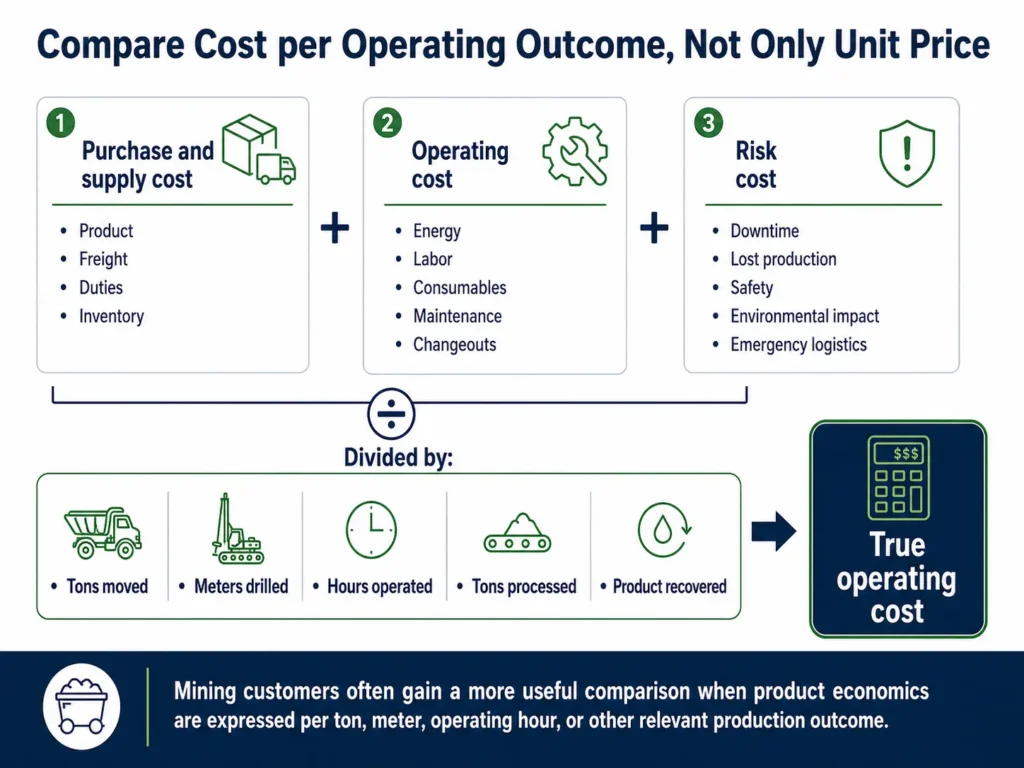
Figure 8. Mining customers often gain a more useful comparison when product economics are expressed per ton, meter, operating hour, or other relevant production outcome.
Prioritize Mines, Not Only Countries
A country can be attractive while individual mine opportunities vary substantially.
Two mines operating in the same region may differ in:
- Mineral
- Production method
- Equipment fleet
- Ownership
- Procurement
- Technical standards
- Existing supplier relationships
- Maintenance strategy
- Mine life
- Expansion plans
- Financial position
- Openness to trials
- Payment behavior
- Local-service expectations
A large mine may appear attractive but be difficult to penetrate because:
- Specifications favor incumbents
- Global agreements control procurement
- Trials are closed
- The equipment fleet is standardized
- The mine requires service capabilities you do not have
- The opportunity is already committed through an EPCM or OEM
A smaller mine may provide a stronger entry opportunity when:
- The current supplier is underperforming
- The operating problem is urgent
- Decision-makers are accessible
- Qualification is manageable
- Your solution can demonstrate value quickly
- The mine can become a reference site
We help you prioritize mines and accounts using criteria such as:
- Product-specific demand
- Mine life
- Operating intensity
- Expansion
- Technical fit
- Operational pain
- Incumbent strength
- Qualification difficulty
- Account access
- Service requirements
- Payment risk
- Reference value
- Probability of conversion
- Expected profitability
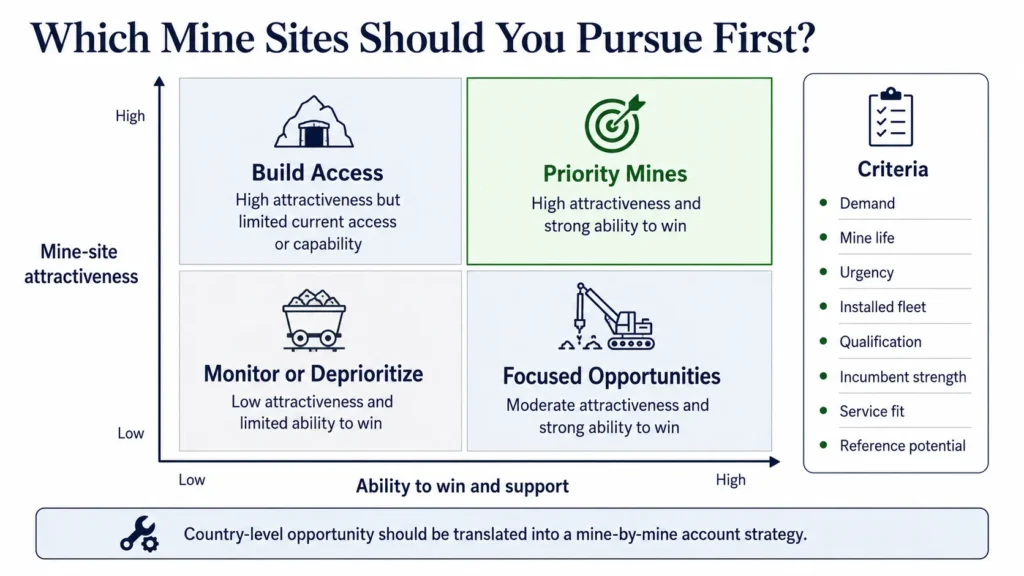
Figure 9. Country-level opportunity should be translated into a mine-by-mine account strategy.
Remote Mines Make Service and Logistics Part of the Product
Mining operations are often located far from major cities, ports, warehouses, and technical-service centers.
Remote operations can create challenges involving:
- Long transport times
- Difficult road access
- High-altitude conditions
- Border procedures
- Weather
- Limited flights
- Site-access requirements
- Safety training
- Camp accommodation
- Emergency delivery
- Communication
- Inventory planning
A technically superior product may lose to a more available alternative when the mine cannot tolerate long downtime.
The supplier’s effective value proposition may therefore include:
- Local inventory
- Consignment stock
- Spare-parts availability
- On-site technicians
- Remote diagnostics
- Emergency support
- Repair capability
- Training
- Forecasting
- Vendor-managed inventory
- Planned-shutdown support
- Service-level commitments
We help you determine:
- Which items must be stocked locally
- Which products can be supplied centrally
- What response time the customer expects
- Whether a distributor or service partner is required
- How much inventory the opportunity justifies
- Who should own the inventory
- How service costs should be priced
- Which capabilities create differentiation
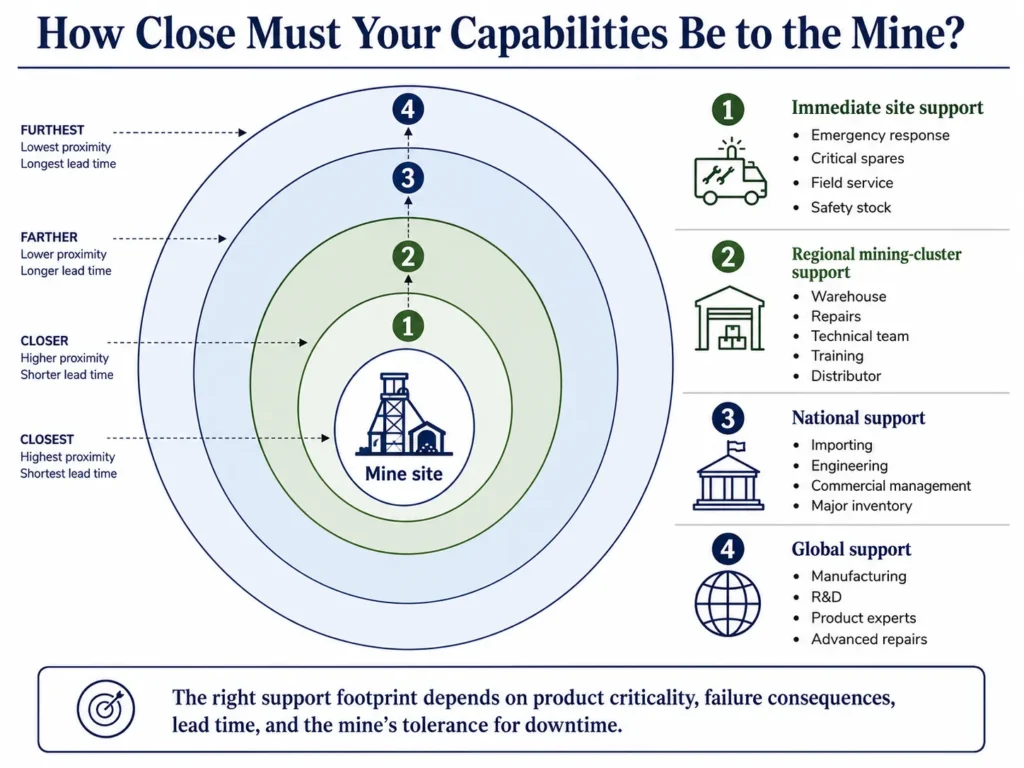
Figure 10. The right support footprint depends on product criticality, failure consequences, lead time, and the mine’s tolerance for downtime.
Distributor, Dealer, and Service-Partner Strategy Consulting for Mining Products and Equipment Suppliers
Mining suppliers may reach the market through:
- Direct sales
- OEM agreements
- Equipment dealers
- National distributors
- Regional mining specialists
- Maintenance companies
- Engineering firms
- EPCMs
- Contractors
- Rental companies
- Service partners
The right model depends on whether the product requires:
- Technical selling
- Field trials
- Engineering
- Installation
- Commissioning
- Inventory
- Repairs
- Rebuilds
- Spare parts
- Training
- Emergency response
A partner may have strong mine relationships but weak technical capabilities.
Another may provide excellent field service but limited commercial reach.
A large distributor may carry so many brands that your product receives little attention.
We evaluate potential partners across four dimensions.
Mine-site access
- Priority mining companies
- Relevant mine sites
- EPCMs and contractors
- Mineral and application coverage
- Mining-cluster presence
Technical capability
- Product expertise
- Application engineering
- Field trials
- Installation
- Commissioning
- Troubleshooting
- Training
- Repairs
Operational capability
- Warehousing
- Local inventory
- Spare parts
- Site delivery
- Emergency response
- Financial strength
- Credit
- Reporting
Strategic commitment
- Portfolio fit
- Competitive conflicts
- Management attention
- Investment willingness
- Technical-team development
- Brand-building commitment
- Long-term alignment
Our distributor and partner search can include:
- Ideal-partner profile
- Market mapping
- Candidate identification
- Capability validation
- Reputation and compliance assessment
- Direct approach
- Interest assessment
- Comparative ranking
- Meeting coordination
- Negotiation preparation
- Governance and performance indicators
The objective is not simply to appoint a company with mining contacts.
It is to identify a partner capable of opening mine sites, supporting qualification, maintaining product availability, and protecting your reputation in the field. Midas’s broader distributor-search methodology similarly emphasizes validated capabilities, customer access, technical support, incentive alignment, and genuine commitment rather than providing only a list of names.
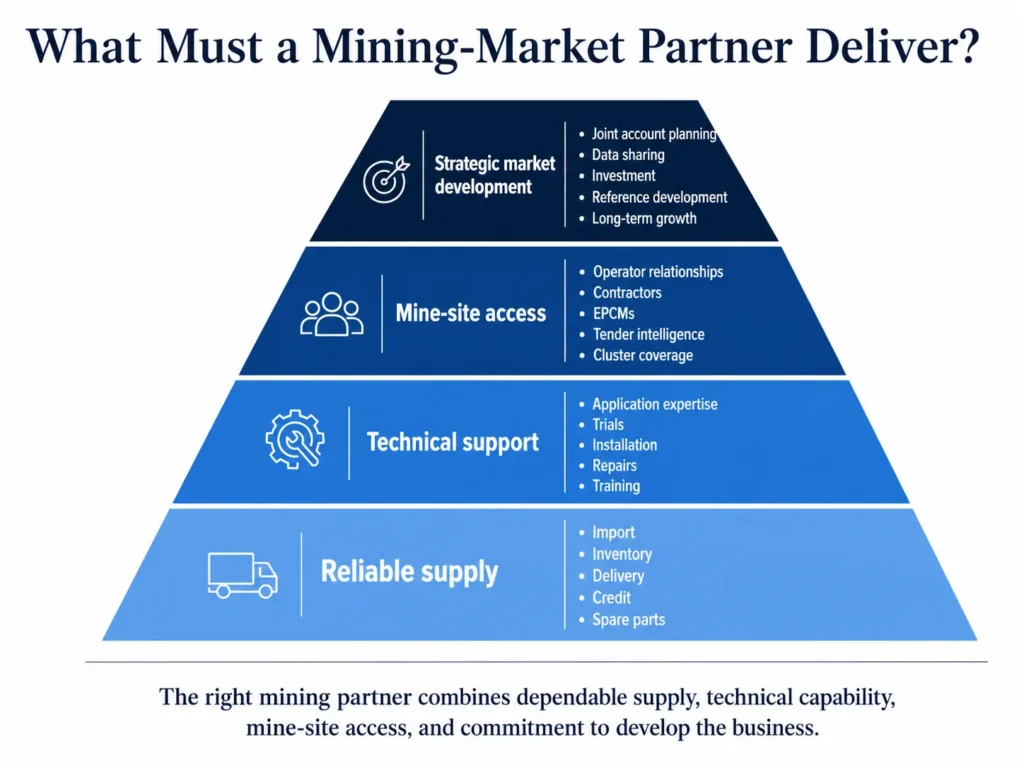
Figure 11. The right mining partner combines dependable supply, technical capability, mine-site access, and commitment to develop the business.
Go-to-Market Strategy Consulting for Mining Products and Equipment Suppliers
A mining go-to-market strategy should connect:
- Minerals
- Mine types
- Operating processes
- Applications
- Installed assets
- Priority mine sites
- Buying centers
- Qualification
- Value proposition
- Direct and indirect channels
- Local service
- Inventory
- Pricing
- Field trials
- Commercial execution
Depending on the product, the strategy may need to define:
- Priority countries and mining clusters
- Open-pit and underground focus
- Minerals and mine processes
- Strategic mine accounts
- Target equipment fleets
- Customer problems
- Technical proof
- Trial sequence
- Direct-sales roles
- Distributor or dealer roles
- OEM and EPCM relationships
- Service and repair model
- Spare-parts requirements
- Commercial terms
- Performance indicators
Your final roadmap may include:
- Market and mine-site priorities
- Account and stakeholder maps
- Qualification roadmap
- Value proposition
- Cost-per-output model
- Channel architecture
- Partner responsibilities
- Field-trial strategy
- Local inventory and service model
- Pricing and margin logic
- Account-development plans
- Organizational responsibilities
- Pipeline and conversion indicators
- Implementation milestones
A strong go-to-market strategy makes explicit who to target, why the mine should change, how the supplier will prove value, which capabilities must be local, and how progress will be measured.
Market Entry Consulting into Mining Countries and Clusters for Mining Products and Equipment Suppliers
Mining markets differ not only by country, but also by mineral belt and operating cluster.
Relevant differences may include:
- Minerals
- Mine ownership
- State participation
- Supplier registration
- Import requirements
- Local-content expectations
- Taxation
- Foreign exchange
- Logistics
- Altitude
- Infrastructure
- Labor
- Safety regulation
- Environmental requirements
- Procurement
- Distributor capabilities
- Mining associations
- Community expectations
- Payment conditions
A product that succeeds in one mining country may require a different:
- Partner
- Certification
- Trial
- Reference
- Inventory model
- Technical team
- Price
- Contract
- Local presence
We help you evaluate:
- Country and mining-cluster attractiveness
- Mineral and mine-type fit
- Operating and project demand
- Priority mine accounts
- Qualification requirements
- Competitors and incumbents
- Partner alternatives
- Local service requirements
- Product adaptation
- Pricing and margins
- Entry-mode options
- Investment and timing
Potential entry models include:
- Direct export
- Distributor
- Equipment dealer
- Service partner
- OEM relationship
- EPCM or contractor partnership
- Local commercial office
- Local warehouse
- Repair center
- Assembly
- Manufacturing
- Licensing
- Joint venture
- Acquisition
The right model should balance:
- Mine access
- Technical credibility
- Availability
- Service
- Control
- Speed
- Capital
- Margin
- Long-term strategic value
Benchmarking the Mining Suppliers That Win: Consulting for High‑Performance Mining Products and Equipment Providers
Competitor market share does not explain why a supplier wins.
The difference may come from:
- Approved-supplier status
- More installed equipment
- Better mine references
- Longer product life
- Faster field service
- Local repair capability
- Better spare-parts availability
- Stronger technical teams
- Better distributor coverage
- Lower cost per ton
- Faster trials
- Stronger OEM relationships
- Better safety performance
- More disciplined key-account management
Depending on your decision, we may benchmark:
Market and account coverage
- Countries
- Mining clusters
- Minerals
- Open-pit and underground mines
- Priority operators
- Installed base
- EPCM and contractor relationships
Technical selling
- Application engineering
- Field trials
- Product testing
- Technical documentation
- Mine references
- Performance measurement
- Cost-benefit tools
Service and supply
- Warehouses
- Site inventory
- Spare parts
- Field technicians
- Repair centers
- Response times
- Training
- Warranty
Commercial execution
- Account segmentation
- Key-account management
- Tender processes
- Distributor management
- Pricing
- Incentives
- Pipeline governance
Product and innovation
- Product range
- Durability
- Automation
- Digital capabilities
- Safety
- Water and energy efficiency
- Sustainability
We normalize differences in mine type, mineral, product criticality, geography, and service intensity before drawing conclusions.
The objective is not to copy another supplier.
It is to understand which capabilities explain the performance gap and what your company should improve, adapt, or intentionally do differently.
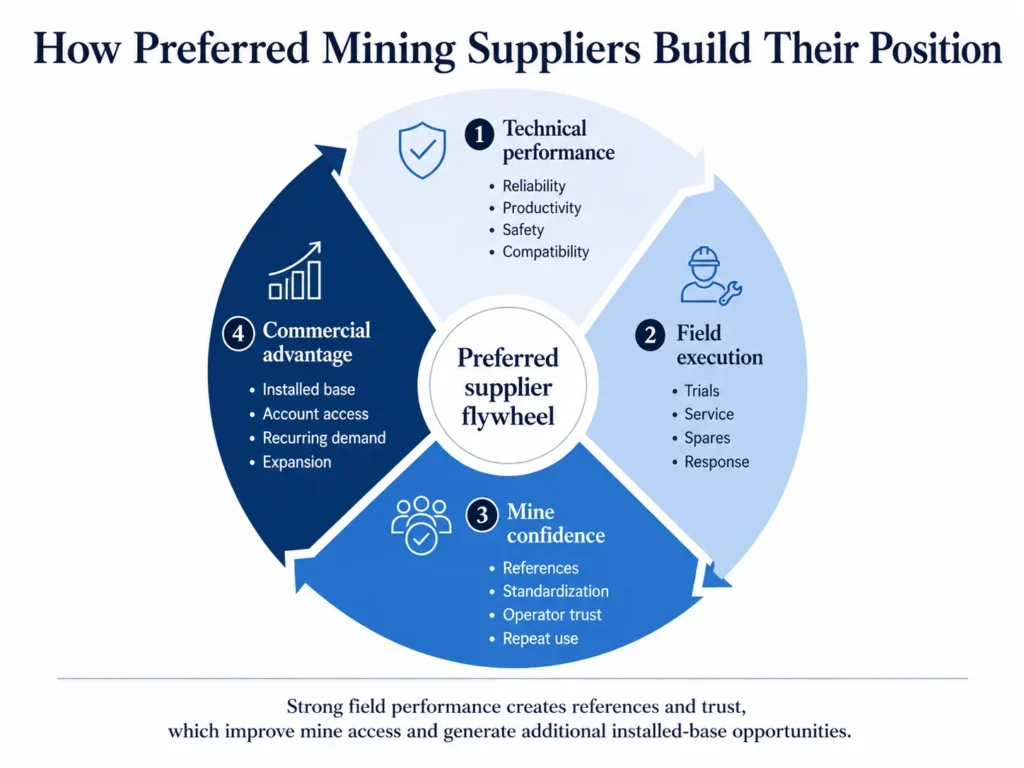
Figure 12. Strong field performance creates references and trust, which improve mine access and generate additional installed-base opportunities.
Pricing and Account Economics
Mining-product prices may vary by:
- Mine
- Application
- Product criticality
- Contract
- Volume
- Delivery location
- Freight
- Inventory
- Service
- Warranty
- Payment terms
- Emergency support
- Local-content requirements
- Competitive situation
Without clear governance, suppliers may:
- Discount unnecessarily
- Underprice technical support
- Absorb excessive travel and site-service costs
- Carry unprofitable inventory
- Win low-margin tenders
- Offer warranties without understanding field risk
- Fail to charge for uptime or productivity value
We help you evaluate:
- Price positioning
- Tender pricing
- Distributor and dealer margins
- Service pricing
- Spare-parts pricing
- Rebuild economics
- Contract escalation
- Freight
- Payment conditions
- Warranty exposure
- Inventory costs
- Discount governance
- Account profitability
A large mining account can still be unattractive when it requires:
- Excessive customization
- High site-service costs
- Long payment terms
- Large consignment inventory
- Uncompensated trials
- Remote emergency support
- Unfavorable warranty commitments
We help you connect price, operating value, cost to serve, and strategic account potential.
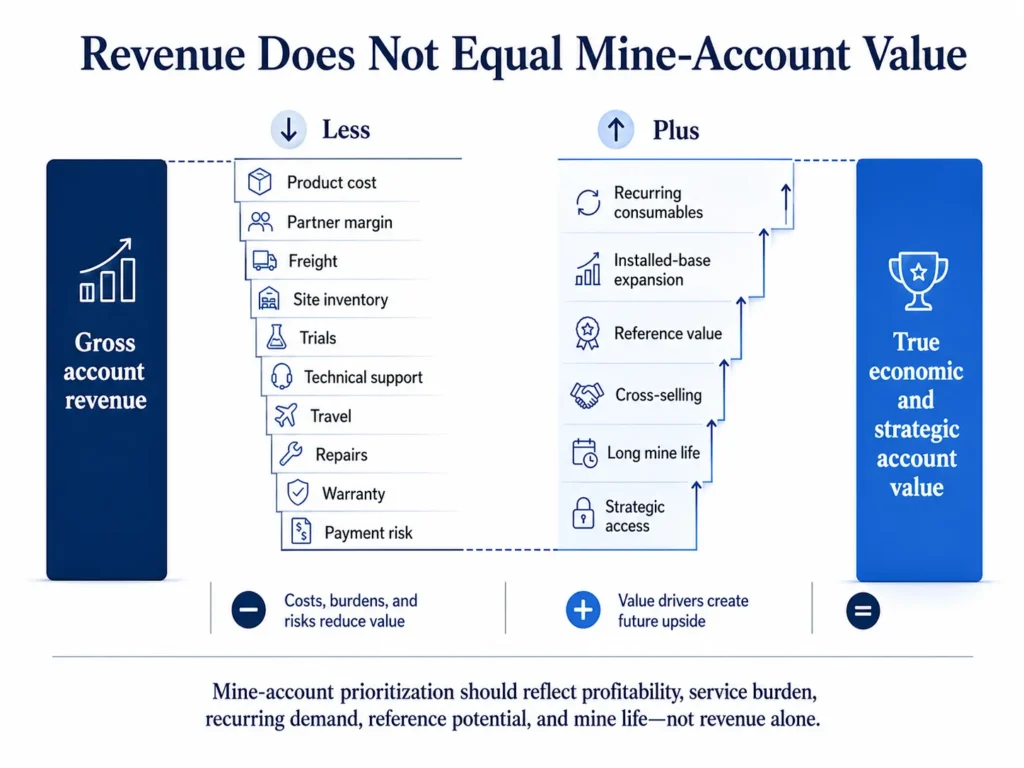
Figure 13. Mine-account prioritization should reflect profitability, service burden, recurring demand, reference potential, and mine life—not revenue alone.
Innovation Must Survive the Mine Site
Mining companies may be interested in innovation while remaining highly cautious about operational risk.
A new technology may require:
- Laboratory tests
- Engineering review
- Risk assessment
- Safety approval
- Pilot installation
- Field trial
- Operator training
- Maintenance training
- Spare-parts planning
- Management-of-change procedures
- Performance monitoring
Adoption may fail when the innovation:
- Has no comparable mining references
- Does not perform under local conditions
- Requires major process changes
- Creates safety concerns
- Lacks local service
- Depends on unrealistic savings
- Requires skills the site does not have
- Is difficult to integrate with existing equipment
- Has unclear responsibility when performance fails
We help you evaluate:
- The mine-site problem
- The severity and frequency of the problem
- Which stakeholder owns it
- What operational value could be created
- What risk the mine assumes
- Which site is best suited to a trial
- How trial success should be measured
- What support is required
- How the solution can scale after validation
- How competitors may react
A strong field trial should demonstrate:
- Technical performance
- Reliability
- Safety
- Operating value
- Maintainability
- Site acceptance
- Scalability
Automation, Remote Operations, and Data
Mining companies are increasing their use of:
- Autonomous or semi-autonomous equipment
- Remote operation centers
- Predictive maintenance
- Fleet-management systems
- Worker tracking
- Digital twins
- Sensor-based monitoring
- Process optimization
- Automated drilling
- Ventilation-on-demand
- Advanced analytics
These technologies can create opportunities for suppliers, but they can also alter existing demand.
A digital solution may improve the value of a physical product.
It may also enable longer component life, lower consumable use, or reduced maintenance.
We help suppliers evaluate:
- Which digital capabilities improve the customer outcome
- Whether the mine has sufficient data and infrastructure
- How the solution integrates with existing systems
- Who controls the data
- Whether cybersecurity approval is required
- What operational behavior must change
- How digital functionality affects pricing
- Whether the capability creates differentiation or is becoming expected
- Which partnerships are required
The objective is not to add digital terminology to the value proposition.
It is to identify where data, monitoring, automation, or remote support creates measurable mine-site value.
Scenario Planning Across Commodity and Investment Cycles for Mining Products and Equipment Suppliers
Mining suppliers face uncertainty from:
- Commodity prices
- Mine investment
- Exploration
- Project approvals
- Exchange rates
- Regulation
- Royalties and taxation
- Water and energy
- Community relations
- Technology
- Automation
- Safety
- Environmental requirements
- Supply chains
- Competitor consolidation
An illustrative scenario exercise might use:
Critical uncertainty 1: Mining investment and production expansion (Restricted ↔ Expansive)
Critical uncertainty 2: Speed of operational modernization (Gradual ↔ Rapid)
This could produce four environments:
- Capacity Expansion. Investment grows while operating models change gradually, supporting equipment, expansions, replacement, and conventional mine-site demand.
- Smart Mining Acceleration. Investment increases while automation, monitoring, efficiency, and remote operations expand rapidly.
- Maintain and Extend. Capital remains constrained, increasing emphasis on maintenance, rebuilds, consumables, life extension, and cost per ton.
- Productivity Under Pressure. Investment remains limited while mines face strong pressure to modernize, improve safety, reduce costs, and address environmental constraints.
For each scenario, we identify:
- Product implications
- Attractive mines and applications
- Vulnerable offerings
- Service requirements
- Partner implications
- Competitor behavior
- No-regret actions
- Strategic options
- Early-warning indicators
- Decision triggers
- Management responses
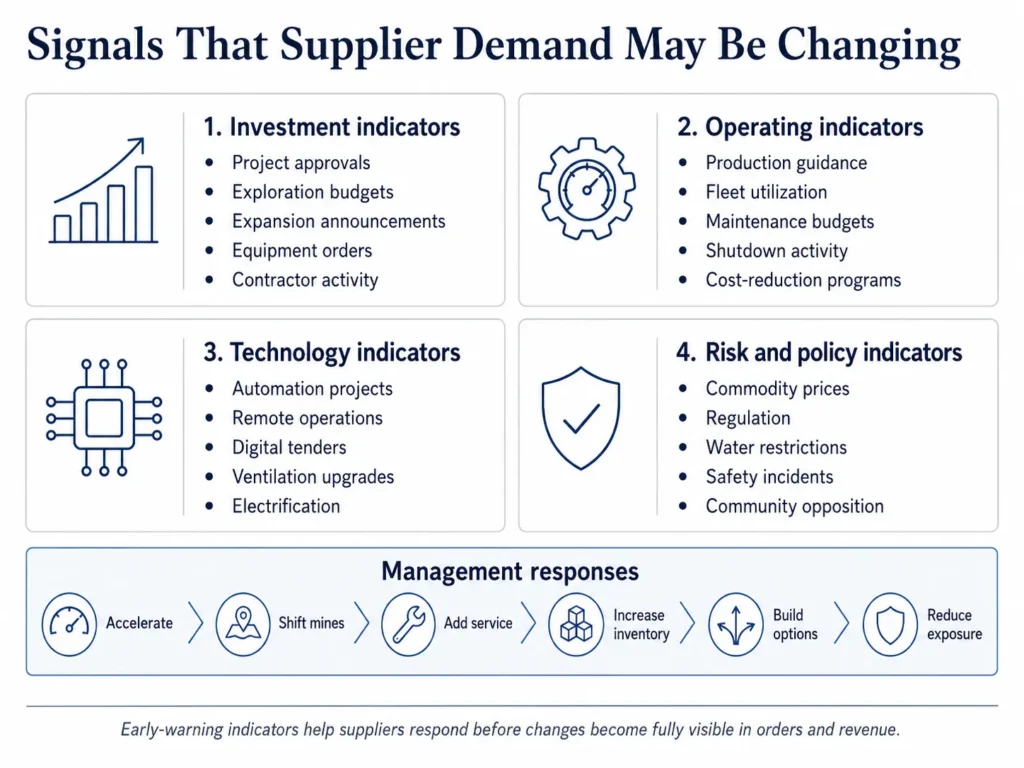
Figure 14. Early-warning indicators help suppliers respond before changes become fully visible in orders and revenue.
Business Wargames Consulting for Mining Products and Equipment Suppliers
Your decisions can trigger reactions from competitors, dealers, distributors, OEMs, and mining customers.
A market entry, product launch, price change, distributor appointment, local-service investment, or acquisition may cause competitors to:
- Reduce prices
- Extend credit
- Increase consignment inventory
- Lock in dealers
- Expand field service
- Accelerate trials
- Offer longer warranties
- Bundle products and maintenance
- Question your references or reliability
- Secure exclusivity
- Acquire a regional supplier
- Increase local production
Mining customers may also use your entry to renegotiate with existing suppliers.
A business wargame helps your team explore these reactions before implementation.
Participants may represent:
- Your company
- Global OEMs
- Specialized suppliers
- Local manufacturers
- Low-cost entrants
- Dealers and distributors
- Mining operators
- EPCMs
- Contractors
- Service companies
The exercise helps identify:
- Unsupported assumptions
- Likely competitor responses
- Channel conflict
- Price escalation
- Qualification barriers
- Service vulnerabilities
- Alternative actions
- Defensive moves
- Early-warning signals
- Prepared responses
Midas’s wargame approach is designed to challenge assumptions, simulate likely reactions, and translate the exercise into practical strategic actions rather than treating the workshop as an abstract exercise.
M&A, Licensing, and Strategic Partnership Consulting for Mining Products and Equipment Suppliers
Acquisitions and partnerships can provide faster access to:
- Approved-supplier status
- Mine relationships
- Installed equipment
- Service teams
- Repair facilities
- Local inventory
- Technology
- Manufacturing
- Mining-cluster presence
- Product certifications
- Field references
- Recurring aftermarket revenue
They can also conceal significant risks:
- Customer concentration
- Dependence on one mine
- Weak recurring demand
- Unprofitable service contracts
- Safety exposure
- Environmental liabilities
- Outdated technology
- Warranty problems
- Informal commercial practices
- Dependence on key technicians
- Excessive inventory
- Overstated project pipelines
- Weak compliance
We help mining suppliers with:
- Acquisition strategy
- Target-profile definition
- Target identification
- Company and competitor intelligence
- Mine and customer validation
- Commercial due diligence
- Installed-base analysis
- Product and service assessment
- Pipeline analysis
- Strategic-fit evaluation
- Partner and licensing search
- Owner-interest assessment
- Approach strategy
- Negotiation preparation
- Post-deal growth priorities
Financial, legal, tax, environmental, safety, technical, and operational due diligence should be completed by appropriately qualified specialists.
Our role is to strengthen the strategic and commercial understanding of the opportunity.
Case Example: Using Supplier Intelligence to Reduce Costs in Mexico
The challenge
A multinational company wanted to improve the cost position of its Mexican subsidiary.
Management needed to determine whether current supplier prices were reasonable and identify credible alternatives without disclosing the company’s identity.
The project required more than collecting informal market opinions.
The company needed to understand:
- Which suppliers had the required capabilities
- Which certifications and equipment they possessed
- Whether they could perform the required tasks
- How long the work should take
- Which labor and material inputs drove cost
- What alternative suppliers would quote
The Midas approach
We combined:
- Secondary research
- Supplier mapping
- Capability screening
- Direct supplier interviews
- Equipment and certification validation
- Requests for quotations
- Task-time analysis
- Labor and raw-material cost modeling
Only suppliers with relevant capabilities were included in the comparison.
What the client received
We developed:
- Alternative supplier profiles
- Comparable quotations
- Task and timing estimates
- A labor and material cost model
- A fact base for evaluating current supplier pricing
- Negotiation alternatives
The outcome
The company used the findings to negotiate substantial savings with its existing suppliers.
The case demonstrates how market and supplier intelligence can improve purchasing economics without relying only on public price information.
Important context: The client identity, products, suppliers, and savings figures are confidential. The outcome reflects the circumstances of this specific engagement and does not guarantee equivalent results elsewhere.
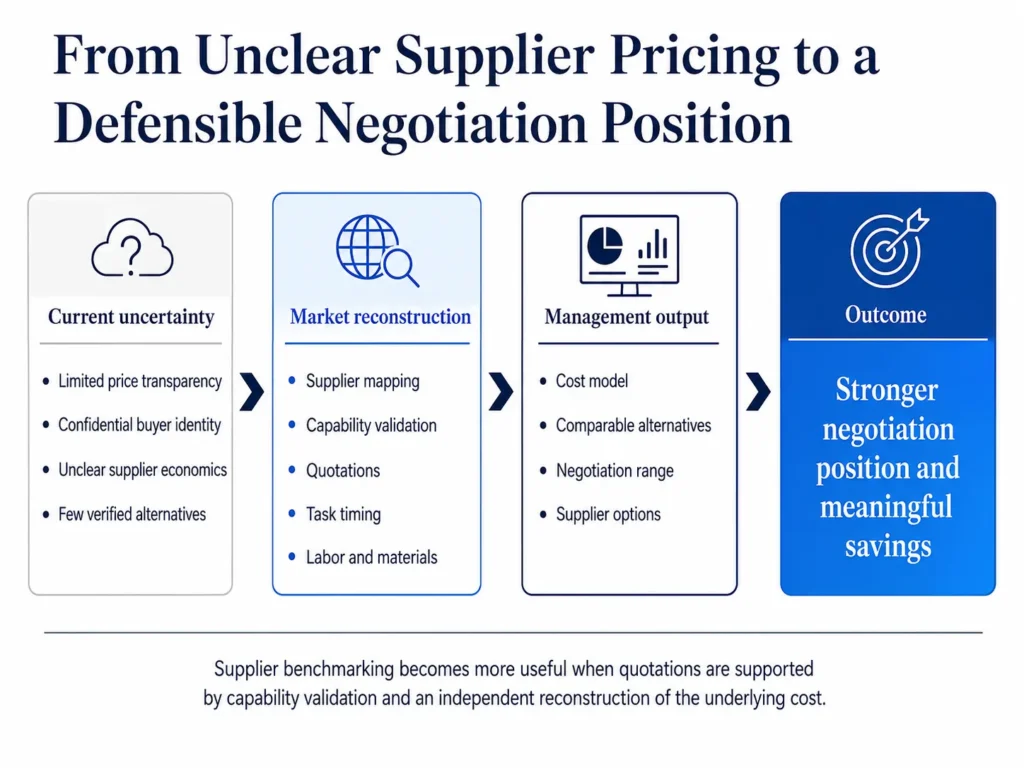
Figure 15. Supplier benchmarking becomes more useful when quotations are supported by capability validation and an independent reconstruction of the underlying cost.
How We Build Reliable Mining-Market Intelligence
Mining markets generate substantial public information about:
- Projects
- Production
- Reserves
- Ownership
- Capital investment
- Commodity prices
However, public information often does not reveal:
- Product-specific demand
- Installed-equipment details
- Maintenance cycles
- Approved suppliers
- Mine-level purchasing
- Actual prices
- Distributor margins
- Incumbent performance
- Field-trial openness
- Service expectations
- Switching willingness
- Competitor strategy
We may combine:
- Mine and company disclosures
- Project and production information
- Installed-equipment estimates
- Import and export data
- Tender information
- Product and technical analysis
- Mine-operator interviews
- Contractor and EPCM interviews
- Distributor and dealer interviews
- Service-company perspectives
- Former mining executives
- Engineers and technical specialists
- Competitor intelligence
- Midas’s accumulated project experience
We triangulate important findings whenever feasible.
We distinguish among:
- Verified facts
- Supported estimates
- Market perceptions
- Analytical inferences
- Management hypotheses
- Unresolved information gaps
When exact information is unavailable, we explain the assumptions and use ranges rather than presenting false precision.
Reliable Mining Intelligence, Gathered Responsibly
We use lawful and ethical research methods.
We do not request trade secrets, encourage sources to violate confidentiality obligations, or present uncertain information as confirmed fact.
Your target mines, product plans, pricing, partner discussions, and strategic priorities are treated as confidential. We can work under a nondisclosure agreement where appropriate.
A Consulting Approach for Mining Products and Equipment Suppliers Built Around Mine-Site Growth
Our work is designed around the strategic and commercial decision your team needs to make.
Depending on your objectives, the engagement may include five connected perspectives.
1. Map the mine opportunity
We identify the minerals, mine types, operating processes, assets, projects, and maintenance cycles that create demand.
2. Prioritize mines and accounts
We compare mine sites according to demand, operating need, mine life, access, qualification, incumbent position, and ability to win.
3. Build the operational value case
We connect technical performance with production, reliability, safety, cost per ton, and mine-site risk.
4. Design the market-access system
We define the qualification path, direct-sales roles, partners, service, inventory, trials, pricing, and local capabilities required.
5. Mobilize execution
We translate the strategy into account priorities, actions, responsibilities, milestones, indicators, and decision triggers.
Your deliverables may include:
- Mining-market and demand model
- Mine-site database
- Project and expansion pipeline
- Installed-fleet analysis
- Open-pit and underground segmentation
- Mine-account prioritization
- Buying-center map
- Qualification roadmap
- Competitor profiles
- Total-cost or cost-per-output model
- Distributor, dealer, or partner long list
- Partner shortlist and assessments
- Go-to-market strategy
- Market-entry recommendation
- Service and spare-parts model
- Scenario framework
- Wargame conclusions
- Acquisition target profiles
- Implementation roadmap
- Executive workshop
- Supporting evidence and databases
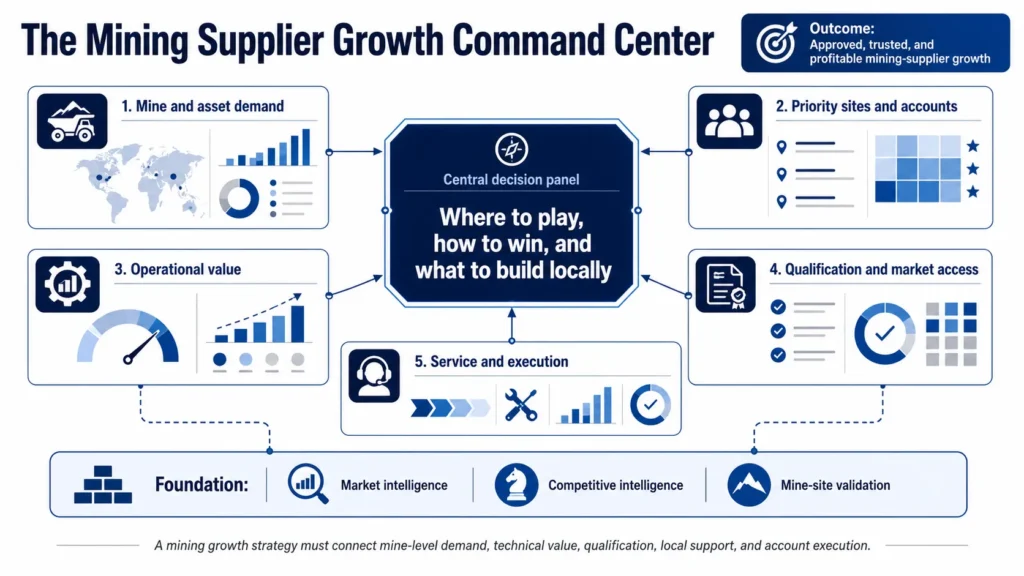
Figure 16. A mining growth strategy must connect mine-level demand, technical value, qualification, local support, and account execution.
Executive Workshop Consulting for Mining Products and Equipment Supplier Decisions
Mining-supplier strategy often requires alignment among:
- Regional management
- Country leadership
- Sales
- Product management
- Application engineering
- Service
- Supply chain
- Operations
- Finance
- Safety
- Distributor management
- Global technical teams
Different functions may view the opportunity differently.
Sales may focus on account access and tenders.
Engineering may focus on technical compatibility.
Service may question whether remote sites can be supported.
Supply chain may highlight inventory and lead-time risks.
Finance may focus on margins, trials, warranties, and payment terms.
We design workshops that help your team:
- Build a shared view of the market
- Prioritize minerals, mine types, clusters, and accounts
- Separate evidence from assumptions
- Evaluate qualification barriers
- Clarify the mine-site value proposition
- Compare direct and partner-led models
- Resolve service and inventory trade-offs
- Anticipate competitor reactions
- Assign ownership
- Agree on milestones and indicators
- Translate choices into an executable roadmap
The workshop is designed around the decision and supporting evidence—not around a generic agenda.
Why Mining Products and Equipment Suppliers Work with Midas Consulting
More than 25 years of experience
Midas Consulting has supported companies in mining products, industrial equipment, consumables, technology, and other complex B2B markets since 2000. The current page states that this experience includes hundreds of mining-product consulting assignments; retain that wording only if the underlying project records support the definition and count.
A mine-site perspective
We do not treat mining as a single national market.
We examine mine types, minerals, operating processes, installed fleets, maintenance cycles, qualification, service requirements, and mine-level purchasing.
Open-pit and underground coverage
Our approach can be adapted to the different equipment, technical, safety, ventilation, logistics, and service requirements of surface and underground operations.
Consulting experience across mining products and equipment supplier categories
Relevant categories include:
- Pumps and valves
- Drilling rigs and bits
- Ventilation
- Filtration
- Consumables
- Wear parts
- Safety equipment
- Pipes and flow-control systems
- Electrical products
- Monitoring and software
- Maintenance and reliability solutions
- Other equipment and services used by mines
Latin American market knowledge
We work across Spanish- and Portuguese-speaking Latin America, as well as Spain, Portugal, and selected international markets.
We understand how mining ownership, regulation, mine clusters, procurement, logistics, local-content expectations, partners, and business practices differ by country.
Primary market intelligence
When public information is insufficient, we develop evidence through mining companies, contractors, EPCMs, dealers, distributors, service companies, former executives, engineers, and technical specialists.
Senior involvement
Senior consultants remain involved in problem definition, research design, strategic interpretation, and management discussions.
Technical and commercial integration
We connect product performance with mine-site outcomes, qualification, supply, service, pricing, account strategy, and cost to serve.
Collaboration with your team
We combine your technical and mining-market knowledge with an independent perspective that can challenge assumptions and identify strategic blind spots.
Transparent limitations
Mine data, supplier information, and commercial conditions may be incomplete or confidential.
We explain assumptions, evidence gaps, estimates, and uncertainty rather than presenting artificial precision.
Selected Mining Products and Equipment Supplier Consulting Experience
Midas has an 82.2% Net Promoter Score for 2020–2025.
We have supported companies selling products, equipment, technology, consumables, and services into mining markets across different minerals, countries, mine types, and strategic decisions. Each logo represents a separate client relationship; project scope, timing, and services differed.



What Mining Products and Equipment Clients Say About Working with Midas Consulting
“Midas delivered practical, high-impact ideas that helped us expand market share in a competitive environment.”
Marketing Manager
Mining-Industry Supplier
Client identity withheld due to confidentiality
“Midas was highly effective, giving us the insights and tools we needed to co-create a robust strategy for complex markets.”
Chief Financial Officer
Mining-Industry Supplier
Client identity withheld due to confidentiality
“Midas helped us reassess priorities and focus our efforts where they truly mattered.”
Global Market Segment Leader
Mining-Industry Supplier
Client identity withheld due to confidentiality
“Midas combined deep market experience with thorough analysis, collaborating effectively across our teams to deliver actionable results.”
Global Product Manager
Mining-Industry Supplier
Client identity withheld due to confidentiality
Strategic Intelligence for Mining-Supplier Decisions
Mining companies publish information on projects, production, reserves, investment, and ownership.
But suppliers need a different level of intelligence.
Your team may need to understand:
- Which mine sites are accessible
- Which equipment fleets create demand
- Which suppliers are approved
- Why competitors win
- Where mines are dissatisfied
- Which trials are realistic
- How mine plans affect consumption
- Which partner can provide local support
- What early signal requires management action
Strategic intelligence connects:
- Mine and project data
- Installed assets
- Customer needs
- Supplier qualification
- Competitor capabilities
- Service and logistics
- Commodity cycles
- Technology
- Strategic intent
Midas Consulting’s applied strategic intelligence work brings together:
- Market intelligence
- Competitive intelligence
- Benchmarking
- Market entry
- Go-to-market strategy
- Distributor search
- Scenario planning
- Business wargaming
- Early-warning systems
- M&A intelligence
Frequently Asked Questions
What types of companies does Midas support through mining products and equipment consulting?
We support companies that sell products, equipment, technology, consumables, and services to mining companies, contractors, and related organizations.
Relevant categories include:
- Pumps and valves
- Drilling rigs
- Drill bits
- Ventilation equipment
- Filters
- Consumables
- Wear parts
- Pipes and flow-control systems
- Safety gear
- Electrical products
- Monitoring technologies
- Mining software
- Maintenance and reliability solutions
- Other products used in mine operations
Do you provide consulting directly to mining companies?
This page is primarily directed to companies that supply mining companies. However, we also have worked for mining companies in projects such as benchmarking, M&A, market entry, wargames, etc.
Do you cover both open-pit and underground mining with your mining products and equipment consulting?
Yes. The methodology is adapted to the different equipment, processes, technical conditions, safety requirements, service needs, and buying criteria of open-pit and underground mines.
Which minerals can you analyze?
Depending on the engagement, our work may include:
- Copper
- Gold
- Lithium
- Silver
- Iron ore
- Coal
- Aggregates
- Industrial minerals
- Other mineral segments
The relevant segmentation depends on the product and application.
Can you estimate the market for our mining product with your mining products and equipment consulting?
Yes, when sufficient evidence is available.
Depending on the category, we may combine:
- Installed equipment
- Operating hours
- Mine production
- Meters drilled
- Maintenance intervals
- Replacement rates
- Consumption rates
- Mine expansions
- New projects
- Imports
- Competitor intelligence
- Mine and contractor interviews
We explain the assumptions and normally use ranges when the evidence does not support one exact figure.
Can you analyze installed mining fleets with your mining products and equipment consulting?
Yes. We may estimate or analyze:
- Equipment population
- Brand and model mix
- Age
- Utilization
- Replacement cycle
- Maintenance practices
- Relevant consumables
- Compatible components
- Aftermarket demand
The depth of the analysis depends on data availability and the product category.
Can you identify relevant mining projects and operating mines?
Yes. We can identify and prioritize:
- New projects
- Mine expansions
- Operating mines
- Underground developments
- Processing upgrades
- Maintenance opportunities
- Life-extension projects
The analysis may consider project stage, probability, product relevance, access, qualification, incumbent suppliers, timing, and strategic value.
Can you help us understand mine-site qualification with your mining products and equipment consulting?
Yes. We can research:
- Supplier registration
- Technical requirements
- Safety documentation
- Quality requirements
- Certifications
- Field-trial processes
- References
- Approved-brand lists
- Local-service expectations
- Procurement procedures
Formal legal, engineering, safety, regulatory, or certification conclusions should be verified by qualified specialists.
Can you interview mining companies and technical users?
Yes. Depending on the project, we may interview:
- Mine managers
- Operations teams
- Maintenance and reliability professionals
- Engineers
- Processing specialists
- Drilling professionals
- Ventilation specialists
- Safety teams
- Procurement
- EPCMs
- Contractors
- Dealers
- Distributors
- Former mining executives
- Technical experts
Access depends on the geography, topic, timing, and participant willingness.
Can you help us find mining distributors, dealers, or service partners with your mining products and equipment consulting?
Yes. We define the ideal partner profile, identify candidates, assess mine access and technical capabilities, validate reputation, approach selected companies, compare alternatives, and support negotiation preparation.
We focus on whether the partner can open mine sites, support qualification, maintain inventory, provide service, and develop the market.
Can you evaluate our existing mining partners?
Yes. We can assess:
- Mine-site access
- Opportunity pipeline
- Technical capabilities
- Field trials
- Inventory
- Spare parts
- Service
- Repairs
- Sales-force quality
- Reporting
- Investment
- Portfolio conflicts
- Management commitment
- Strategic alignment
The recommendation may involve improving, complementing, consolidating, renegotiating, or replacing parts of the network.
Can you develop a cost-per-ton or total-cost model with your mining products and equipment consulting?
Yes. Depending on the product, the analysis may include:
- Purchase price
- Freight
- Inventory
- Installation
- Energy
- Maintenance
- Replacement
- Changeout time
- Downtime
- Lost production
- Safety
- Product life
The relevant output may be expressed per ton, meter drilled, operating hour, or other mine-performance metric.
Can you benchmark competitor prices with your mining products and equipment consulting?
Yes, subject to accessibility and comparability.
Mining prices may vary by:
- Mine
- Specification
- Contract
- Volume
- Geography
- Freight
- Inventory
- Service
- Warranty
- Payment terms
- Emergency support
Some research must be conducted on a best-efforts basis because negotiated prices and contract conditions are confidential.
Can you benchmark competitor service capabilities with your mining products and equipment consulting?
Yes. We may compare:
- Local technicians
- Mine-site coverage
- Inventory
- Spare parts
- Repair facilities
- Response times
- Training
- Field-trial support
- Warranty
- Customer perceptions
Can you help us enter a new mining country with your mining products and equipment consulting?
Yes. We can compare countries and mining clusters, estimate demand, identify priority mines, understand qualification, analyze competitors, evaluate partners, recommend an entry model, develop pricing, and create a go-to-market roadmap.
Can you support an acquisition or partnership?
Yes. We can help define strategy, identify targets or partners, validate mine and customer relationships, conduct commercial due diligence, assess installed base and pipeline, evaluate strategic fit, and support negotiation preparation.
Financial, legal, tax, environmental, safety, operational, and technical due diligence should be completed by qualified specialists.
Do you provide engineering, safety, or environmental advice?
Our focus is market, competitive, commercial, growth, and strategic consulting.
We do not replace mining engineers, geologists, ventilation specialists, safety professionals, environmental advisers, certification bodies, or legal counsel.
We may work alongside those experts when the decision requires their input.
How long does a mining products and equipment consulting project take?
A focused market, account, distributor, installed-base, or competitor assessment may require several weeks.
A multicountry go-to-market strategy, detailed benchmarking program, partner search, scenario-planning engagement, or acquisition-related project may require several months.
The proposal defines the scope, methodology, milestones, deliverables, and expected timing.
What information will you need from us?
Useful inputs may include:
- Product portfolio
- Technical specifications
- Mining applications
- Target minerals
- Current customers
- Approved mine sites
- Sales and margins
- Prices
- Distributor network
- Service capabilities
- Installed products
- Qualification status
- Competitor hypotheses
- Previous studies
- Strategic priorities
- Decision timetable
We begin with the information available and identify the gaps that materially affect the decision.
How do you protect confidential information?
We treat client information as confidential and can work under a nondisclosure agreement.
Access is limited to relevant project participants. Public case examples, client identities, products, prices, target mines, and results may be anonymized when disclosure has not been authorized.
Do you guarantee commercial results with your mining products and equipment consulting?
No responsible consulting firm should guarantee a specific sales, market-share, qualification, field-trial, tender, distributor, acquisition, or investment result.
Outcomes depend on:
- Product performance
- Mine-site conditions
- Technical approval
- Safety
- Pricing
- Execution
- Partner commitment
- Availability
- Service
- Competitor actions
- Commodity cycles
- Regulation
Our role is to improve the evidence, strategic choices, preparation, and execution behind your decision.
The Cost of Misreading a Mining Opportunity
Your company may:
- Overestimate demand from broad mining-investment figures
- Focus only on new projects while ignoring installed-fleet demand
- Treat open-pit and underground mines as the same market
- Prioritize countries without identifying accessible mine sites
- Underestimate supplier qualification and trial time
- Select a partner with relationships but weak service capabilities
- Enter without local inventory or spare parts
- Compete on unit price when cost per ton is more relevant
- Pursue large mines with little probability of conversion
- Win unprofitable contracts that require excessive remote support
- Launch technology without credible field evidence
- Ignore mine life, expansion plans, or equipment standardization
- Acquire a supplier with weak recurring demand or excessive customer concentration
Better intelligence cannot remove commodity cycles or mine-site risk.
It can help your team understand where demand comes from, which mines are accessible, what customers need, and which capabilities deserve investment.
Let’s Clarify Your Next Mining-Market Decision with Our Mining Products and Equipment Consulting
You may be evaluating a country, mineral, mine type, application, strategic account, distributor, product launch, qualification strategy, local-service investment, or acquisition.
We begin with your decision, not with a predetermined consulting package.
Tell us what is at stake
Share the product, mine application, customer, partner, market, or investment choice your company is considering.
Define the evidence
Together, we determine which mine, asset, technical, qualification, competitor, pricing, service, partner, and market questions must be answered.
Develop the strategy
We compare alternatives, make relevant assumptions visible, and recommend the strongest path supported by the evidence.
Prepare for execution
You receive clear priorities, actions, responsibilities, milestones, indicators, and decision triggers.
About Midas and Mining Products and Equipment Consulting
Midas Consulting is a strategy and market intelligence consulting firm that helps companies grow, compete, enter markets, select partners, evaluate investments, and make stronger decisions across Latin America and selected international markets.
For more than 25 years, we have supported companies through market entry, go-to-market strategy, distributor and partner search, benchmarking, strategy consulting, scenario planning, business wargaming, and M&A-related decisions.
Our work combines local market research, competitive intelligence, executive experience, and collaborative strategy development.