

In hyper-competitive markets, leaders rarely suffer from a lack of data. They suffer from a lack of clarity about what the data means. Why can one competitor sell at a lower price? Why does another serve customers faster? Why does a third operate with a leaner structure without losing effectiveness? This is where benchmarking comes in.
Benchmarking is more than comparing numbers. APQC defines benchmarking as a disciplined approach to measure internal processes and look externally to identify, understand, and adapt practices used by best-in-class organizations. At Midas Consulting, we take this one step further: strategic benchmarking is the process of identifying which performance gaps matter, why they exist, and which actions can realistically close them in a specific competitive context.
The executive question is not simply “How do we compare?” It is “Which performance gaps are strategically worth closing, which gaps should we ignore, and where can we leapfrog the market instead of imitating it?” That distinction is what separates benchmarking as a reporting exercise from benchmarking as a strategic decision tool.
Benchmarking is strongest when it is connected to the broader strategic question the company needs to answer. Depending on the issue, benchmarking may support go-to-market strategy, market entry decisions in Latin America, distributor search and partner evaluation, strategy workshops, or business wargames. The benchmark provides the fact base; the next strategic step turns that fact base into decisions.
Why Benchmarking Matters
For senior executives, benchmarking is valuable only when it improves decisions. A good benchmark should answer three questions: What is the real gap? What explains the gap? What can we do about it? Without these three answers, it becomes measurement without management.
This is why the strongest benchmarking efforts combine performance benchmarking, which compares quantitative indicators, with practice benchmarking, which explains how activities are actually performed through people, processes, and technology. APQC distinguishes both types and also separates internal benchmarking from external benchmarking, a distinction that matters when companies need to understand whether the answer is already inside the organization or must be learned from the market.
A robust benchmarking process provides three critical benefits:
Clarity on reality, not averages. Industry reports often rely on broad averages. The problem is, no company is “average.” To make smart decisions, you need to know the actual processes or costs of the specific competitors you face. That’s the only way to identify what really moves the needle.
As one regional leader at an industrial company in Latin America told us in post-project feedback in 2024:
“We’ve done benchmarking before, but never have I been so clear on how and why competitors act the way they do.”
Turning insights into action. Many studies stop at highlighting differences. The real value comes when those insights translate into specific actions: adjustments in pricing, changes in process design, reallocation of resources, or new ways of organizing commercial execution. That requires close collaboration with local teams so the findings resonate internally.
When benchmarking findings require leadership alignment, strategy workshops that turn insights into action can help teams prioritize decisions, agree on trade-offs, and move from analysis to execution. This is especially important when the benchmark reveals several possible improvement paths but the organization cannot pursue all of them at once.
A regional operations leader at an industrial company in Latin America put it simply during implementation workshop feedback in 2024:
“Midas worked side by side with our team, speaking their language and understanding their reality. This connection made all the difference.”
Driving alignment across the organization. When everyone, from frontline managers to executives, shares a clear understanding of where the company stands and what to do next, decision-making accelerates. Benchmarking becomes a common language to rally the organization around improvement.
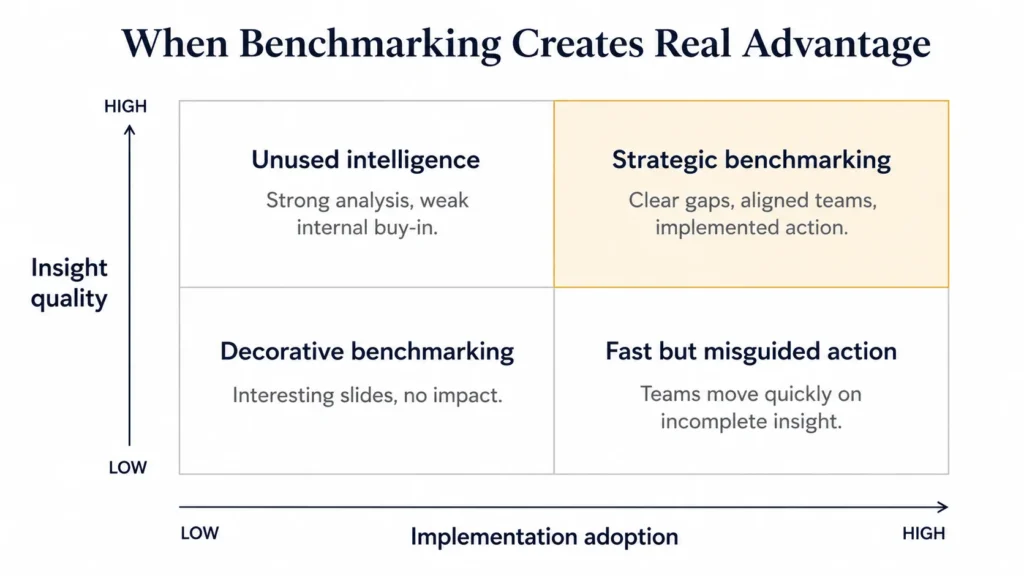
Figure 1. Midas Strategic Benchmarking Matrix.
When benchmarking becomes a real advantage by combining insight quality and internal adoption.
Strategic benchmarking creates value when high-quality insight is paired with strong implementation adoption.
What Strategic Benchmarking Really Means
Strategic benchmarking is not the search for an average. It is the search for the performance drivers that explain why one company outperforms another.
A traditional benchmark may show that a competitor has lower costs, faster execution, stronger coverage, or a more productive salesforce. A strategic benchmark explains why. Is the difference driven by scale, labor model, channel structure, supplier terms, asset configuration, technology, incentives, management routines, or simply better execution?
This distinction matters because not every gap is worth closing. Some gaps are structural. Some require investment. Some can be closed through operational discipline. Others should not be closed at all because doing so would erode differentiation. The value of benchmarking lies in helping executives make those choices with clarity.
Traditional Benchmarking vs. Strategic Benchmarking
| Traditional benchmarking | Strategic benchmarking |
| Compares averages | Reconstructs actual competitor economics |
| Shows what the gap is | Explains why the gap exists |
| Produces rankings | Produces decisions |
| Risks imitation | Clarifies where to match, leapfrog, or remain different |
| Ends with a report | Ends with an implementation roadmap |
Table 1. Comparison between traditional and Midas’ strategic benchmarking
This distinction is critical. Benchmarking should not make your company more similar to competitors. It should help you decide where similarity is necessary, where superiority is possible, and where differentiation must be protected.
The Challenges of Benchmarking in Latin America
In Latin America, published averages often hide more than they reveal. Two companies may operate in the same industry but face radically different realities depending on import exposure, tax burden, labor regulation, union dynamics, distributor margins, informality, public procurement rules, logistics costs, and access to local suppliers. For this reason, benchmarking in the region requires more than data collection. It requires normalization: separating structural differences from true performance gaps.
We consistently encounter three hurdles:
- Limited transparency. In many markets, public data is scarce or unreliable. Understanding competitor costs or processes often requires fieldwork, supplier interviews, and local knowledge. Without this, it is easy to make decisions based on guesswork.
- Regional complexity. What works in Brazil may not work in Mexico. Differences in labor costs, regulation, union dynamics, channel structure, and local execution create diverse operating realities. Benchmarking across Latin America requires sensitivity to these nuances.
- Low internal adoption. Too often, global consultancies deliver generic recommendations that do not resonate locally. Without buy-in from local teams, implementation stalls. The key is involving them from day one and co-creating solutions that reflect operational realities.
The practical implication is clear: Latin American benchmarking must normalize the comparison before drawing conclusions. A competitor may be cheaper because it has a different tax exposure, a different route-to-market model, a different labor setup, a different plant configuration, or simply better execution. Only some of those gaps are directly actionable. Strategic benchmarking helps executives distinguish between structural constraints, investment choices, and operational improvement opportunities.
The same regional differences that complicate benchmarking also shape market entry in Latin America, where companies must adapt assumptions to local regulation, channels, costs, and competitive behavior. When benchmarking reveals gaps in channel access, local execution, or partner capabilities, the next step may also involve go-to-market strategy or distributor search.
As one CEO of a B2B company in Latin America told us during an executive debrief in 2023:
“Midas delivered practical, effective recommendations that made a real difference, bringing us closer to our competitor.”
A Step-by-Step Approach That Works
At Midas, we use a five-step approach designed to convert benchmarking into decisions:
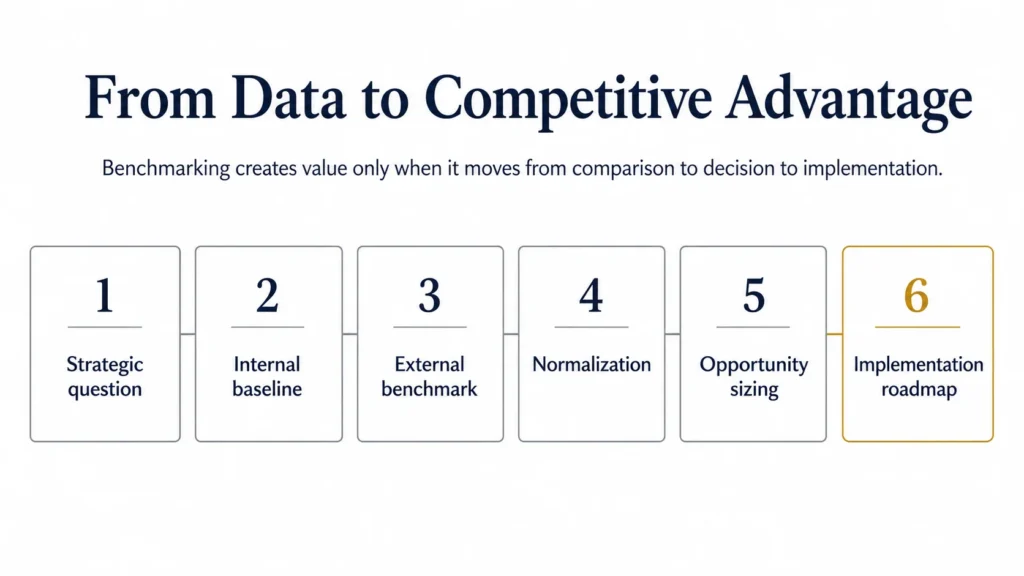
Figure 2. Midas Benchmarking Advantage Framework.
From comparative data to strategic decisions.
- Define the strategic question. We begin by clarifying the decision the benchmark must support: pricing, cost reduction, salesforce redesign, channel strategy, footprint decisions, productivity improvement, or organizational redesign.
- Build the internal baseline. We map the client’s current processes, costs, roles, KPIs, channel structure, and operating assumptions. This prevents the team from comparing external data against an incomplete view of its own reality.
- Reconstruct the external benchmark. We combine interviews, secondary research, fieldwork, supplier and channel intelligence, and local market expertise to understand how selected competitors actually operate.
- Normalize the comparison. We separate structural differences from addressable performance gaps. This is where benchmarking becomes strategic: not every gap should be closed, and not every difference is a weakness.
- Translate insights into action. We work with local and regional teams to convert findings into initiatives, targets, owners, and implementation priorities.
The right follow-up depends on what the benchmark reveals. If the gap is commercial, the next step may be a stronger go-to-market strategy. If the gap is related to channel coverage or local access, it may require distributor search or partner evaluation. If the gap affects broader strategic priorities, a strategy consulting engagement can help leadership decide where to focus, invest, and differentiate.
As one vice president at an FMCG company in Latin America commented during an interim findings review in 2024:
“Just to reiterate, this is fantastic. I’m really excited to see such valuable insights and information! Thank you again!”
Strengths and Weaknesses of Benchmarking
Like any strategic tool, benchmarking has strengths and weaknesses. Leaders who understand both can maximize its value and avoid common interpretation traps.
Strengths:
- Reveals blind spots. Competitors may excel in areas you had not considered important until you see the gap.
- Provides a reality check. Internal perceptions often differ from market realities. Benchmarking grounds decisions in facts.
- Accelerates improvement. With clear comparisons and actions, organizations move faster toward better practices.
Weaknesses:
- Risk of imitation. Simply copying competitors can erode differentiation. The goal is not mimicry but adaptation. If a benchmark leads to major pricing, channel, cost, or commercial moves, business wargames can help reveal competitor reactions before those moves are implemented in the market.
- Data challenges. In opaque markets, getting accurate information is complex. That’s why local expertise is critical.
- Implementation hurdles. Insights mean little if they aren’t embraced by local teams and translated into action.
Our approach addresses these weaknesses directly by uncovering “the why,” grounding findings in local realities, and co-creating solutions that stick.
The biggest risk in benchmarking is not bad data; it is bad interpretation. A benchmark can create false confidence if it compares companies without adjusting for scale, market mix, channel structure, labor model, product complexity, regulatory exposure, or make-or-buy decisions. The output should therefore be a decision map, not a ranking. Executives need to know which gaps are addressable, which require investment, and which are not worth pursuing because they would undermine the company’s differentiation.
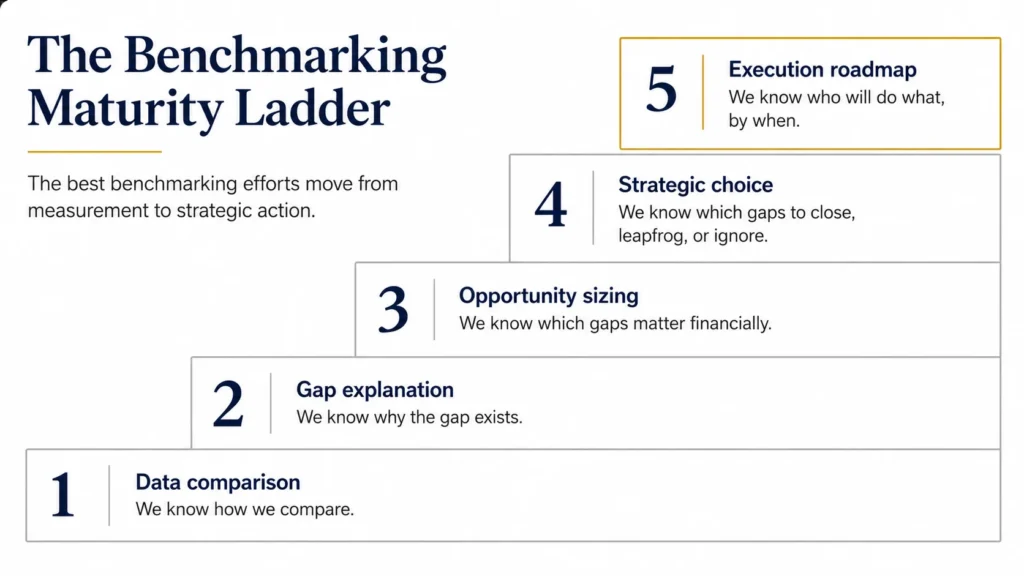
Figure 3. Midas Benchmarking-to-Action Process.
From benchmarks to gaps, priorities, and action.
The strongest benchmarking efforts move beyond comparison and create a clear path from insight to strategic action.
Practical Cases: Benchmarking in Action
Case 1: Closing the pricing gap in government tenders
Situation. A multinational syringe manufacturer was repeatedly being undercut in government tenders and needed to understand whether the competitor’s advantage came from price aggression, lower costs, supplier choices, or operating model differences.
Complication. Internal assumptions were not enough. The competitor’s cost position depended on plant configuration, supplier dynamics, and regional operating choices that were not visible through public information.
Benchmarking approach. Midas benchmarked competitor plants in Brazil and Paraguay, reconstructed key cost drivers, mapped supplier dynamics, and compared the client’s operating assumptions against the competitor’s likely cost structure.
Executive impact. The client gained clear visibility into the sources of the competitor’s cost advantage and developed a roadmap to close the gap in selected bids.
Why it mattered. The project shifted the conversation from “they are cheaper” to “we understand why they are cheaper and which levers we can act on.”
When a benchmarking project reveals cost, pricing, or tender vulnerabilities, companies may also need to pressure-test the likely competitor response. In those situations, business wargames can help leadership teams prepare countermoves before implementing changes in the market.
Case 2: Rethinking salesforce incentives in healthcare
Situation. A diabetes metering company wanted to understand whether its sales organization was aligned with market realities across Argentina, Brazil, Mexico, and Peru.
Complication. The company needed more than headcount comparisons. It needed to understand roles, incentives, coverage models, account priorities, and differences in local execution.
Benchmarking approach. Midas mapped competitor sales structures and compensation models across four countries, comparing not only quantitative staffing levels but also the logic behind incentives and field deployment.
Executive impact. The client refined its incentive model and improved regional alignment around the behaviors it needed from the salesforce.
Why it mattered. The benchmark helped the company distinguish between a structural issue and an execution issue, allowing management to adjust the sales model with greater confidence.
When salesforce benchmarking reveals broader commercial gaps, go-to-market strategy in Latin America can help leadership teams redesign channels, coverage, segmentation, sales priorities, and commercial execution.
Case 3: Optimizing R&D investment in food
Situation. A food multinational wanted to benchmark its new R&D center against a Brazilian competitor to understand whether its investment, structure, and priorities were correctly configured.
Complication. Traditional benchmarking would have focused only on budget or headcount. The real question was whether the R&D setup was aligned with innovation priorities, partnerships, and commercial impact.
Benchmarking approach. Midas mapped organizational structure, partnerships, capabilities, decision rights, and innovation priorities to understand how the competitor’s R&D model supported growth.
Executive impact. The client identified resource misalignments and redesigned its setup to improve efficiency and innovation focus.
Why it mattered. The project showed that benchmarking is not just about spending less; it is about allocating resources where they create the greatest strategic impact.
When benchmarking uncovers resource allocation, portfolio, or capability questions, strategy consulting for market success can help leadership teams decide where to focus, where to invest, what to stop, and how to protect differentiation.
As one vice president at an FMCG company in Latin America summed up during a post-project review in 2024:
“We are extremely satisfied with the benchmarking. It helped us reassess our priorities and redirect our resources.”
Why Our Benchmarking?
With more than 25 years of experience and 300 benchmarking projects in Latin America, Midas Consulting has worked across opaque markets, regional complexity, cultural differences, and implementation challenges. Our Net Promoter Score of 82.2% reflects client feedback collected between 2020 and 2025.
Evidence base behind our perspective. Midas Consulting’s benchmarking approach is based on more than 300 projects across Latin America and selected global markets. These projects include competitive cost benchmarking, commercial benchmarking, salesforce benchmarking, distributor and channel benchmarking, process benchmarking, and organizational benchmarking across healthcare, industrial, food, consumer goods, packaging, and B2B sectors.
Our differentiators are clear:
- Reality over averages. We reconstruct competitor processes and costs from the ground up.
- Co-creation with local teams. Insights resonate because they reflect operational realities.
- Actionable outcomes. Recommendations do not stay on slides; they become implemented changes.
As a business unit manager at a pharmaceutical company in Latin America told us in post-project feedback:
“I truly believe no one understands benchmarking in the region like Midas. Whenever I need support, they’re the team I trust.”
Conclusion: From Insight to Action
Benchmarking is not just about knowing where you stand. It is about understanding which performance gaps matter, why they exist, and how to close them without losing what makes your company distinctive.
In complex Latin American markets, that requires more than reports. It requires local intelligence, competitor reconstruction, internal alignment, and a practical roadmap for action.
If your organization needs to understand why competitors outperform you in cost, speed, coverage, pricing, productivity, or execution, benchmarking can provide the fact base for action. The goal is not to imitate the market. The goal is to identify where to close gaps, where to leapfrog, and where to preserve the differences that make your company stronger.
Frequently Asked Questions About Benchmarking in Latin America
What makes benchmarking in Latin America different from benchmarking in more transparent markets?
Benchmarking in Latin America often requires more fieldwork and normalization because public data can be scarce, inconsistent, or misleading. Companies may face very different tax burdens, labor regulations, import costs, channel margins, union dynamics, procurement rules, and levels of informality. A useful benchmark must separate those structural differences from true performance gaps.
Why are industry averages not enough for strategic benchmarking?
Industry averages can be useful as a starting point, but they rarely explain why a specific competitor performs better. Executives need to understand the actual processes, costs, incentives, channel structures, and operating choices behind the numbers. The goal is not to know whether you are above or below average; it is to know what to do next.
How do you avoid copying competitors blindly?
Strategic benchmarking distinguishes between gaps to close, gaps to leapfrog, and gaps to ignore. Some competitor practices may be effective for their business model but wrong for yours. The objective is not imitation. The objective is better strategic choice.
What types of benchmarking are most useful for executive decision-making?
The most useful projects usually combine performance benchmarking and practice benchmarking. Performance benchmarking shows where the gap is. Practice benchmarking explains how the gap is created through people, processes, technology, incentives, and management routines.
When should a company conduct a benchmarking project?
Benchmarking is most valuable when leaders face a specific strategic question: why competitors are cheaper, why a salesforce underperforms, why margins differ across countries, why a plant or function is less productive, or why a rival can serve the market more effectively.
What should a benchmarking project deliver?
A strong benchmarking project should deliver more than a report. It should provide a clear internal baseline, a validated external comparison, an explanation of performance gaps, a distinction between structural and addressable differences, and a practical roadmap for implementation.
About the Author:
By Adrian Alvarez, PhD. Adrian Alvarez is Managing Partner at Midas Consulting, a Wharton alumnus, MBA Professor at Universidad Argentina de la Empresa (UADE), and Competitive Intelligence Fellow. He specializes in competitive strategy, growth strategy, and strategic decision-making under uncertainty across Latin America.
He has led complex strategic benchmarking initiatives across industries throughout Latin America. For more executive frameworks on market signals, competitor behavior, and strategic decision-making, explore our strategic intelligence insights for executives.
View Adrian Alvarez’s professional profile on LinkedIn.
Related Midas Resources
Strategic benchmarking often reveals what needs to change, but different gaps require different follow-up actions. These Midas resources can help executives connect benchmarking findings with the next strategic decision:
- Benchmarking Consulting: When your company needs support comparing competitors, reconstructing performance gaps, and translating benchmarking findings into practical improvement priorities.
- Strategy Workshops: When benchmarking findings need to be converted into leadership alignment, strategic priorities, owners, and implementation roadmaps.
- Go-to-Market Strategy: When benchmarking reveals gaps in segmentation, channel design, sales coverage, pricing, value proposition, or commercial execution.
- Distributor Search: When benchmarking shows that competitor advantage depends on stronger local partners, better channel access, or superior distributor execution.
- Market Entry in Latin America: When benchmarking is part of evaluating where and how to enter a new country, segment, or regional market.
- Business Wargames: When benchmarking findings may lead to moves that competitors can imitate, block, retaliate against, or escalate.
- Strategy Consulting: When benchmarking raises broader questions about growth priorities, resource allocation, capability building, positioning, or execution.
Together, these resources show how benchmarking fits into a broader strategic process: diagnose the gap, understand why it exists, decide what to do, align the organization, and execute.
References
This article draws on Midas Consulting’s benchmarking experience across Latin America, as well as selected external perspectives on benchmarking methodology:
- APQC, “What Is Benchmarking?”
- APQC, “What Are the Four Types of Benchmarking?”
- McKinsey & Company, “How benchmarking can improve cost competitiveness in steel”
- McKinsey & Company, “Unseen value: the impact of benchmarking on indirect operations”
Successful benchmarking is not only about understanding the process. It is about executing the right changes with the right internal alignment. This is where we can help.
We work with you from question definition to implementation, helping your team benchmark the right competitors, normalize the right variables, and translate findings into actions that can improve performance.
With over 300 projects completed, we have developed a practical approach to help companies identify where competitors outperform, which gaps matter, and how to translate benchmarking insights into action.
Some of Our Clients:






Benefits that You Can Expect from Our Benchmarking:
Get actual data, not averages
Turn Insights into Action
Drive Alignment
Know actual processes and costs to improve your competitive position
Translate the insights into specific actions to leapfrog your competitors
When everyone knows where the company stands, you accelerate decision-making and get a higher impact
Ready to Benchmark?
Schedule a call
Receive an actionable benchmarking roadmap
Thrive in your market
We design a custom benchmarking program around your strategic question, target competitors, internal baseline, and implementation priorities.
Preliminary findings to ensure we’re aligned with your needs
Final recommendations that you can implement immediately
Implement recommendations that help your organization improve performance and compete more effectively.
Let’s benchmark the competitors, capabilities, and practices that can help you leapfrog the market.