

Get expert advice on market entry in Mexico
Why Mexico?
Mexico stands as one of the most attractive markets in Latin America, offering a dynamic economy, strategic trade agreements, and a highly skilled workforce. As the second-largest economy in Latin America, with a GDP of over $1.8 Trillion and a population of 134 million, Mexico presents vast opportunities for businesses looking to expand in the region
A significant advantage of entering the Mexican market is its proximity to the United States, allowing for seamless supply chain integration. Additionally, Mexico has more free trade agreements (FTAs) than any other country, including the United States-Mexico-Canada Agreement (USMCA), which provides preferential access to North America’s massive consumer market.
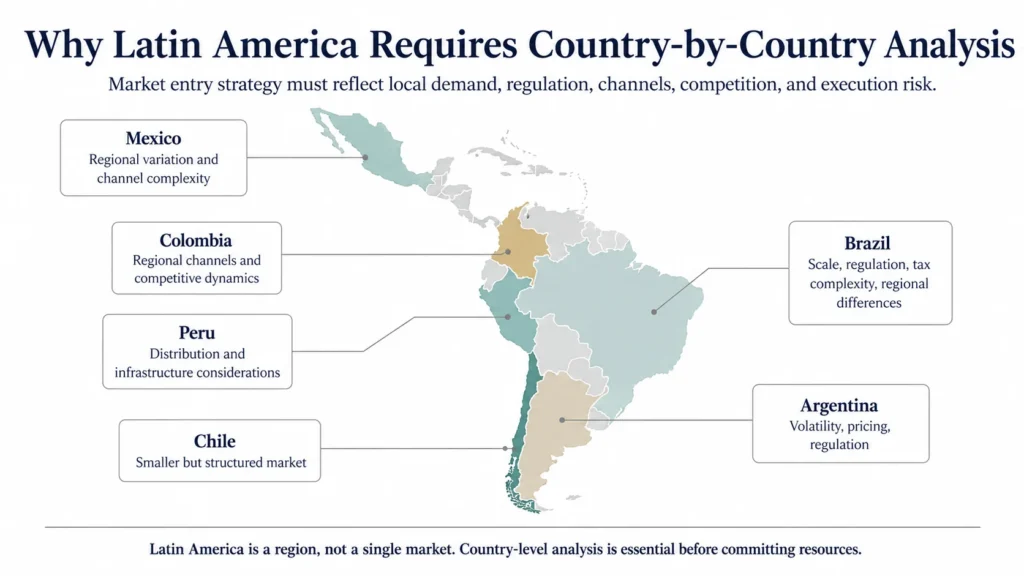
Figure 1. Midas Country-by-Country LatAm Market Entry Analysis: Latin America is a region, not a single market. Market entry decisions should be evaluated country by country, considering local demand, regulation, channels, competition, and execution risk.

Key Data About Mexico:
| Metric | Data |
|---|---|
| GDP (2025) | $1,819 Billion |
| GDP growth (2025) | 0.6% |
| Imports (2023) | $606 Billion |
| Exports (2023) | $600 Billion |
| Consumer inflation rate (2025) | 3.7% |
| Unemployment rate (2025) | 2.6% |
| Population (2025) | 134 million |
| Capital | Mexico city |
| Language | Spanish |
Source: Banco Itaú BBA (all data except for import and export figures, which are from the World Bank)
What Are the Mexico’s Market Entry Challenges?
Despite its advantages, Mexico poses several challenges for new entrants. Successfully navigating these hurdles requires in-depth market knowledge and a strategic approach. Key challenges include:
- Complex Regulatory Framework: Companies must comply with federal, state, and municipal regulations, which can vary significantly across industries
- Intellectual Property Protection: While progress has been made, companies must be vigilant in safeguarding their trademarks and patents
- Cultural and Business Norms: Understanding business etiquette and consumer behavior is crucial for establishing successful relationships

How Midas Can Help Your Market Entry in Mexico
At Midas Consulting, we specialize in helping companies navigate the complexities of entering the Mexican market. Our expertise includes:
- Market entry consulting and competitor benchmarking. Through our local presence we provide in-depth insights into industry trends, key players, and potential opportunities
- Distributor search. Finding the right local partners is crucial. Our network connects you with trusted distributors, suppliers, and industry stakeholders
- Go-to-market consulting. We develop tailored strategies to position your company for success, considering pricing, branding, and sales channels
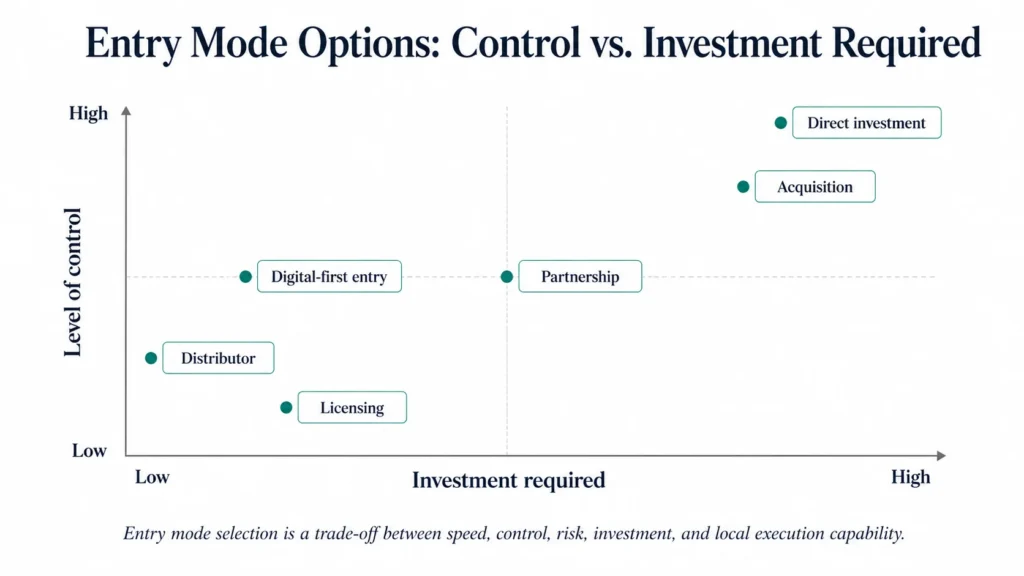
Figure 2. Midas Entry Mode Trade-off Map: Mexico offers multiple paths to market, but each involves different trade-offs in speed, control, investment, partner dependence, and local execution capability.
Access our detailed guide to create a solid market entry strategy, step by step.

How This Market Entry Analysis Was Prepared
This analysis is based on Midas Consulting’s experience supporting market entry, market analysis, distributor search, go-to-market, benchmarking, competitive intelligence, and strategy projects across Latin America.
Our approach typically combines:
- Secondary research from recognized economic, trade, industry, regulatory, and company sources.
- Primary interviews with market participants, including customers, distributors, competitors, experts, associations, regulators, suppliers, or channel partners when relevant.
- Competitive analysis to understand positioning, capabilities, pricing, channels, likely reactions, and barriers to entry.
- Country-by-country interpretation, because Latin America should not be treated as a single homogeneous market.
- Executive decision support, translating findings into practical recommendations on whether to enter, where to focus, which partners to evaluate, what risks to monitor, and how to sequence the market entry plan.
The goal is not to provide generic country information. The goal is to help executive teams make better market entry decisions with stronger evidence, clearer assumptions, and a more realistic view of local execution challenges.
Some of Our Market Entry in Mexico Customers:






Case Study: Breaking into Mexico’s Mining Industry
How a Global Mining Ventilator Manufacturer Secured Market Success
Background and challenges
A multinational company had acquired a mining ventilator manufacturer and was evaluating the Mexican market’s potential. They needed insights on market attractiveness, growth forecasts, and the best strategy to establish a strong position


Approach
We conducted in-depth research and interviews with mining companies, government authorities, competitors, and industry representatives to assess:
- Market size and growth potential
- Key purchase decision drivers
- Strengths and weaknesses of existing competitors
Results
The analysis showed that success in Mexico depended not only on market potential, but also on technical support after the sale and the way procurement decisions differed across customer segments. This helped the client adapt its entry strategy to the buying process, not just the size of the opportunity.

About the author
By Adrian Alvarez, PhD. Adrian Alvarez is Managing Partner at Midas Consulting, a Wharton alumnus, MBA professor at Universidad Argentina de la Empresa (UADE), and Competitive Intelligence Fellow.
He specializes in competitive strategy, market entry, go-to-market strategy, distributor search, benchmarking, business wargaming, and strategic decision-making under uncertainty in Latin America. He has led and supervised hundreds of strategy, market entry, market analysis, competitive intelligence, and growth projects across Argentina, Brazil, Chile, Colombia, Mexico, Peru, and other Latin American markets.
His work combines executive-level strategy, primary research, competitive analysis, local market interviews, and practical implementation support. He has published strategic insights and research in the United States, Spain, and Germany, and has trained executives and professionals in competitive intelligence practices and ethics in Latin America.