

Expanding into a new market is one of the boldest growth decisions a company can make. Done right, it can open new revenue streams, diversify the customer base, and strengthen a company’s regional or global footprint. Done wrong, it can drain resources, delay growth, and weaken strategic focus.
That is why market entry consulting matters. At Midas Consulting, we define market entry analysis as the structured process of deciding where, how, and under what conditions a company should enter a new country, region, or customer segment. It combines market attractiveness, competitive intensity, customer needs, regulatory constraints, channel access, investment requirements, and execution feasibility.
For C-level executives, the key question is not simply: “Is this market attractive?” It is: “Can we win there, how should we enter, what will it take to execute, and which risks could make the opportunity less attractive than it appears?”
This distinction is especially important in Latin America. The region offers significant growth potential, but it should not be approached as a single homogeneous market. Country conditions, customer behavior, channel economics, regulation, competitor dynamics, and execution requirements can vary sharply across markets, and even across regions within the same country. The World Bank and the OECD Latin American Economic Outlook both provide useful context on the region’s economic conditions, structural differences, and development challenges.
Market entry strategy translates that complexity into choices. At Midas, we define market entry strategy as the set of decisions that determines the target market, entry mode, value proposition, pricing approach, channel model, partner strategy, investment priorities, and implementation roadmap. This work often connects directly with go-to-market strategy, because deciding to enter a market is only the first step; the next challenge is commercializing the offer locally.
We also use strategic intelligence to support market entry decisions. In this context, strategic intelligence means the disciplined use of market, competitor, customer, channel, regulatory, and contextual information to improve decisions under uncertainty. This matters because international expansion rarely succeeds by copying and pasting a corporate blueprint; it requires local market interpretation and an execution model adapted to country-level realities.
Entering a foreign market also requires understanding how outsider status, local credibility, partnerships, and adaptation requirements affect execution. Harvard Business Review has highlighted that companies expanding abroad need to think carefully about both the challenges and potential advantages of being an outsider in a new market.
At Midas Consulting, we have supported companies across sectors such as consumer goods, pharmaceuticals and healthcare, packaging, industrial products, technology, and B2B services in evaluating and entering Latin American markets including Mexico, Brazil, Argentina, Chile, Colombia, and Peru. Depending on the challenge, market entry work may also connect with distributor search consulting, go-to-market consulting, benchmarking consulting, M&A consulting, or wargame consulting.
Across these engagements, we have learned that successful market entry depends on three decisions: choosing the right market, selecting the right entry model, and building early traction with customers, partners, and internal teams.
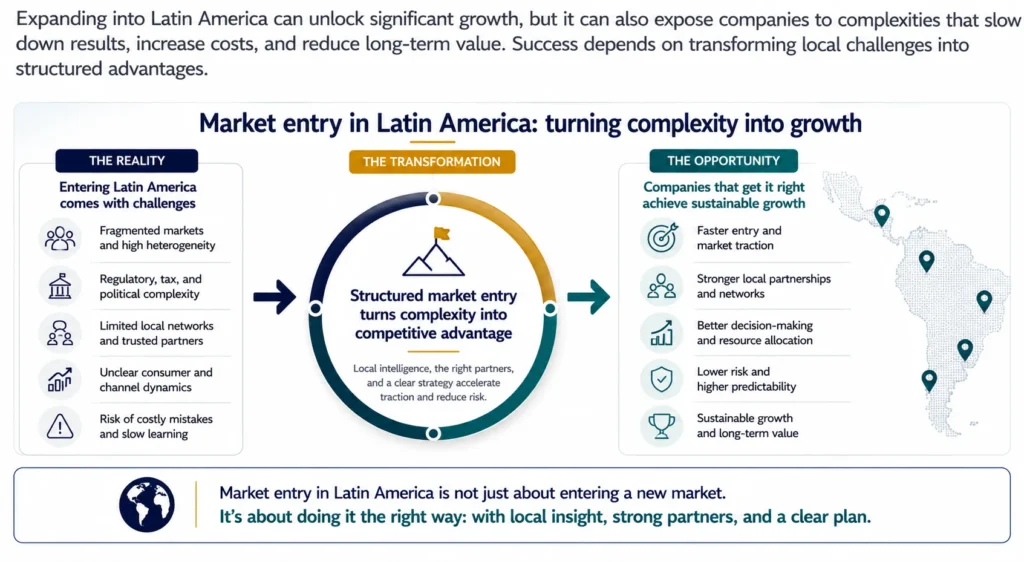
Figure 1. Successful market entry in Latin America requires more than ambition. Companies need local intelligence, trusted partners, and a structured plan to convert complexity into growth.
Why a Structured Market Entry Process Matters
Market entry is often approached with optimism and intuition: “We know our product works here, so it should work there too.” In Latin America, that assumption can be expensive. Demand, regulation, channel economics, tax exposure, customer behavior, competitor conduct, and execution feasibility can vary significantly by country, and sometimes by region within the same country.
A structured process helps executives make expansion decisions with evidence rather than optimism alone. It is especially valuable when the cost of choosing the wrong country, partner, entry mode, or pricing model is materially higher than the cost of upfront analysis.
- Clarity on where to play. Not every country, region, or segment is equally attractive. A structured process helps identify where demand is strong, regulations are manageable, competitors leave room for differentiation, and execution is feasible.
- Better allocation of resources. Expansion requires capital, leadership attention, and organizational commitment. Market entry analysis helps prioritize the opportunities with the strongest risk-adjusted potential instead of spreading resources across untested markets.
- Faster early traction. When companies enter with local insight, they can identify early wins, such as a priority segment, channel partner, regional cluster, or product adaptation, that build credibility and momentum from the start.
A structured market entry process typically produces a country or regional prioritization, an opportunity map, a competitor assessment, a channel and partner view, an entry-mode recommendation, and a practical implementation roadmap. Depending on the challenge, this roadmap may connect with additional workstreams such as go-to-market strategy, distributor search, or benchmarking.
Our methodology combines strategic research, executive interviews, local market validation, competitor analysis, channel assessment, and real-world competitive insights developed through complex business engagements. It is part of Midas Consulting’s broader strategic intelligence work, which helps executives make better decisions under uncertainty.
As one of our clients told us after reviewing their entry strategy:
“Just to reiterate, this is fantastic. I’m really psyched to see so much information, insights, and recommendations! This was a wonderful surprise to start the holidays.”
Marketing Vice President, Consumer Goods Company, Market Entry Project, 2024
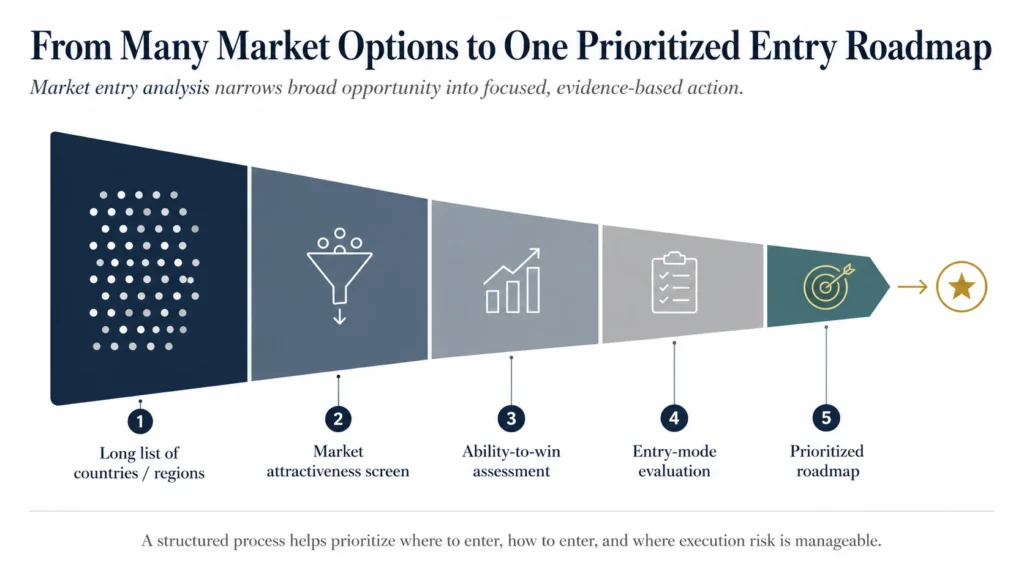
Figure 2. Midas’ Market Entry Roadmap.
A structured process to turn multiple market options into a prioritized, evidence-based entry roadmap.
What Are the Challenges of Entering Latin America?
Latin America can offer attractive growth opportunities, but it should not be treated as a single homogeneous market. Companies entering the region must navigate uneven growth, volatile investment conditions, fragmented regulation, infrastructure gaps, channel complexity, and country-specific business practices. These factors make market selection and execution design especially important.
Neutral institutional sources such as the World Bank and the OECD Latin American Economic Outlook provide useful context on the macroeconomic and structural conditions shaping the region. For executives, three practical challenges stand out:
- Regional diversity within and across countries. What works in São Paulo may not work in Recife; what works in Mexico City may not work in Monterrey. A one-size-fits-all strategy rarely survives first contact with the market.
- Information gaps. Reliable data is not always easy to find. Market size, sell-out by region, distributor margins, informal competition, customer decision criteria, competitor commercial terms, and real import costs often require direct research, expert interviews, and triangulation across multiple sources. For that reason, market entry decisions should often be supported by market analysis and competitor analysis. Market analysis helps clarify demand, customer behavior, channels, and opportunity attractiveness, while competitor analysis helps executives understand incumbent strengths, likely reactions, positioning, pricing, and strategic vulnerabilities.
- Regulatory and structural hurdles. Import restrictions, certification requirements, sanitary registrations, tax treatment, customs delays, payment terms, distributor exclusivity norms, and local business practices can delay or derail market entry. Without local insight, companies risk underestimating timelines, working capital needs, and cost-to-serve.
One of our clients summarized it well:
“Midas worked side by side with our local team, speaking their language and understanding their reality. This connection made all the difference. The team felt ownership of the recommendations and drove the project forward.”
Regional Director, B2B company, Market Entry Project, 2023
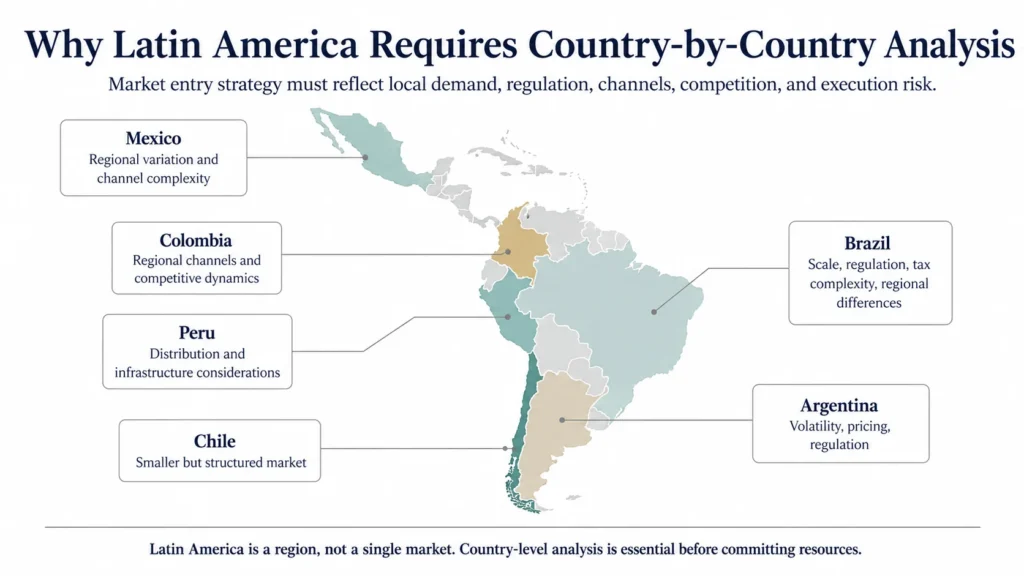
Figure 3. Midas’ Country-by-Country LatAm Analysis.
Latin America is a region, not a single market; country-level analysis helps assess demand, regulation, channels, competition, and execution risk before committing resources.
What Does a Step-by-Step Market Entry Process Look Like?
Based on Midas Consulting’s experience in more than 400 market entry projects, go-to-market, distributor search, benchmarking, and competitive intelligence projects across Latin America, our process balances strategic rigor with practical implementation:
- Define the strategic objective. Are you seeking revenue growth, customer diversification, regional expansion, competitive defense, supply-chain resilience, or strategic positioning? Clarity on the “why” shapes the “how.”
- Scan and prioritize markets. Start broad, then narrow down. Evaluate market size, growth, profitability, import dependency, customer concentration, regulatory barriers, competitive intensity, channel accessibility, distributor availability, and ease of execution to identify where the opportunity is both attractive and realistically capturable.
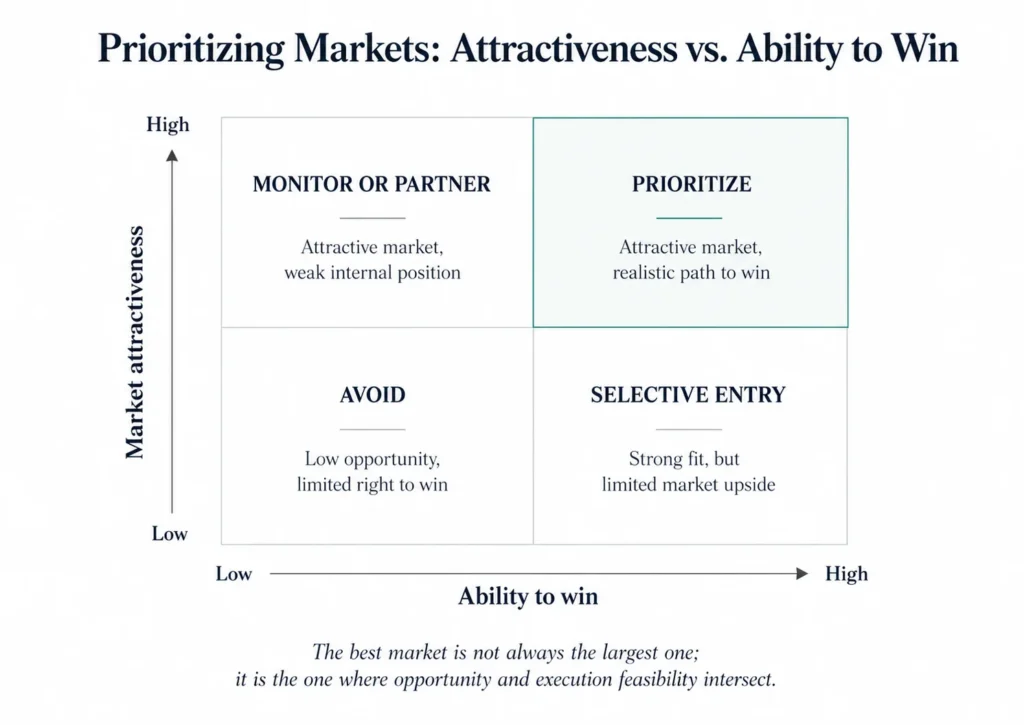
Figure 4. Midas Market Prioritization Matrix.
A matrix to prioritize markets based on opportunity attractiveness and the company’s real ability to win.
This step matters because market entry decisions should not be based only on top-line attractiveness. They require disciplined strategic choice: which markets to prioritize, which assumptions to test, and which path gives the company the best chance of building a sustainable position. MIT Sloan Management Review’s work on closing the gap between strategy and execution reinforces the importance of connecting strategic choices with action, learning, and revision.
When the main challenge is comparing several possible countries, segments, or opportunities, market entry analysis can provide a more focused decision framework for ranking markets, assessing ability to win, and deciding which opportunities should be prioritized, monitored, or avoided.
- Conduct deep-dive analysis. Go beyond the numbers. Combine secondary research with interviews with customers, distributors, channel experts, regulators, former industry executives, and market specialists. Where competitor insight is needed, use ethical and compliant competitive intelligence methods to understand strategic behavior without crossing confidentiality boundaries. This deep-dive phase is reinforced by Midas Consulting’s applied research on strategic intelligence and regional execution, available in our Applied Strategic Intelligence Hub.
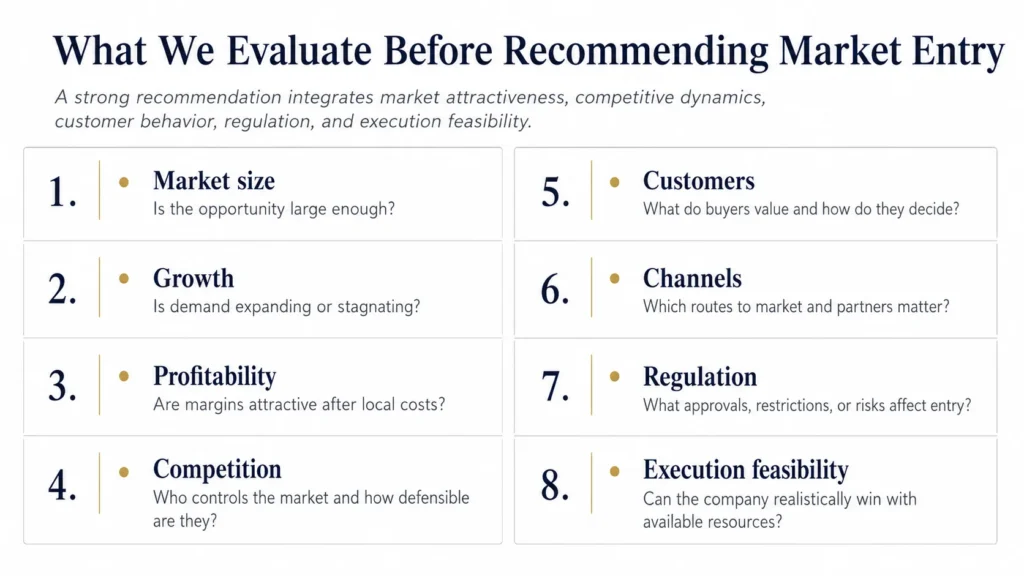
Figure 5. Midas Market Entry Evaluation Criteria.
Key criteria to assess whether a market entry opportunity is attractive, viable, and executable.
- Build scenarios and choose an entry path. Options may include direct investment, partnerships, distributors, M&A, licensing, or digital-first approaches. Each path comes with trade-offs. Scenarios should test demand upside, competitor reaction, regulatory delay, channel access, pricing pressure, investment requirements, and implementation risk. For high-stakes decisions, companies can also use wargame consulting to pressure-test the strategy before committing resources. Before pressure-testing the strategy, companies may also need a stronger competitor analysis to understand which incumbents matter most, what they are likely trying to protect, how they compete, and how they may respond to a new entrant.
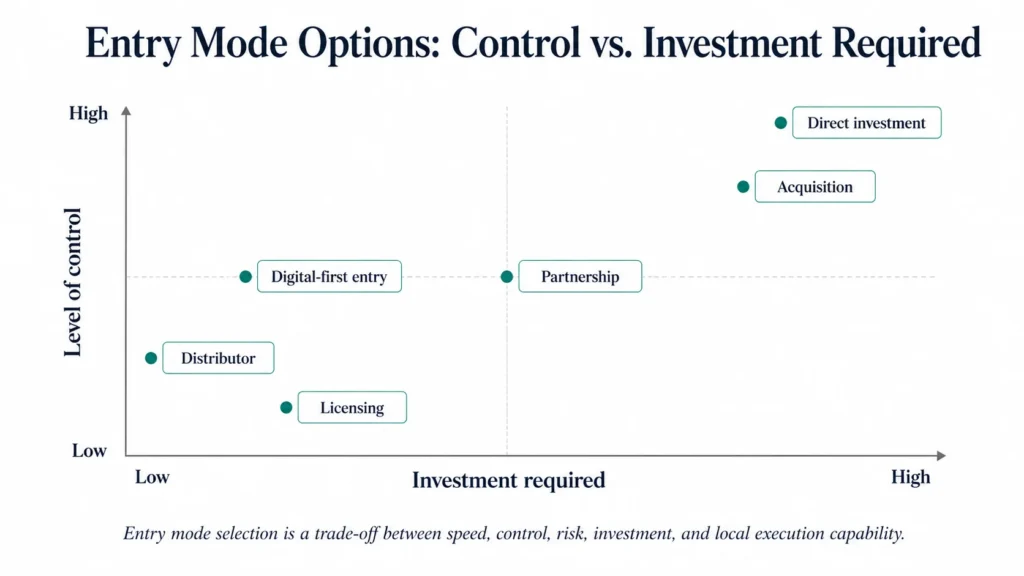
Figure 6. Midas Entry Mode Trade-off Map.
Comparison of entry modes based on required investment, level of control, and local execution capability.
- Craft a tailored market entry plan. Define target segments, value proposition, product or service adaptations, pricing corridor, channel model, partner requirements, commercial messaging, investment priorities, and the first-year implementation roadmap. This is where market entry connects directly with go-to-market strategy.
- Execute, measure, and adapt. Start with early wins, track leading indicators, test assumptions in-market, and refine the strategy as evidence accumulates. Market entry is not a one-off decision; it is an iterative process of learning, adjustment, and disciplined execution.
Execution also depends on leadership discipline. Entering a new market often requires executives to make decisions with incomplete information, competing assumptions, and organizational pressure to move quickly. Wharton Executive Education’s article on strategic decision-making emphasizes the importance of recognizing decision biases and improving the quality of long-term executive choices.
As one client told us during a post-project review:
“It was a very positive experience. Excellent research! Very thorough. It served us to successfully enter the market with confidence.”
Regional VP, Consumer Goods Company, Market Entry Project, 2025
What Are the Strengths and Weaknesses of This Market Entry Approach?
Like any strategic method, a structured market entry process has trade-offs. It is most valuable when the cost of a wrong market entry decision is materially higher than the cost of upfront research.
Strengths
- Data-driven clarity that helps leadership teams prioritize countries, regions, segments, and channels based on evidence rather than assumptions.
- Local insight that uncovers customer behaviors, distributor economics, regulatory constraints, and regional differences that are often invisible in desk research.
- Practical recommendations that translate analysis into entry-mode choices, resource allocation, implementation priorities, and early traction initiatives.
Weaknesses
- Time investment. Thorough research can require several weeks or months, especially when the market requires primary interviews or country-by-country validation.
- Upfront investment. A rigorous entry assessment requires budget before revenue is visible, but it can reduce the risk of misallocated capital and avoidable execution mistakes.
- Organizational complexity. Market entry decisions often require alignment across strategy, sales, marketing, finance, legal, supply chain, and local teams.
As another client put it in a post-project assessment:
“Your report and analysis were very thorough. Your collaborated well with our team, including our tech department. One of the reasons we chose you was your depth of experience, which was evident throughout the project.”
Global Product Manager, B2B company, Market Entry Project, 2021
A Practical Market Entry Case
One practical case involved a company evaluating expansion opportunities in Mexico. The challenge was not simply whether the market was attractive, but where to focus first, which product categories had the strongest potential, and how to avoid spreading commercial resources too thin.
We applied a funneling framework:
- First, we used secondary research to screen multiple product categories and identify where demand, profitability, and market accessibility appeared most attractive.
- Second, we conducted in-depth interviews in the most promising categories to validate customer needs, purchasing criteria, channel dynamics, competitive threats, and product adaptation requirements.
- Third, we translated the findings into a prioritized roadmap, identifying which categories to enter first, which product improvements mattered locally, and where the sales team should focus early commercial efforts.
The result was a focused Mexico entry roadmap that helped the company avoid spreading resources across too many categories, concentrate sales efforts on the most attractive opportunities, and build internal confidence around a fact-based expansion plan.
Another case went the other way. A company exploring Brazil’s bulletproof glass market asked whether the opportunity justified the required investment. Our research showed that the market’s competitive intensity, margin pressure, and entry barriers made the risk-return profile unattractive. The recommendation was not to enter. Based on the client’s planned investment assumptions, this helped avoid committing significant resources to a market where the probability of attractive returns was limited.
Why This Market Entry Approach?
With more than 25 years of experience, Midas Consulting has applied this approach across Latin American market entry consulting, go-to-market, distributor search, benchmarking, and competitive intelligence engagements, covering sectors such as pharmaceuticals and healthcare, fast-moving consumer goods, packaging, industrial products, technology, and B2B services. We do not rely on generic templates. We co-create strategies with leadership teams through executive alignment, local validation, interim readouts, and joint prioritization of entry options, ensuring that recommendations are both analytically sound and organizationally actionable.
A customer mentioned in a post-project review:
“We are extremely satisfied with the market entry analysis. It helped us successfully enter the market. Kudos!”
Market Segment Leader, B2B company, Market Entry Project, 2021
Argentina: When Trade Opening Reshapes Competitive Dynamics
Argentina shows why a market entry strategy cannot be developed in isolation from the potential responses of existing players. In the Midas Import Competition Monitor 2026, we analyzed 151 business decisions made in response to the country’s new import competition environment, ranging from investment and production reconfiguration to sourcing changes, regionalization, capacity reductions, and market exit.
Conclusion: From Uncertainty to Confidence
Market entry is not about being bold. It’s about being prepared. Success depends on knowing where to play, how to win, and how to adapt fast.
A structured process transforms uncertainty into clarity, data into strategy, and ambition into sustainable growth.
About the Author:
By Adrian Alvarez, PhD. Adrian Alvarez is Managing Partner at Midas Consulting, a Wharton Alumnus, MBA Professor at Universidad Argentina de la Empresa (UADE), and Competitive Intelligence Fellow. He specializes in competitive strategy, growth strategy, and strategic decision-making under uncertainty across Latin America.
He has designed hundreds of market entry strategies supporting companies expanding across Latin America. You can also explore more of his thinking in Midas Consulting’s strategic intelligence insights.
View professional profile on LinkedIn
Selected external references
This guide is informed by Midas Consulting’s market entry work across Latin America and by institutional sources on regional context, economic conditions, and articles about market entry and strategy.
- World Bank
- OECD: Latin American Economic Outlook
- Harvard Business Review: When Expanding Into a Foreign Market, Your Outsider Status Is a Competitive Advantage
- MIT Sloan Management Review: Closing the Gap Between Strategy and Execution
- Wharton Executive Education: Making Strategic Decisions: Do You Have What It Takes?
Midas Thought Leadership on Market Entry and Regional Strategy
Midas Consulting’s market entry methodology is supported by a broader body of applied research and executive publications on strategic intelligence, competitive analysis, and multi-country growth. Our Applied Strategic Intelligence Hub includes a section on Regional Strategy and Multi-Country Operations, which is directly relevant to market entry because expansion into Latin America requires contextual intelligence, local market interpretation, and execution models adapted to country-level realities.
For executives who want to explore the analytical foundations behind market entry decisions, these Midas articles provide additional context:
- Market Entry Analysis: A practical framework for comparing markets, assessing ability to win, and deciding which countries, segments, or opportunities to prioritize.
- Market Analysis: When executives need to understand market size, customer needs, demand patterns, channels, barriers, and opportunity attractiveness before committing resources.
- Competitor Analysis: When market entry decisions require a deeper view of incumbent competitors, local players, positioning, pricing, capabilities, and likely reactions.
- Benchmarking: When leadership teams need to compare entry models, channel practices, cost structures, service levels, or competitor capabilities before deciding how to enter.
If your company is considering expansion into Latin America, do not let assumptions guide the decision. A structured market entry process can help you identify where to play, how to enter, which risks to manage, and how to build early traction.
Want to enter your next market with clarity and confidence?
You understand the market entry process. Now the challenge is disciplined execution: aligning the organization, validating assumptions, choosing the right partners, and adapting quickly as evidence emerges.
We help you enter new markets with clarity and confidence
After conducting hundreds of market entry and growth strategy projects, we have developed a structured approach to help companies make better expansion decisions, reduce avoidable risks, and improve the odds of a successful launch.
If you are planning an expansion, explore our market entry consulting services or contact us to discuss your specific challenge.
Companies We Support in Market Entry:






Midas Consulting supports companies across industries where market entry decisions require a strong understanding of customers, competitors, channels, regulation, and execution feasibility.
The Benefits of a Data-Driven Market Entry
Gain clarity on where to play
Understand how to win locally
Build stronger execution alignment
Prioritize countries, regions, customer segments, and product categories based on market size, growth, profitability, competitive intensity, and feasibility.
Identify customer needs, purchase criteria, channel dynamics, regulatory requirements, and competitor behavior before committing resources.
Translate research into a practical roadmap that aligns leadership, sales, marketing, finance, and local teams around the same entry priorities.
Summing up, reduce avoidable risk. Surface hidden barriers early, including distributor conflicts, pricing pressure, regulatory delays, logistics constraints, and underestimated cost-to-serve.
Ready to Move Forward With Our Market Entry Consulting?
Schedule a quick call
We’ll discuss your goals and create a custom market entry proposal for you
Receive your market entry strategy
We’ll work together to craft a winning market entry plan
Thrive in your new markets
Implement the roadmap, track early market signals, and refine the strategy as evidence accumulates.
Let’s work together to ensure your success
Schedule a call today to begin your journey toward confident, sustainable growth!