Get strategic insights with business wargame consulting!
Your strategy does not operate in a vacuum. Competitors react. Customers reconsider. Distributors protect their economics. New entrants change the rules. Regulators intervene. And sometimes the response of another market player matters more than the move you originally planned.
Our Business Wargame Consulting helps you test those reactions before you commit major resources. We design and facilitate structured competitive simulations that let you challenge strategic assumptions, anticipate plausible competitor moves, identify blind spots, prepare countermoves, and align your organization around what to do next.
The objective is not to predict one exact future. It is to improve the quality of your decision by asking a harder question: What happens to your strategy when the market stops behaving passively?
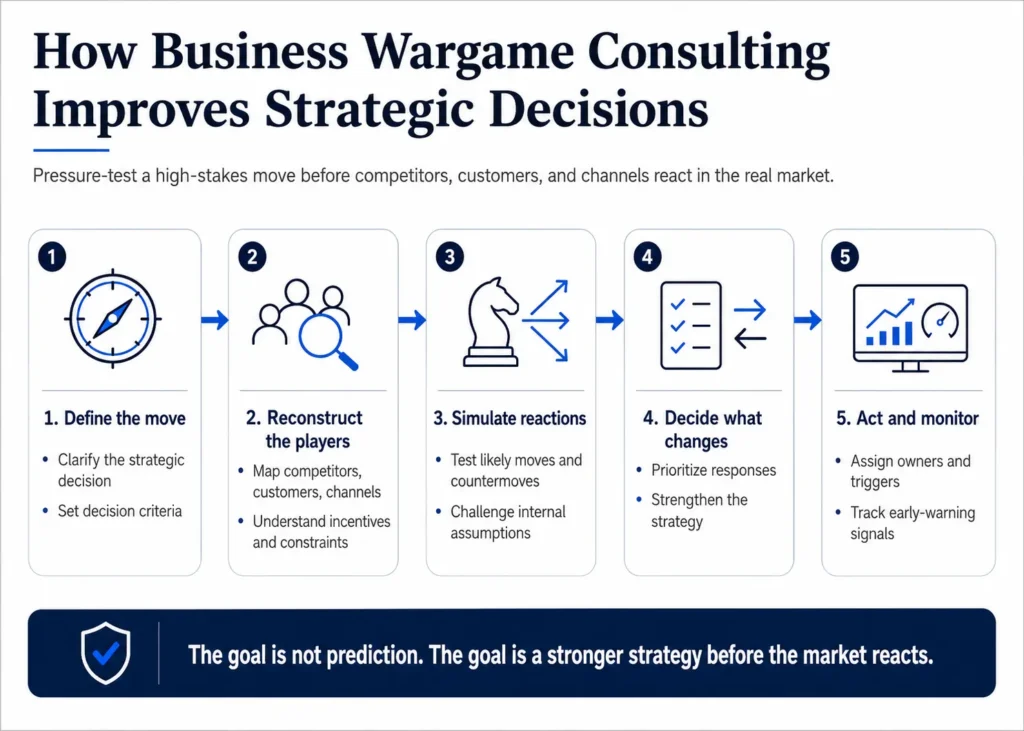
Figure 1: How Business Wargame Consulting improves strategic decisions in 5 steps
When a Business Wargame Can Change the Decision
You do not need a wargame for every strategic choice. It creates the most value when the decision is important, the reactions of other players are uncertain, and getting those reactions wrong could materially affect the outcome.
A business wargame may be the right tool when you are preparing to:
- Enter a new market where incumbent competitors may respond aggressively.
- Launch or reposition a product and need to anticipate counteroffers, pricing moves, messaging, or channel retaliation.
- Change prices, commercial terms, distribution, or customer coverage in a way that could trigger competitor action.
- Defend or regain market share in a market where the competitive response is difficult to predict.
- Evaluate a strategic move before committing significant capital, management attention, or organizational resources.
- Prepare for an acquisition, partnership, or market move that could change the competitive balance.
- Challenge an internal plan that assumes competitors, customers, distributors, or regulators will behave as expected.
- Build alignment across functions before implementing a high-stakes strategy.
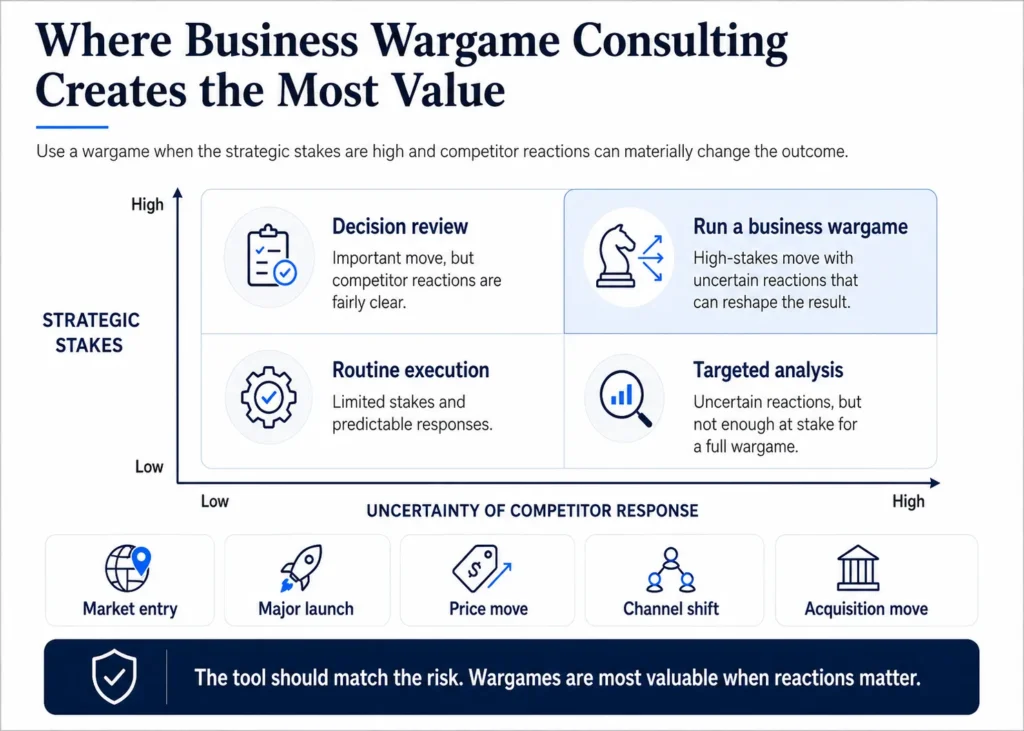
Figure 2: Matrix showing Where Business Wargame Consulting creates the most value
If your primary challenge is deciding where to compete rather than anticipating how others may respond, our strategy consulting, market entry consulting, or scenario consulting may be a better starting point. We will tell you when a wargame is not the right tool.
What Business Wargame Consulting Helps You Decide
A strong wargame should end with decisions, not an interesting discussion. Depending on your challenge, the engagement can help you answer questions such as:
- Is our strategy still attractive after likely competitor reactions?
- Which assumptions are carrying more risk than we realized?
- What are the most plausible offensive and defensive moves available to competitors?
- Which countermoves should we prepare now, and which should remain contingent?
- What signals should tell us that a competitor or market response is beginning?
- Where could customers, channels, partners, substitutes, regulators, or new entrants change the outcome?
- Which parts of the strategy should we strengthen, redesign, delay, or stop?
- Who should own each response, and what needs to happen next?
This is where Business Wargame Consulting becomes a strategic decision tool rather than a workshop format. You are not simulating competitors for entertainment. You are using evidence and structured challenge to make a better choice before the market makes the consequences visible.
A Wargame Is a Stress Test, Not a Prediction Exercise
Business wargames are sometimes misunderstood as attempts to forecast exactly what a competitor will do. That is not how we use them.
Competitor behavior is uncertain. A credible simulation therefore explores plausible responses based on incentives, capabilities, constraints, previous behavior, market economics, customer relationships, strategic priorities, and the situation each player faces.
The aim is to discover whether your strategy remains robust across a realistic range of reactions. If it does, you gain confidence. If it does not, you have learned something valuable while there is still time to change the plan.
Harvard Business Review has described corporate war games as a way to stress-test strategies before deploying them in the market. That distinction matters: the value comes from disciplined challenge and preparedness, not from pretending uncertainty can be eliminated.
The Quality of the Simulation Depends on the Evidence Behind It
A wargame becomes unreliable when teams are asked to “act like the competitor” based only on opinions. Before the simulation, we build the fact base needed to make each player’s behavior credible.
Depending on your decision, preparation can combine:
- Market structure, growth, demand, economics, and customer behavior.
- Competitor strategies, capabilities, constraints, positioning, and previous moves.
- Pricing, channel, distributor, and commercial intelligence.
- Customer, expert, distributor, or stakeholder interviews.
- Internal data and the knowledge of your team.
- Public filings, industry sources, regulatory information, and specialized databases.
- Benchmarking when a competitor’s economics, capabilities, processes, or performance gaps need deeper reconstruction.
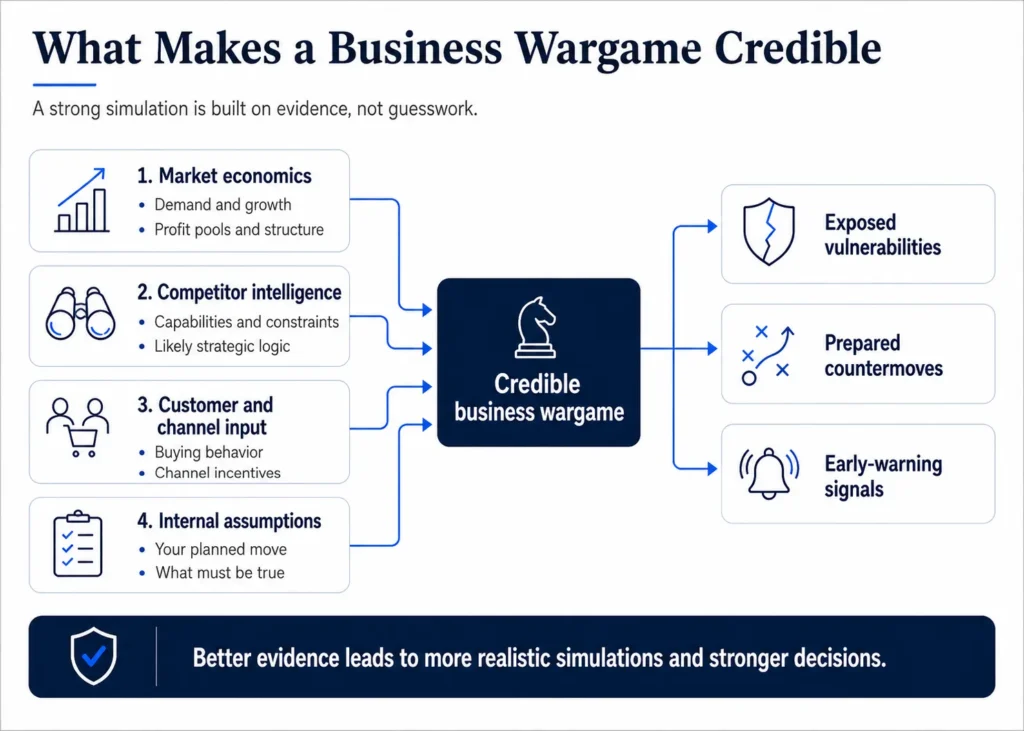
Figure 3: Infographic portraying what makes a business wargame credible
We triangulate material findings whenever feasible and distinguish evidence from estimates and hypotheses. When uncertainty remains, we make it visible rather than presenting it as fact.
Our competitive-intelligence work follows lawful and ethical research practices. We also use the SCIP Code of Ethics as an external reference for responsible competitive and market intelligence.
How We Build a Business Wargame Around Your Strategic Question
Every engagement is customized, but the logic is consistent: start with the decision, build enough evidence to represent the relevant players credibly, simulate their moves and reactions, and convert what you learn into choices and action.
1. Define the decision you need to test
We begin with the business question, not with the workshop. Together, we clarify the move under consideration, what is at stake, the decision criteria, the time horizon, and what you need to know before moving forward.
2. Identify who can change the outcome
Direct competitors may be central, but they are not always the only players that matter. Customers, distributors, partners, substitutes, regulators, new entrants, suppliers, or other stakeholders can be represented when their reactions could materially affect the decision.
3. Build evidence-based player perspectives
We develop the fact base and player briefs needed to understand what each actor wants, what it can do, what constrains it, and which moves would make sense from its perspective.
4. Design and pre-test the simulation
We structure the rounds, timing, rules, presentations, challenges, decision criteria, and outputs before your team enters the room. We also rehearse the mechanics so the live session is spent on strategic thinking rather than process confusion.
5. Simulate moves, reactions, and countermoves
Participants temporarily step outside your company’s perspective and represent the relevant players. They make moves, explain their logic, react to what others do, and expose assumptions that can remain hidden in a conventional strategy discussion.
6. Return to your strategy and decide what changes
The debrief is where the value is captured. We identify the implications for your strategy, prioritize countermoves, define what should change now, establish contingency actions, and clarify the signals that should trigger a response.
If you want the detailed mechanics behind preparation, player briefs, simulation rounds, and debriefing, see our step-by-step guide to designing and implementing a business wargame. Our broader wargame consulting framework also explains when structured competitive simulation is most useful. This page focuses specifically on how Midas uses business wargaming as a strategic advisory service to improve high-stakes decisions.
What You Receive
Your deliverables depend on the question and scope. A typical engagement can include:
- A clearly defined strategic question and wargame objective.
- A map of the competitors and other players that could influence the outcome.
- A market and competitive fact base tailored to the decision.
- Evidence-based player profiles or playbooks.
- Participant briefing materials and pre-reads.
- A custom simulation design and professional facilitation.
- Documented competitor and stakeholder moves and reaction patterns.
- Strategic assumptions and blind spots exposed during the exercise.
- Prioritized offensive and defensive countermoves.
- Recommended changes to the strategy or execution plan.
- Early-warning indicators and decision triggers.
- An action roadmap with priorities, owners, timing, and follow-up.
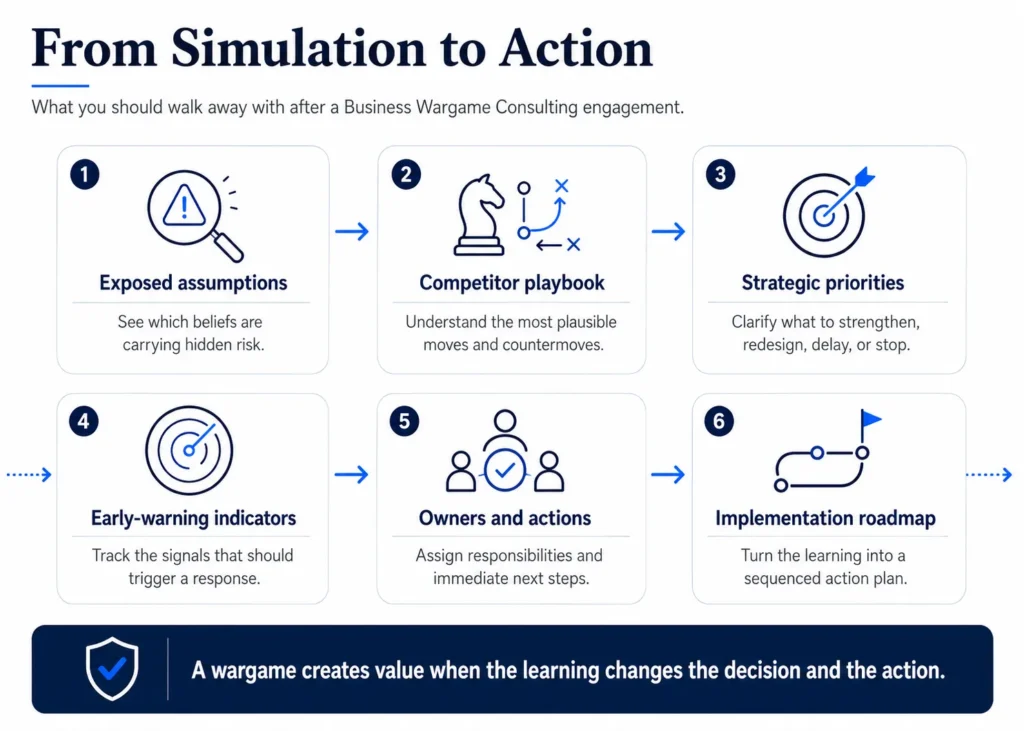
Figure 4: Visual showing how business wargames go from simulation to action
Where Business Wargames Connect with Other Strategic Decisions
Wargaming is often most valuable when it connects with work your organization is already doing. We can integrate the simulation with other strategic disciplines when the decision requires a broader fact base or implementation path.
- Strategy consulting: clarify where to play, how to win, priorities, trade-offs, and the choices the wargame should pressure-test.
- Market entry consulting: test how incumbents, channels, customers, or regulators could respond to your entry.
- Go-to-market consulting: anticipate reactions to pricing, channel, positioning, coverage, and launch choices.
- Benchmarking consulting: deepen the fact base when competitor economics, capabilities, or operating models matter.
- M&A consulting: explore competitive reactions before or after a transaction changes market structure.
- Scenario consulting: examine how competitor behavior could differ across multiple plausible futures.
For a broader explanation of how these disciplines connect to future preparedness, competitive response, and decision-making, explore our Strategic Foresight and Competitive Response executive insights.
From One-Off Simulation to an Early-Warning System
The most useful wargames do more than improve one decision. They reveal which assumptions matter most and which external developments should be monitored after the session.
You can use that learning to build a simple preparedness loop:
- Identify the assumptions that could materially change the strategy.
- Monitor competitor moves, customer behavior, regulation, technology, channels, and other relevant signals.
- Define the developments that should trigger management attention.
- Prepare response options before those signals become urgent.
- Adapt the strategy as evidence changes.
This approach connects naturally with scenario planning. Scenarios help you explore alternative environments; wargames add the behavior of competitors and other actors inside those environments. Used together, they can make your strategy more resilient without pretending the future is predictable.
Why Companies Choose Midas for Business Wargame Consulting
More than two decades of business wargame experience
Midas has been facilitating business wargames for more than 20 years. That experience matters because a credible simulation depends on much more than facilitation on the day. It requires the right strategic question, disciplined preparation, realistic player behavior, relevant evidence, a carefully designed process, and a debrief that produces decisions.
A strategic, not theatrical, approach
We do not run wargames as entertainment or as generic team-building exercises. The design starts with the business decision you need to improve and ends with implications, priorities, responsibilities, and action.
Evidence before simulation
We prepare the market and competitive fact base before asking your team to represent another player. That makes the exercise more credible and helps separate plausible competitor behavior from internal assumptions.
Experience across industries and Latin American markets
Our work spans consumer goods, healthcare, industrial products, food and beverage, packaging, agribusiness, energy, automotive, chemicals, construction, mining, technology, and other B2B and B2C environments.
We understand that competitor behavior is shaped by local market structures, channels, regulation, economics, and organizational realities, not by a generic playbook.
Confidentiality and ethical competitive intelligence
Your strategic priorities, internal information, assumptions, and wargame outputs are treated as confidential. When appropriate, we can work under a mutual nondisclosure agreement. We do not ask sources for trade secrets, encourage breaches of legal or contractual obligations, or treat unsupported speculation as verified intelligence.
Business Wargame Consulting in Action
Client identity and selected details are withheld or generalized to protect confidentiality.
The challenge
A multinational consumer-goods company had experienced prolonged market-share losses in an intensely competitive environment. The organization needed more than another review of its own plan. It needed to understand how competitors were likely to act and how its strategy should respond.
What we did
We designed two rounds of business wargaming. The first focused on the competitive players: what they were trying to achieve, which moves were available to them, and how they could exploit the client’s vulnerabilities. The second returned to the client’s perspective and focused on counter-strategies, regional priorities, and the actions required to regain momentum.
What changed
The process helped the team move from reacting to competitors toward anticipating them. It also created stronger alignment across the organization and supported differentiated regional responses rather than a single generic strategy. The client subsequently reversed the market-share decline and regained momentum.
The lesson was not that the wargame “predicted” the market. It was that the organization saw the competitive problem from outside its own perspective, prepared better responses, and entered implementation with greater alignment.
What Our Clients Say
“Midas helped us leave with a clear, well-structured strategy. The collaboration between our business units was seamless, and the fresh market insights were truly invaluable.”
Client feedback from a strategy and wargaming engagement. Company name withheld for confidentiality.
“I found the dynamic very effective. The structure and organization were excellent. We gained valuable insights, ideas, and elements to craft a robust strategy.”
Client feedback from a business wargame. Company name withheld for confidentiality.
“Midas was a pioneer in bringing Wargames to the region, and their expertise clearly sets them apart.”
Client feedback. Company name withheld for confidentiality.
Before You Decide to Run a Wargame
If you contact us, we will first help you determine whether a business wargame is actually the right tool. We will want to understand:
- The strategic decision you are facing.
- What you already know—and what remains uncertain.
- Which competitors or other players could change the outcome.
- What decisions should come out of the engagement.
- Which functions or markets need to participate.
- Whether additional research is required before the simulation.
- Your timing and implementation context.
From there, we can recommend the appropriate scope. In some cases, a focused competitive workshop is enough. In others, the decision requires deeper research, multiple simulation rounds, scenarios, benchmarking, or a broader strategy process.
Frequently Asked Questions About Business Wargame Consulting
What is Business Wargame Consulting?
Business Wargame Consulting is a structured advisory process that uses competitive simulation to pressure-test a strategic decision. Participants represent competitors or other market actors, make plausible moves based on evidence, and help your organization identify vulnerabilities, countermoves, decision triggers, and implementation priorities.
Can a business wargame predict exactly what competitors will do?
No. Competitor behavior cannot be predicted with certainty. A well-designed wargame improves preparedness by identifying plausible reactions, testing assumptions, and helping you prepare responses before those reactions occur.
How is a business wargame different from scenario planning?
Scenario planning explores different external environments that could emerge. A business wargame adds active players inside those environments and asks how competitors, customers, channels, regulators, or other actors may respond to your moves and to one another. The two approaches can be combined when both environmental uncertainty and competitor behavior matter.
How is a business wargame different from a strategy workshop?
A strategy workshop can address a broad range of questions, from priorities and positioning to growth and implementation. A wargame is more specific: it is designed to test a strategy against the reactions of other players. If your challenge is broader, our strategy workshops may be a better format.
Who should participate?
The right group depends on the decision. Participants often come from the functions that understand customers, competitors, economics, operations, products, channels, finance, regulation, and implementation. The objective is to bring enough knowledge into the room without making the simulation too large to manage effectively.
How much preparation is required?
Preparation is critical. Before the live session, we clarify the decision, identify the relevant players, build or validate the fact base, prepare player briefs, design the simulation rounds, select participants, and pre-test the process. A short session built on weak preparation can create false confidence, which is why we do not treat the live workshop as the entire engagement.
Can you run a wargame for a market we are considering entering?
Yes. Wargaming can be particularly useful before market entry when incumbent responses, channel behavior, pricing retaliation, regulatory dynamics, or customer switching could materially change the economics of entry. Depending on what is already known, we may recommend completing part of the market-entry fact base before the simulation.
Can the output be translated into an implementation plan?
Yes. We design the debrief around action. Depending on scope, the output can include strategic changes, countermoves, priorities, owners, timing, early-warning indicators, decision triggers, and a follow-up roadmap.
Pressure-Test the Decision Before You Have to Defend It in the Market
The best time to discover that your strategy depends on a fragile assumption is before competitors exploit it. The best time to prepare a countermove is before you are forced to improvise one.
If you are considering a high-stakes strategic move, tell us what you need to test. We can help you determine whether Business Wargame Consulting is the right approach, what evidence the simulation would require, who should participate, and what decisions should come out of the process.
About the Author: Midas Consulting
Midas Consulting is a strategy and competitive intelligence consulting firm that has been designing and facilitating business wargames for more than 20 years. We help leadership teams pressure-test strategic decisions by looking beyond their own plans and considering how competitors, customers, channels, regulators, and other market actors could respond.
Our approach combines competitive intelligence, strategic analysis, executive facilitation, and structured simulation. Before a wargame begins, we work to establish the relevant market and competitive fact base so participants are testing plausible behaviors rather than simply exchanging opinions.
Midas Consulting’s senior team has worked with companies across consumer goods, healthcare, industrial products, food and beverage, packaging, agribusiness, energy, automotive, chemicals, construction, mining, technology, and other B2B and B2C markets. The perspectives on this page reflect our applied experience using wargames to challenge assumptions, identify vulnerabilities, anticipate competitive reactions, and translate those insights into practical strategic choices.
We do not use wargaming to claim that competitor behavior can be predicted with certainty. We use it to help your leadership team see the decision from outside its own perspective, prepare for plausible reactions, and make a stronger strategy more resilient before it reaches the market.
Last reviewed: August 2026