

Ready to unlock your potential? Get expert guidance on market entry in Brazil
Expanding into Brazil presents vast opportunities for businesses seeking growth in Latin America. As the region’s largest economy, Brazil boasts a GDP of approximately $2.3 Trillion and a population of over 213 million people importing roughly $252 Billion, making it a highly attractive market for international companies. However, entering this dynamic landscape requires a deep understanding of local regulations, cultural nuances, and business practices. At Midas, we help you navigate the complexities of market entry, ensuring a seamless and strategic expansion.
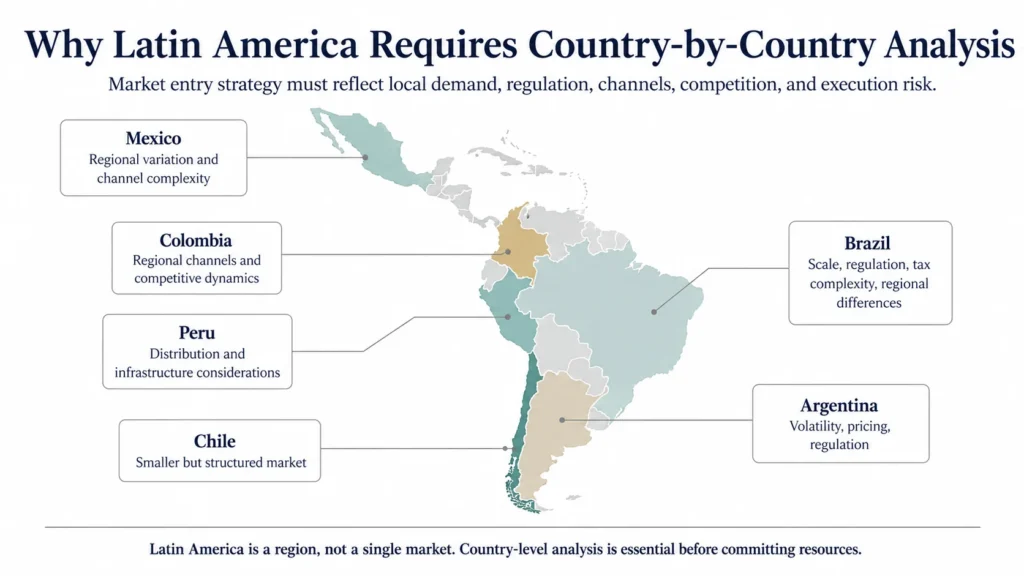
Figure 1. Midas Country-by-Country LatAm Market Entry Analysis: Latin America is a region, not a single market. Market entry decisions should be evaluated country by country, considering local demand, regulation, channels, competition, and execution risk.

Key Data About Brazil:
| Metric | Data |
|---|---|
| GDP (2025) | $2,278 Billion |
| GDP growth (2025) | 2.3% |
| Imports (2023) | $252 Billion |
| Exports (2023) | $344 Billion |
| Consumer inflation rate (2025) | 4.3% |
| Unemployment rate (2025) | 5.9% |
| Population (2025) | 213 million |
| Capital | Brasilia (the economic capital is, however, Sao Paulo) |
| Language | Portuguese |
Source: Banco Itaú BBA (all data except for import and export figures, which are from the World Bank)
What Are Brazil’s Main Market Entry Challenges?
Brazil offers significant potential for companies looking to expand, but businesses often encounter critical challenges that can hinder success. Some key hurdles include:
- Import Tariffs. Certain goods and especially services are subject to high import duties
- Government Support for Local Companies. Domestic businesses often receive preferential treatment, making competition tougher for foreign entrants
- Language Barrier. Portuguese is the official business language, and fluency is essential for conducting successful operations

How Midas Can Help Your Market Entry in Brazil?
At Midas, we provide tailored market entry consulting services to help businesses navigate Brazil’s complexities and seize opportunities effectively. Our expertise includes:
- Market entry consulting and competitor benchmarking. With boots on the ground, we deliver in-depth insights into industry trends, consumer behavior, and competitive landscapes to optimize your strategy
- Distributor search and go-to-market consulting. We connect you with distributors, key stakeholders, and strategic partners to accelerate your market penetration through our Brazilian office
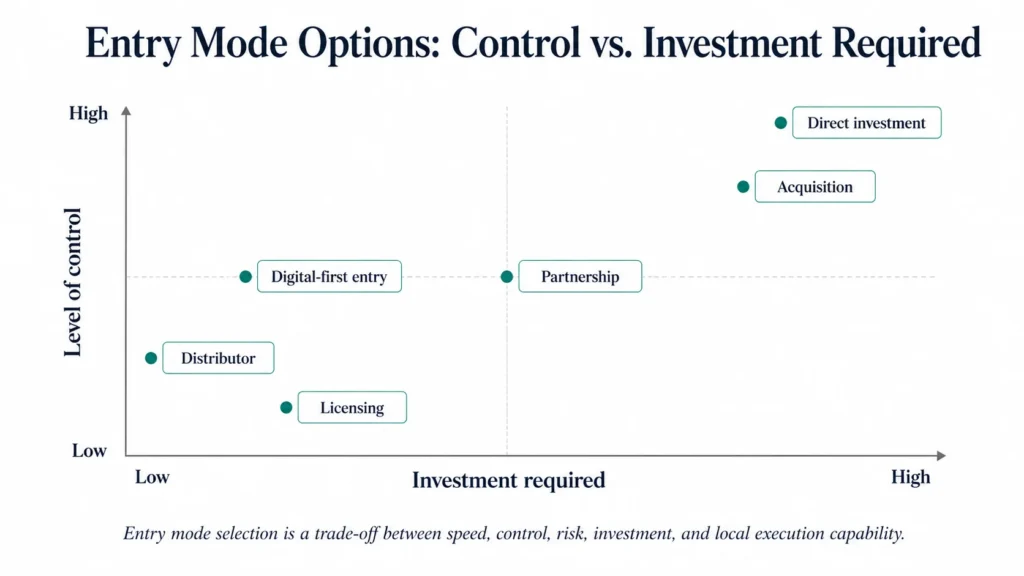
Figure 2. Midas Entry Mode Trade-off Map: Brazil’s scale and complexity make entry-mode selection critical. Companies should balance speed, control, investment, risk, and local execution capability before choosing between distributors, partnerships, acquisition, or direct investment.
A step-by-step guide on how to build a successful market entry strategy

How This Market Entry Analysis Was Prepared
This analysis is based on Midas Consulting’s experience supporting market entry, market analysis, distributor search, go-to-market, benchmarking, competitive intelligence, and strategy projects across Latin America.
Our approach typically combines:
- Secondary research from recognized economic, trade, industry, regulatory, and company sources.
- Primary interviews with market participants, including customers, distributors, competitors, experts, associations, regulators, suppliers, or channel partners when relevant.
- Competitive analysis to understand positioning, capabilities, pricing, channels, likely reactions, and barriers to entry.
- Country-by-country interpretation, because Latin America should not be treated as a single homogeneous market.
- Executive decision support, translating findings into practical recommendations on whether to enter, where to focus, which partners to evaluate, what risks to monitor, and how to sequence the market entry plan.
The goal is not to provide generic country information. The goal is to help executive teams make better market entry decisions with stronger evidence, clearer assumptions, and a more realistic view of local execution challenges.
Some of Our Market Entry in Brazil Customers:





Case Example: Breaking into Brazil’s Offshore Oil & Gas Market: A Strategic Success Story
This example is anonymized for confidentiality, but reflects a real project structure: market sizing, regulatory understanding, stakeholder interviews, and segment prioritization
Background and challenges
A multinational company sought to expand into Brazil’s offshore oil and gas market, recognizing its strong projected growth. However, entering this highly regulated industry required more than just competitive intelligence. It demanded a deep understanding of Brazil’s complex regulations and certifications essential for market entry


Approach
To uncover the best opportunities and navigate regulatory hurdles, we conducted:
- In-depth market research to identify key growth segments by product, application, and customer type.
- Targeted interviews with industry stakeholders, including potential customers, regulatory authorities, and competitors, to gain firsthand insights
Results
With Midas’ comprehensive guidance, the company successfully entered the Brazilian market. Our insights enabled them to:
- Navigate complex compliance requirements and secure necessary certifications
- Identify the most lucrative product segments for a stronger competitive advantage
The company positioned itself for sustainable success in Brazil’s offshore oil and gas sector

About the author
By Adrian Alvarez, PhD. Adrian Alvarez is Managing Partner at Midas Consulting, a Wharton alumnus, MBA professor at Universidad Argentina de la Empresa (UADE), and Competitive Intelligence Fellow.
He specializes in competitive strategy, market entry, go-to-market strategy, distributor search, benchmarking, business wargaming, and strategic decision-making under uncertainty in Latin America. He has led and supervised hundreds of strategy, market entry, market analysis, competitive intelligence, and growth projects across Argentina, Brazil, Chile, Colombia, Mexico, Peru, and other Latin American markets.
His work combines executive-level strategy, primary research, competitive analysis, local market interviews, and practical implementation support. He has published strategic insights and research in the United States, Spain, and Germany, and has trained executives and professionals in competitive intelligence practices and ethics in Latin America.