

Scenario planning to succeed in a volatile region.
Most strategic plans are built around a quiet assumption: the future will be sufficiently similar to the past for your company’s forecasts to remain useful.
Sometimes that assumption is reasonable.
When customer behavior is relatively stable, regulation is predictable, competitors are familiar, and technology evolves gradually, forecasts and budgets can give your leadership team a practical basis for making decisions.
But what happens when several forces begin changing at the same time?
A new technology alters the economics of your industry. A regulatory decision changes who can compete. Customers become more price-sensitive. A low-cost player enters the market. A distributor consolidates. A geopolitical event disrupts your supply chain. A competitor makes an unexpected acquisition.
You may still have a forecast. But you no longer have certainty that the business environment behind that forecast will exist.
That is where scenario planning becomes valuable.
Scenario planning does not try to predict exactly what will happen. It helps you understand what could happen, why it could happen, how it would affect your company, and which strategic choices would remain attractive across several plausible futures.
For you as a C-level executive, the objective is not to produce imaginative stories about the future. It is to make better decisions today.
A strong scenario-planning process should help you answer questions such as:
- Which assumptions does our current strategy depend on?
- What external changes could make those assumptions invalid?
- Under which future conditions would our strategy still work?
- Where would it fail?
- What should we do now regardless of which scenario emerges?
- Which options should we preserve rather than commit to immediately?
- What signals would tell us that the environment is moving toward one scenario rather than another?
- When should we accelerate, adapt, pause, or abandon a strategic initiative?
The real value of scenarios is not predicting the future. It is preparing your organization to recognize change earlier and respond with greater clarity.
Executive takeaway: You cannot eliminate uncertainty. But you can prevent uncertainty from becoming strategic paralysis.
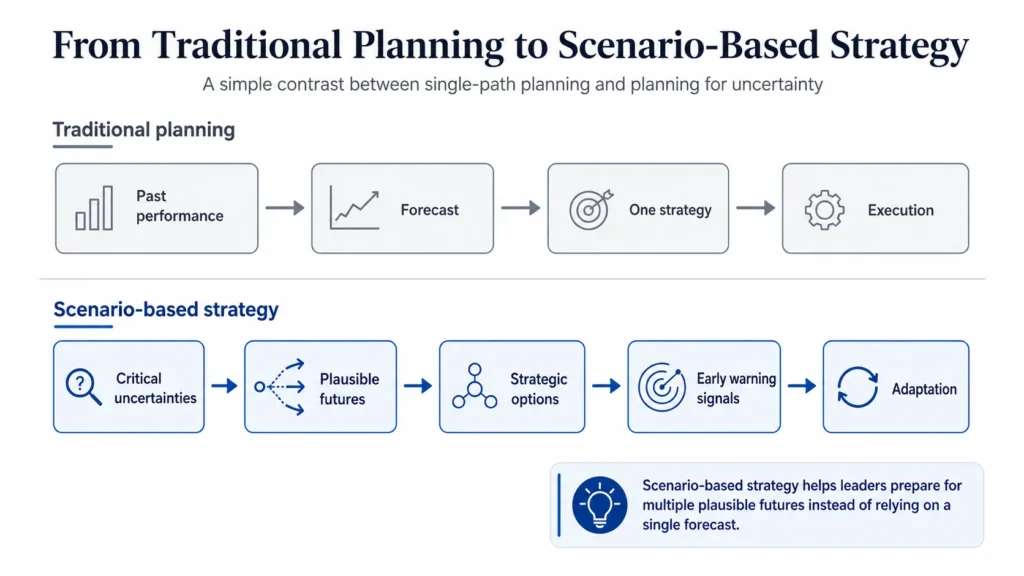
Figure 1. From One Forecast to Multiple Plausible Futures
What Is Scenario Planning?
A scenario is a coherent description of a possible future business environment.
It is not a prediction. It is not a target. It is not an optimistic, neutral, or pessimistic variation of the same financial forecast.
A useful scenario describes how several relevant forces could interact to create a meaningfully different competitive environment.
For example, an optimistic forecast might assume that your sales grow 10%, while a pessimistic forecast assumes that they decline 10%. Both projections may still assume:
- The same competitors
- The same customer needs
- The same industry structure
- The same channel model
- The same regulatory framework
- The same basis of competition
A true scenario asks whether those underlying conditions could change.
- What if customers move rapidly toward a lower-cost substitute?
- What if a regulator changes market-access requirements?
- What if your largest distributor begins promoting its own brand?
- What if artificial intelligence reduces a capability that currently differentiates your company?
- What if an adjacent competitor enters with a fundamentally different business model?
The point is not to decide which of these futures is “correct.” The point is to determine whether they are sufficiently plausible and strategically relevant to deserve management attention.
Real-world evidence also shows that the same shift in the environment can trigger very different strategic responses. In the Midas Import Competition Monitor 2026, we analyzed 151 business decisions made in response to Argentina’s new import competition environment. Some companies are investing to defend local production; others are reconfiguring operations, regionalizing, importing, reducing capacity, or exiting the market. Forbes Argentina used Midas Consulting’s research to examine these different strategic responses. For scenario planning, this diversity matters: it is not enough to ask how the environment might change; you also need to explore how different players might respond to that change.
Pierre Wack, one of the pioneers of scenario planning at Shell, argued that scenarios are valuable when they are grounded in reality and capable of changing the assumptions held by decision-makers.
At Midas Consulting, we define a strategic scenario as:
An internally consistent view of how the business and competitive environment could evolve, developed to challenge assumptions, assess strategic implications, and improve present-day decisions.
That definition contains four important ideas.
A scenario must be possible
It does not have to be the most likely future, but its probability cannot be zero. The scenario must have a credible chain of causes, decisions, and consequences.
A scenario must be relevant
There is little value in exploring a future that has no material implications for your strategy, business model, investment choices, or organizational capabilities.
A scenario must be internally consistent
The assumptions within the scenario need to make sense together.
For example, a scenario combining extremely high penetration of low-cost private-label products with declining customer price sensitivity may require additional explanation. Those conditions are not necessarily impossible, but they should not be combined without a credible causal logic.
A scenario must change the strategic conversation
A scenario is useful only when it helps your leadership team see a risk, opportunity, trade-off, or strategic option differently.
The objective is not to write the most creative scenario. It is to improve the quality of the decision.
The scenario-planning materials reviewed for this article emphasize that useful scenarios should be credible, challenging, logically consistent, and limited to a manageable number. They also distinguish scenarios from predictions and recommend supporting the narratives with analysis that tests their credibility and business impact.
When Should You Use Scenario Planning?
Scenario planning is not necessary for every decision.
If the planning horizon is short, the variables are relatively stable, and the possible outcomes can be estimated with reasonable confidence, traditional forecasting may be enough.
Scenario planning becomes more useful when three conditions are present:
1. The decision is strategically important
The decision may involve significant capital, a multi-year commitment, a new market, a major product launch, an acquisition, a new technology platform, or a change in your operating model.
The cost of getting it wrong is material.
2. The environment contains significant uncertainty
Important variables could move in different directions, and those changes would alter the attractiveness of your strategic options.
Examples include:
- Regulation
- Technology adoption
- Customer behavior
- Competitor strategy
- Channel structure
- Availability of financing
- Supply-chain resilience
- Political or macroeconomic conditions
- Industry consolidation
- Substitution
- Market access
- Social expectations
3. Your company still has meaningful choices
Scenario planning is most useful when your company can act differently depending on what it learns.
If every decision is already irreversible, the exercise may identify risk but provide limited strategic value. Ideally, scenario planning is conducted while you can still modify investments, sequence commitments, create partnerships, run pilots, protect capabilities, or establish contingency plans.
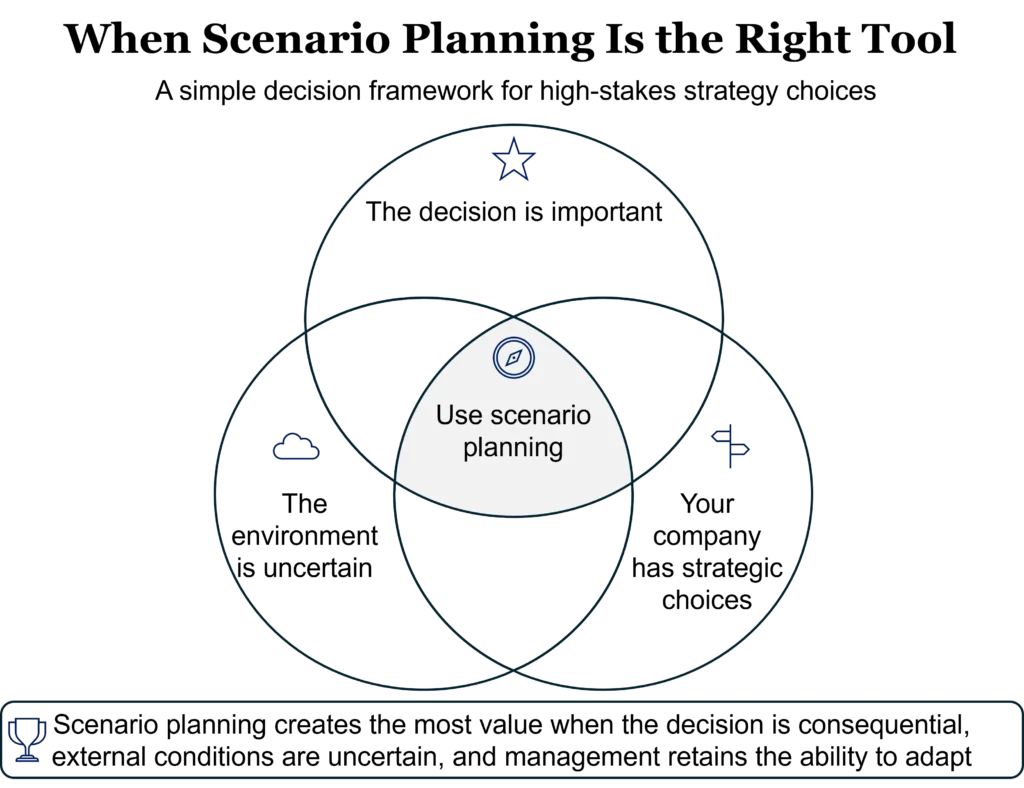
Figure 2. When Scenario Planning Is the Right Tool
Forecasting and Scenario Planning Work Together
Scenario planning should not be presented as a replacement for forecasting.
You still need budgets, demand projections, financial models, capacity plans, and operational targets.
Forecasting is particularly useful when you need to understand a defined variable over a shorter period. Scenario planning is more useful when the relationships among several variables may change over a longer horizon.
Forecasts answer questions such as:
- What will sales be next year?
- How much capacity will we need?
- What happens to margin if a raw-material cost increases by 8%?
- How many salespeople should we hire?
Scenarios answer different questions:
- What if the basis of competition changes?
- What if the current channel loses influence?
- What if customers adopt a substitute faster than expected?
- What if regulation changes the economics of the market?
- What if a competitor triggers a price war?
- What if the capabilities required for success are different in five years?
The two approaches should reinforce each other.
Forecasts can quantify parts of a scenario. Scenarios can reveal which forecasts your team should run.
Once a scenario has been developed, financial and operational models can estimate:
- Revenue by scenario
- Margin pressure
- Cash-flow requirements
- Market-share implications
- Capacity utilization
- Working-capital needs
- Investment exposure
- Risk-adjusted returns
The uploaded scenario-planning materials similarly distinguish forecasting from scenario planning while recommending the use of quantitative models to test assumptions, estimate the magnitude of change, and evaluate strategic options within each scenario.
Executive takeaway: Forecasting helps you operate the business you expect. Scenario planning helps you prepare for a business environment you may not expect.
The Strategic Benefits of Scenario Planning
Scenario planning can improve strategy in six important ways.
1. It exposes hidden assumptions
Every strategy contains assumptions, whether they are written down or not.
Your strategy may assume that:
- Customers will continue valuing your current differentiation
- Your largest channel will remain profitable
- A regulatory approval will arrive on time
- Competitors will respond rationally
- Financing will remain available
- Talent can be recruited at the required pace
- Your technology advantage will last
- The organization can execute several initiatives simultaneously
Scenarios force those assumptions into the open.
Your team can then ask:
- What must be true for this strategy to succeed?
- Which of those conditions are reasonably predictable?
- Which are uncertain?
- Which assumptions would cause the greatest damage if they proved wrong?
That discussion alone often improves the strategy before a single scenario has been completed.
2. It challenges groupthink
Senior teams can become trapped by a shared view of the market.
That view may be reinforced by the same data, planning templates, industry conferences, consultants, customers, and internal incentives. The organization begins interpreting new information through its existing strategy rather than questioning whether the strategy still fits the environment.
Scenario planning creates a legitimate space for divergent views.
It allows someone to say:
- “Our premium positioning may not survive this scenario.”
- “The technology we dismiss could become the industry standard.”
- “Our distributor may eventually become a competitor.”
- “The most attractive growth market may also expose our weakest capability.”
- “The competitor we consider irrational may have a different objective from ours.”
The goal is not disagreement for its own sake. It is to ensure that the strategy has survived serious challenge before the market challenges it for you.
3. It identifies robust strategic moves
Some actions make sense in only one scenario.
Others perform reasonably well across several futures.
These cross-scenario actions are sometimes described as robust moves or no-regret moves. They may include:
- Strengthening customer intelligence
- Improving cost transparency
- Developing a second source of supply
- Building a stronger distributor network
- Protecting a critical capability
- Improving data infrastructure
- Running a limited market pilot
- Developing relationships with regulators
- Increasing organizational agility
- Creating a competitor-monitoring system
A robust strategy is not necessarily the strategy with the highest return in one specific future. It is the strategy that provides an attractive balance of upside, downside protection, adaptability, and feasibility across several plausible futures.
The Midas methodology reviewed for this article evaluates strategies partly through their flexibility and robustness—whether they work well in most scenarios rather than only in the future management currently considers most likely.
4. It preserves strategic options
Not every decision needs to be made immediately.
Scenario planning helps distinguish among:
- Decisions you should make now
- Capabilities you should build now
- Options you should preserve
- Experiments you should run
- Commitments you should delay
- Risks you should transfer
- Contingencies you should prepare
This can reduce the temptation to choose between “invest fully” and “do nothing.”
You may instead make a staged commitment.
For example, your company might:
- Test a new channel before restructuring the entire route to market
- Acquire an option or minority position before purchasing a company
- Build a partnership before making a direct investment
- Introduce a product in one region before launching nationally
- Develop a new capability internally while retaining an external provider
- Reserve production capacity without building a new facility immediately
These options give management the right—but not necessarily the obligation—to move as uncertainty resolves.
5. It improves alignment
Different executives often hold different assumptions about the future.
Finance may be planning for margin pressure. Sales may expect aggressive growth. Operations may assume stable product complexity. Marketing may expect customers to become less price-sensitive. The country team may see a regulatory threat that headquarters considers unlikely.
A well-facilitated scenario process makes those differences visible.
The result should be more than intellectual agreement. It should create a shared language for discussing uncertainty, trade-offs, strategic priorities, and decision triggers.
The scenario-planning material reviewed for this article emphasizes the importance of cross-functional participation and describes a common language for strategic debate as one of the method’s central benefits.
6. It helps you act earlier
The value of an early-warning signal is not that it tells you the future with certainty.
Its value is that it gives you time.
If a scenario requires several developments to occur, your team can work backward and identify the signals that would probably appear first.
Those signals might include:
- Regulatory consultations
- Competitor hiring patterns
- New patent applications
- Distributor investments
- Changes in customer inquiries
- Price movements
- Changes in promotional intensity
- Partnerships or acquisitions
- Capacity expansions
- Supplier negotiations
- New import flows
- Changes in reimbursement decisions
- Shifts in search behavior
- Pilot launches in adjacent markets
Strategic intelligence turns these observations into decision support.
Midas Consulting’s Applied Strategic Intelligence Hub describes early-warning systems as a way to convert weak signals and fragmented market information into a more proactive management capability.
How to Use Scenario Planning for Crafting Strategy
The exact process should be adapted to your decision, industry, available evidence, and organizational culture.
At Midas, we recommend a nine-stage approach.
Step 1: Define the strategic decision
Do not begin with a broad question such as:
“What will our industry look like in the future?”
That question is interesting but difficult to convert into action.
Start with a strategic decision your leadership team must make.
For example:
- Where should we compete over the next five years?
- Should we enter a new country?
- How should we respond to a disruptive technology?
- Which capabilities should we build before regulation changes?
- How should we defend our market position against new entrants?
- Should we invest in a new production facility?
- What should our future channel model look like?
- How should we redesign our portfolio?
- Which acquisition strategy would remain attractive under different market conditions?
A clear decision creates boundaries for the exercise.
It helps determine:
- The time horizon
- The geographic scope
- The business units involved
- The stakeholders who should participate
- The evidence required
- The scenarios that are relevant
- The final deliverables
Executive question
What decision do you need to improve—not merely discuss?
Step 2: Select the right participants
Scenario quality depends heavily on who is in the room.
A team composed entirely of senior executives may have authority but lack proximity to emerging customer, operational, technological, or channel changes.
A team composed only of specialists may have detailed knowledge but lack the authority to challenge strategic commitments.
The strongest teams usually combine:
- Senior decision-makers
- Business-unit leadership
- Commercial functions
- Finance
- Operations
- Technology
- Regulatory or legal expertise
- Local market teams
- People close to customers
- People who see emerging trends early
- Selected external experts or facilitators
Diversity matters because uncertainty is interpreted differently across functions and hierarchical levels.
The purpose is not to maximize the number of participants. It is to bring together the perspectives needed to understand the decision and implement the outcome.
You should also appoint:
- An executive sponsor
- A project owner
- A process facilitator
- Owners for research and analysis
- Owners for monitoring indicators after the exercise
Scenario planning should not become a workshop owned by no one.
Executive question
Who sees changes before they appear in your management dashboard?
Step 3: Build the strategic fact base
Scenarios require imagination, but they should not begin with imagination alone.
Start with evidence.
Depending on your strategic question, the fact base may cover:
- Market size and growth
- Customer needs and behavior
- Competitors and substitutes
- Profit pools
- Technology
- Regulation
- Channels
- Suppliers
- Cost structures
- Capabilities
- Macroeconomic conditions
- Political and social trends
- Environmental constraints
- Potential entrants
- Adjacent industries
This is where strategic intelligence becomes especially important.
Strategic intelligence is not simply collecting more information. It means integrating market, competitor, customer, regulatory, technological, and contextual evidence so that management can understand what the information means for a decision.
Midas Consulting’s thought-leadership approach emphasizes converting fragmented signals and competitive information into practical executive choices rather than treating research as an end in itself.
In Latin America, this stage often requires more than reviewing published reports. Important information about channels, informal competitors, customer practices, local regulation, distributor behavior, and actual commercial conditions may require interviews and triangulation across several sources.
Executive question
Which important assumptions are supported by evidence, and which are simply widely repeated inside your company?
Step 4: Separate constants, predetermined elements, and uncertainties
Not every variable belongs at the center of a scenario.
A useful classification is:
Constants
Elements expected to remain relatively stable during the scenario horizon.
Examples might include:
- A structural customer need
- A physical constraint
- A long-established regulation
- A basic industry requirement
- A capability that takes many years to build
Constants should still be challenged, but they do not need to differentiate every scenario.
Predetermined elements
Changes that have already been set in motion and can be anticipated with reasonable confidence, although their timing or magnitude may vary.
Examples might include:
- Demographic changes
- Investments already announced
- Patent expirations
- Scheduled regulation
- Infrastructure under construction
- Contracts that will expire
- Known capacity additions
Critical uncertainties
Variables that:
- Could develop in meaningfully different ways, and
- Would have a significant impact on your strategic decision.
Examples might include:
- Speed of customer adoption
- Severity of regulation
- Competitor response
- Channel consolidation
- Access to financing
- Technology performance
- Price sensitivity
- Market-access timing
- Strength of substitutes
- Entry of new business models
The Midas scenario-development approach uses this classification to prevent predictable elements from being confused with the uncertainties that genuinely differentiate alternative futures.
Executive question
Which variables are genuinely uncertain, rather than merely difficult to estimate?
Step 5: Prioritize the critical uncertainties
Your team may identify dozens of uncertainties.
You cannot build useful scenarios around all of them.
Rank the uncertainties using at least two criteria:
- Potential impact on the strategic decision
- Degree of uncertainty
You may also consider:
- Speed of change
- Irreversibility
- Management’s ability to influence the outcome
- Interdependence with other variables
- Potential to invalidate the business model
Be careful not to eliminate a variable simply because its probability appears low.
A low-probability event with a catastrophic impact may deserve special treatment, either within a scenario or as a separate stress test.
At the same time, a scenario built from several highly improbable events may not be credible enough to engage management.
This is where judgment matters.
You need scenarios that stretch thinking without becoming science fiction.
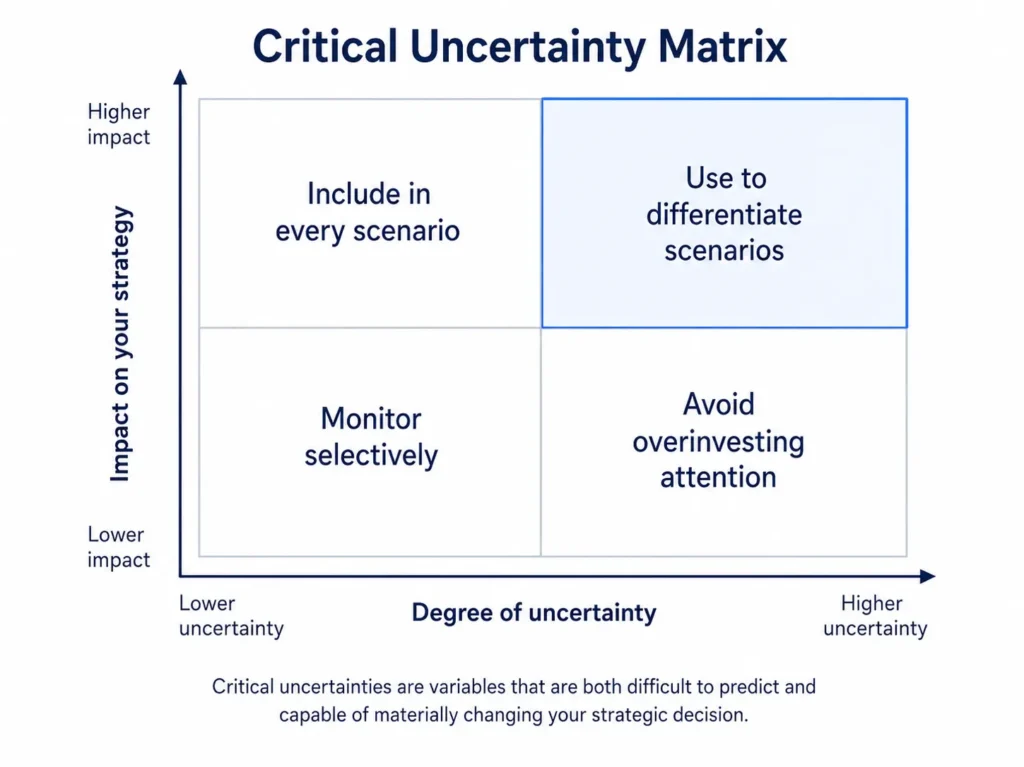
Figure 3: Critical uncertainties are key
Step 6: Construct a manageable set of scenarios
Most organizations should develop between two and four scenarios.
Too few may not create sufficient divergence. Too many can overwhelm management and dilute the strategic implications.
The purpose is not to cover every possible future. It is to cover a range broad enough to reveal how the strategy behaves under different conditions.
One common method is the 2×2 matrix.
Your team chooses two critical uncertainties and defines two plausible extremes for each. Their interaction produces four scenarios.
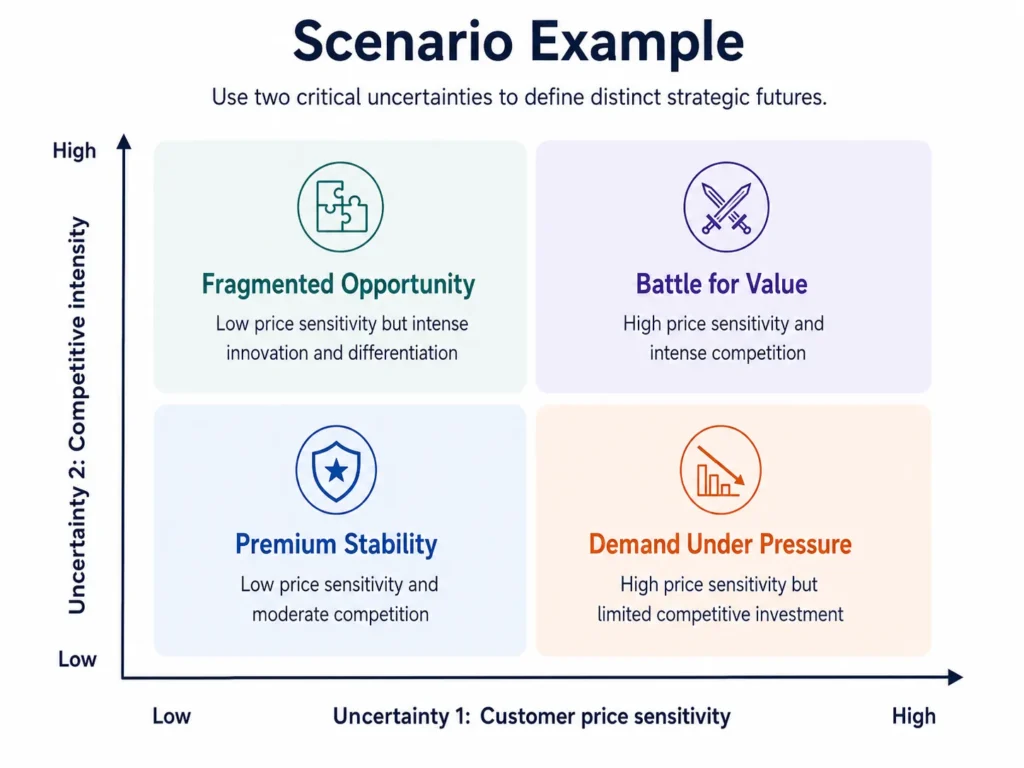
Figure 4: Four scenarios based on two uncertainties. The names matter.
A scenario name should communicate the central logic quickly and help people remember it. “Scenario A” does not influence executive thinking in the same way as “Battle for Value.”
Each scenario should include:
- The defining uncertainties
- Predetermined developments
- Customer behavior
- Competitor behavior
- Channel evolution
- Regulation
- Technology
- Industry economics
- Sources of profit
- Required capabilities
- A timeline or causal narrative
- Strategic implications
The scenarios must be internally consistent.
Do not simply combine extreme values mechanically. Remove combinations that are implausible, redundant, or strategically uninformative.
The materials reviewed recommend a small number of clearly differentiated scenarios and warn that three scenarios can tempt teams to choose the apparently safe middle case. They also caution against creating so many scenarios that leaders become paralyzed.
Executive question
Are your scenarios genuinely different futures, or merely different growth rates within the same future?
Step 7: Determine the strategic implications of each scenario
This is where the exercise begins producing strategic value.
For each scenario, ask:
Market implications
- Where will growth come from?
- Which segments will become more or less attractive?
- How will profit pools shift?
- Which customer needs will intensify?
- Which channels will gain power?
Competitive implications
- Which competitors benefit?
- Which competitors become vulnerable?
- What would each major competitor try to protect?
- How could new entrants change the rules?
- Which substitutes become more attractive?
Company implications
- Where would your current strategy work?
- Where would it fail?
- Which capabilities become critical?
- Which assets become less valuable?
- Which costs become difficult to sustain?
- Which assumptions become dangerous?
Organizational implications
- Does your structure support the strategy?
- Does your culture help or hinder adaptation?
- Does your leadership team have the required capabilities?
- Can your governance model make decisions quickly enough?
Scenario planning becomes particularly powerful when it tests not only strategy but also the alignment among strategy, structure, culture, leadership, and capabilities.
Executive question
In which scenario does your current strategy break first—and why?
Step 8: Develop and test strategic options
Your team should now develop a strategy for each scenario.
Do not immediately search for one perfect answer.
First, explore the full range of options:
- Defend the core
- Enter a new segment
- Exit an unattractive activity
- Change the pricing model
- Build a new capability
- Form a partnership
- Acquire a competitor
- Develop an alternative channel
- Redesign the portfolio
- Increase localization
- Reduce fixed commitments
- Accelerate innovation
- Run a controlled pilot
- Preserve cash and wait
- Influence regulation
- Improve customer retention
- Build supply-chain redundancy
Then compare those strategies across scenarios.
The common elements can form the core strategy.
The differentiated elements become:
- Contingency plans
- Strategic options
- Staged investments
- Defensive moves
- Scenario-specific initiatives
The scenario-planning materials describe this as creating one plan for each scenario, comparing the plans, and separating their common elements from the options that should be activated only under certain conditions.
Evaluate each option using criteria such as:
- Strategic fit
- Financial attractiveness
- Downside exposure
- Flexibility
- Reversibility
- Time to impact
- Capability requirements
- Competitor response
- Execution feasibility
- Performance across scenarios
For decisions where competitor reactions are decisive, you can combine scenario planning with a business wargame.
Scenario planning asks:
“What business environment might emerge?”
A wargame asks:
“How will competitors, customers, distributors, regulators, and other actors behave within that environment?”
The combination allows your leadership team to test both environmental uncertainty and active competitive response.
Executive question
Which actions create value across several futures, and which actions should be conditional?
Step 9: Define early warning indicators and decision triggers
A scenario-planning exercise should not end with a presentation.
For each scenario, work backward from the future and identify the developments that would have to occur before that scenario became reality.
This approach is sometimes called backcasting or backtrending.
For every indicator, define:
- What you are monitoring
- Why it matters
- The source
- A proxy if it cannot be measured directly
- The monitoring frequency
- The owner
- The threshold that requires attention
- The management action triggered
For example:
| Indicator | Signal | Trigger | Potential response |
|---|---|---|---|
| Competitor hiring | Rapid recruitment of market-access specialists | More than 10 relevant hires in 90 days | Accelerate payer engagement |
| Channel behavior | Distributor increases private-label promotion | Private label exceeds agreed threshold | Review incentives and channel mix |
| Customer adoption | Trial rate of substitute technology rises | Adoption exceeds 15% in priority segment | Accelerate product redesign |
| Regulation | Draft rules become more restrictive | Specific clause enters consultation | Activate regulatory-response team |
Your monitoring system should connect directly to governance.
Leadership should agree in advance:
- Which signals require review
- Who convenes the review
- What evidence is required
- Which decisions can be delegated
- Which decisions require executive approval
- How quickly the organization must respond
Without those rules, early warnings become interesting information rather than strategic action.
Executive takeaway: An indicator without an owner is an observation. An indicator with a trigger, owner, and response becomes a management tool.
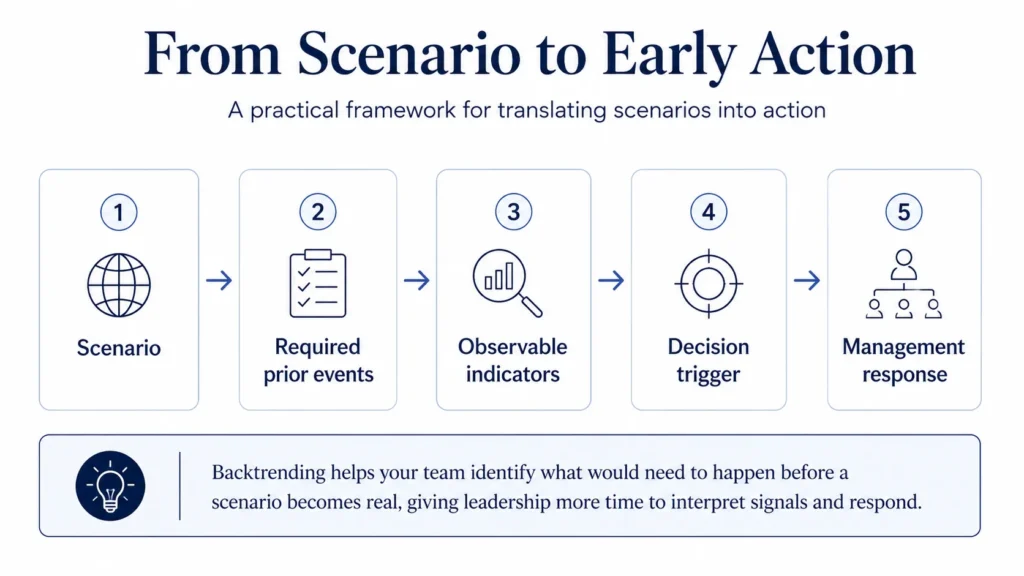
Figure 5. From Scenario to Early Action
What Does a Strong Scenario Strategy Planning Produce?
A practical scenario-planning engagement should produce more than four scenario narratives.
The final deliverables should include:
A shared view of the strategic decision
Leadership agrees on what must be decided, the relevant horizon, and the boundaries of the analysis.
A map of assumptions and uncertainties
Your team distinguishes between:
- What it knows
- What it expects
- What it assumes
- What remains uncertain
A limited set of plausible scenarios
Each scenario is:
- Relevant
- Credible
- Internally consistent
- Meaningfully different
- Supported by evidence
Strategic implications
Management understands how customers, competitors, channels, regulation, economics, capabilities, and risks change in each scenario.
Strategic options
The company identifies:
- Core actions
- No-regret moves
- Contingent actions
- Staged commitments
- Capabilities to develop
- Options to preserve
A robust strategy
Leadership chooses a strategy that balances:
- Expected return
- Downside protection
- Flexibility
- Reversibility
- Ability to win
- Execution capacity
Early warning indicators
Each important scenario has observable signals, sources, owners, review routines, and decision triggers.
Governance
The organization knows when and how to review the scenarios, update assumptions, and adjust the plan.
Common Scenario Planning Mistakes
Scenario planning can create false confidence when it is poorly designed.
Mistake 1: Treating scenarios as optimistic, base, and pessimistic forecasts
These are usually variations of one future rather than distinct business environments.
Better approach: Change the underlying drivers, industry structure, customer behavior, or basis of competition—not only the numbers.
Mistake 2: Starting without a decision
Broad discussions about the future can become intellectually stimulating but commercially irrelevant.
Better approach: Begin with a strategic dilemma and define how the scenarios will influence a decision.
Mistake 3: Choosing only comfortable scenarios
Teams often reject extreme scenarios because they seem unlikely or threatening.
Better approach: Include at least one scenario that challenges the dominant management view while remaining logically credible.
Mistake 4: Confusing uncertainty with lack of information
Some variables are uncertain because the future genuinely could develop in different ways. Others appear uncertain because the company has not done enough research.
Better approach: Strengthen the fact base before building scenarios.
Mistake 5: Using too many variables
Combining too many uncertainties produces an unmanageable number of futures.
Better approach: Prioritize the two to four uncertainties with the greatest strategic impact.
Mistake 6: Ignoring competitor decisions
Competitors are not fixed elements of the environment. They have objectives, capabilities, constraints, and options.
Better approach: Determine what each important competitor would probably do in each scenario and which response would be most dangerous to you.
Mistake 7: Selecting the “most likely” scenario and discarding the rest
This recreates the single-forecast problem.
Better approach: Use likelihood as one input, but test the strategy across the full scenario set.
Mistake 8: Producing scenarios without strategic choices
An attractive presentation is not a strategy.
Better approach: Translate every scenario into implications, options, commitments, and decision triggers.
Mistake 9: Failing to monitor the environment
Scenarios become obsolete if they are never revisited.
Better approach: Integrate indicators into your strategic-intelligence and management-review processes.
Mistake 10: Communicating uncertainty without direction
The leadership team cannot tell the organization, “Four different futures are possible, and we do not know which one will happen.”
Better approach: Communicate the chosen strategy clearly while management retains scenarios as a decision-support system.
Scenario Planning in Latin America
Scenario planning can be especially useful in Latin America because companies often face several overlapping sources of uncertainty:
- Macroeconomic volatility
- Exchange-rate movements
- Regulatory changes
- Import restrictions
- Political transitions
- Informal competition
- Infrastructure constraints
- Different channel structures
- Uneven access to information
- Rapid changes in customer purchasing power
But macroeconomic scenarios alone are rarely enough to craft strategy.
A scenario stating that GDP will grow by 2%, 4%, or 6% does not necessarily tell you:
- Which competitor will benefit
- How customers will trade down
- Whether distributors will consolidate
- How price architecture should change
- Which substitute will gain share
- Where your company should invest
- Which capabilities will become critical
For strategic decisions, macroeconomic scenarios should be translated into industry and competitive scenarios.
For example, inflation does not affect every company in the same way.
Its strategic implications depend on:
- Pricing power
- Customer income
- Product criticality
- Local sourcing
- Imported inputs
- Inventory requirements
- Competitor cost structures
- Channel working capital
- Availability of substitutes
- Ability to finance growth
This is why Midas approaches Latin America country by country and industry by industry rather than treating the region as a uniform market. Market structures, regulation, customer behavior, channel economics, and execution requirements may differ sharply across countries and within individual countries.
How Scenario Planning Connects with Strategic Intelligence
Scenario planning and strategic intelligence should operate as one system.
Strategic intelligence supports scenario planning development
It helps identify:
- Emerging trends
- Critical uncertainties
- Competitor intentions
- New technologies
- Customer changes
- Regulatory signals
- Market anomalies
Scenarios focus intelligence priorities
Once the scenarios exist, your team knows which signals deserve attention.
Instead of monitoring everything, it can ask:
- What evidence would support this scenario?
- What would contradict it?
- Which competitors are making moves consistent with it?
- Which indicators have changed?
- Which assumptions should be revised?
Intelligence updates the scenarios
As new evidence emerges, the scenarios should evolve.
The objective is not to defend the original scenario. It is to improve management’s view of the environment.
Scenarios translate intelligence into decisions
The final question is always:
“What does this mean for our strategy?”
Midas Consulting’s Applied Strategic Intelligence Hub is built around this connection between market signals, competitive interpretation, strategic choice, and execution. It brings together applied work on business wargaming, strategic decision-making, early warning, multi-country strategy, and competitive intelligence.
When External Facilitation Adds Value to Scenario Planning
Your company can develop scenarios internally.
External facilitation becomes particularly useful when:
- The decision is politically sensitive
- Functions hold conflicting assumptions
- Seniority makes open disagreement difficult
- The organization is strongly attached to its current strategy
- Local and headquarters perspectives differ
- Competitor behavior must be challenged
- The process requires external market evidence
- The team needs a structured methodology
- Management wants to accelerate the exercise
- An independent party is needed to test logic and consistency
The facilitator should not impose a generic set of scenarios.
The role is to:
- Structure the process
- Challenge assumptions
- Bring external evidence
- Encourage divergent thinking
- Prevent dominant voices from closing the discussion
- Test internal consistency
- Translate discussion into strategic choices
- Establish accountability and follow-up
The best outcome is not consultant ownership of the scenarios.
It is management ownership of a stronger strategy.
Frequently Asked Questions About Scenario Planning
Is scenario planning the same as forecasting?
No. Forecasting estimates the future based largely on expected relationships among variables. Scenario planning explores several plausible business environments in which those relationships may change. The two methods should be used together.
How many scenarios should your company develop?
Usually between two and four. You need enough scenarios to create meaningful strategic divergence but not so many that management becomes overwhelmed.
How far into the future should scenario planning look?
The horizon should match the strategic decision. A consumer business might use three to seven years, while an energy, infrastructure, mining, or pharmaceutical company may need a substantially longer horizon. The right period is the one in which critical uncertainties could materially affect your decision.
Should probabilities be assigned to scenarios?
Not necessarily. Assigning probabilities can create a false sense of precision and encourage management to focus only on the apparently most likely scenario. Relative likelihood can be discussed, but the central purpose is to understand implications and build a robust strategy.
Should one scenario represent management’s expected future?
Often yes. Including a recognizable future can increase credibility and provide a point of comparison. However, the other scenarios should still challenge the assumptions behind that view.
What is a robust strategy?
A robust strategy performs acceptably across several plausible futures. It may not maximize returns in every scenario, but it reduces unacceptable downside while preserving the ability to capture opportunities.
What are no-regret moves?
No-regret moves are actions that create value across most or all scenarios. Examples may include strengthening strategic intelligence, improving cost transparency, developing talent, protecting customer relationships, or increasing supply-chain resilience.
Can scenario planning predict competitor behavior?
It cannot predict it with certainty. However, scenarios can be combined with competitor analysis and business wargaming to examine competitor objectives, capabilities, constraints, and likely responses under different conditions.
How often should scenarios be reviewed?
Review frequency depends on the speed of change. Indicators can be monitored continuously, while a formal scenario review may occur quarterly, semiannually, or when an agreed trigger is reached.
What should happen after a scenario planning workshop?
Management should finalize strategic priorities, assign owners, define indicators, establish triggers, integrate relevant actions into plans and budgets, and schedule scenario reviews. Without follow-up governance, the exercise will have limited impact.
Craft a Strategy That Can Survive More Than One Future
You do not need to predict the future perfectly to make a strong strategic decision.
You need to understand:
- Which forces are shaping your environment
- Which assumptions your strategy depends on
- Which uncertainties could change the rules
- How customers and competitors may respond
- Which actions make sense across several futures
- Which options should remain open
- Which signals require your attention
- What would cause you to change course
That is what scenario planning can give you.
It replaces a false promise of certainty with something more useful: strategic preparedness.
At Midas Consulting, we help leadership teams connect scenario development with strategic intelligence, industry analysis, competitor behavior, executive workshops, and early-warning systems.
We do not develop scenarios simply to describe the future.
We use them to help you craft a stronger strategy today.
Are you facing a strategic decision in which the future assumptions are becoming difficult to trust?
Let’s have a confidential conversation about the decision, the uncertainties surrounding it, and whether scenario planning could help your leadership team move forward with greater clarity.
Midas Thought Leadership Related to Scenario Planning
You may also find these Midas resources useful:
- Applied Strategic Intelligence Hub: Explore Midas research and executive frameworks on strategic intelligence, competitive simulation, early warning, and strategy execution.
- Strategy Consulting: Turn complex market evidence into clear strategic choices, priorities, and implementation plans.
- Business Wargaming: Pressure-test your strategy against likely competitor moves and countermoves.
- Competitor Analysis: Understand competitor objectives, capabilities, assumptions, and potential reactions.
- Market Analysis: Build the market and customer fact base required for high-stakes decisions.
- Market Entry Consulting: Assess how different market, regulatory, channel, and competitive futures could affect an expansion decision.
References
- Schoemaker, P. J. H. “Scenario Planning: A Tool for Strategic Thinking.” Sloan Management Review.
- Wack, P. “Scenarios: Uncharted Waters Ahead.” Harvard Business Review.
- Wack, P. “Scenarios: Shooting the Rapids.” Harvard Business Review.
- Midas Consulting. “Strategic Intelligence Applied: Insights for Executives and Organizations.”
- Midas Consulting. “Market Entry: Turning Complexity into Growth.”
About the Author
Adrian Alvarez, PhD | Managing Partner, Midas Consulting | Wharton Alumnus | Competitive Intelligence Fellow | MBA Professor at UADE
Adrian Alvarez advises leadership teams on competitive strategy, growth, strategic intelligence, market entry, and decision-making under uncertainty. He has directed consulting projects across Latin America and combines executive facilitation, competitive analysis, and applied strategic research to help companies turn complex market evidence into practical strategic choices.
His published and applied work covers competitive intelligence, business wargaming, competitor-response analysis, early-warning systems, regional strategy, and the connection between strategic thinking and execution.
Explore more of his work in the Midas Applied Strategic Intelligence Hub.
View Adrian Alvarez’s professional profile on LinkedIn.