

Mergers and acquisitions can be a powerful way to accelerate growth, enter new markets, access capabilities, strengthen a portfolio, or improve competitive positioning. But in Latin America, attractive deals can also hide risks that are difficult to see from public data alone: informal market dynamics, fragmented ownership, regulatory exposure, government relationships, cultural fit, channel dependencies, and operational realities that may not appear in a financial model.
At Midas Consulting, we define M&A search as a structured process to identify, evaluate, prioritize, approach, and support negotiations with acquisition targets, joint-venture candidates, licensing partners, or strategic partners that fit your growth objectives.
For C-level executives, the real question is not simply “Which companies are available?” It is “Which targets truly fit our strategy, what risks could change the deal logic, how much negotiating leverage do we have, and what would make the acquisition successful after the transaction closes?”
That distinction matters because successful M&A is not only about finding a target. It is about acquiring the right company, for the right strategic reason, at the right valuation, with the right understanding of commercial, operational, regulatory, cultural, and integration risks.
A strong M&A search process should be built on a clear fact base. Depending on the acquisition thesis, this may require market analysis to understand demand, customer segments, market size, and growth potential; competitor analysis to assess incumbent strength, positioning, and likely reactions; and benchmarking to compare capabilities, channel models, cost structures, and performance gaps before deciding which targets deserve deeper evaluation.
What Is M&A Search?
We, at Midas, define M&A search as a strategic target-identification and evaluation process. It starts by defining the acquisition thesis, then maps the market, screens potential targets, develops in-depth profiles, validates assumptions, and supports discreet outreach to the most attractive candidates.
The goal is not only to find companies that could be acquired. The goal is to find targets that make strategic sense: companies with the right market position, capabilities, customer base, management quality, compliance standards, financial profile, cultural fit, and potential for value creation.
In Latin America, this process requires more than database searches. Many attractive companies are privately held, family-owned, under the radar, or not actively marketed for sale. Public information can be incomplete, outdated, or misleading. That is why M&A search often requires a combination of desk research, local market intelligence, expert interviews, channel insight, and discreet validation.
Research from Harvard Business Review’s “The New M&A Playbook” argues that companies improve their acquisition odds when they understand how to select targets, how much to pay, and whether and how to integrate them. This is exactly why the target-search process should be tied to strategic logic from the beginning.
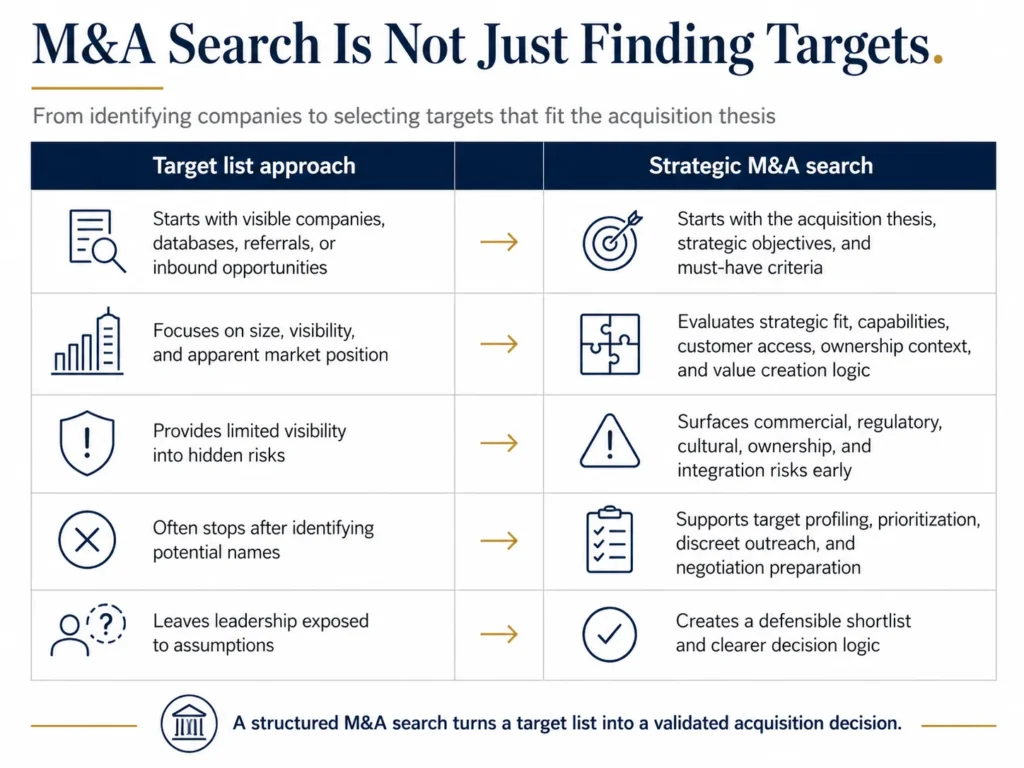
Figure 1. M&A Search Is Not Just Finding Targets: A structured M&A search turns a target list into a validated acquisition decision.
The Benefits of a Structured Mergers & Acquisitions Process
Companies often start M&A with a short list of obvious targets, personal referrals, or inbound opportunities. Those can be useful starting points, but they rarely provide a complete view of the market or the risks behind each option. A structured process helps executives make acquisition decisions with evidence rather than momentum alone.
In our experience, the benefits fall into three categories:
- Strategic clarity. Instead of chasing every possible opportunity, the process starts with a clear acquisition thesis: market entry, portfolio expansion, capability acquisition, customer access, vertical integration, defensive positioning, or regional consolidation. This focus makes screening more rigorous and helps leadership prioritize only the targets that truly fit the strategy.
- Better negotiation power. When you understand a target’s strengths, weaknesses, ownership context, commercial dependencies, likely concerns, and potential deal-breakers, you can negotiate from knowledge rather than guesswork. This can improve valuation discipline, deal structure, timing, and negotiation strategy.
- Reduced risk of failure. M&A risk rarely comes only from the numbers. A systematic approach helps uncover strategic, commercial, operational, regulatory, cultural, and integration risks early, before they become expensive surprises.
This is consistent with Wharton Executive Education’s view of mergers and acquisitions, which emphasizes that acquisition strategy connects valuation, negotiation, deal structure, due diligence, and integration.
“Midas explained clearly why our target was overvalued and gave us the insights to negotiate a better deal. Their support saved us millions.”
Senior Vice President, Healthcare Company, M&A Services 2024
The Challenges of Mergers & Acquisitions in Latin America
Latin America offers attractive acquisition opportunities, but the region should not be treated as a single homogeneous market. Deal dynamics vary significantly by country, sector, ownership structure, regulatory environment, channel model, and business culture. A target that looks attractive in a spreadsheet may carry risks that only become visible through local intelligence and disciplined due diligence.
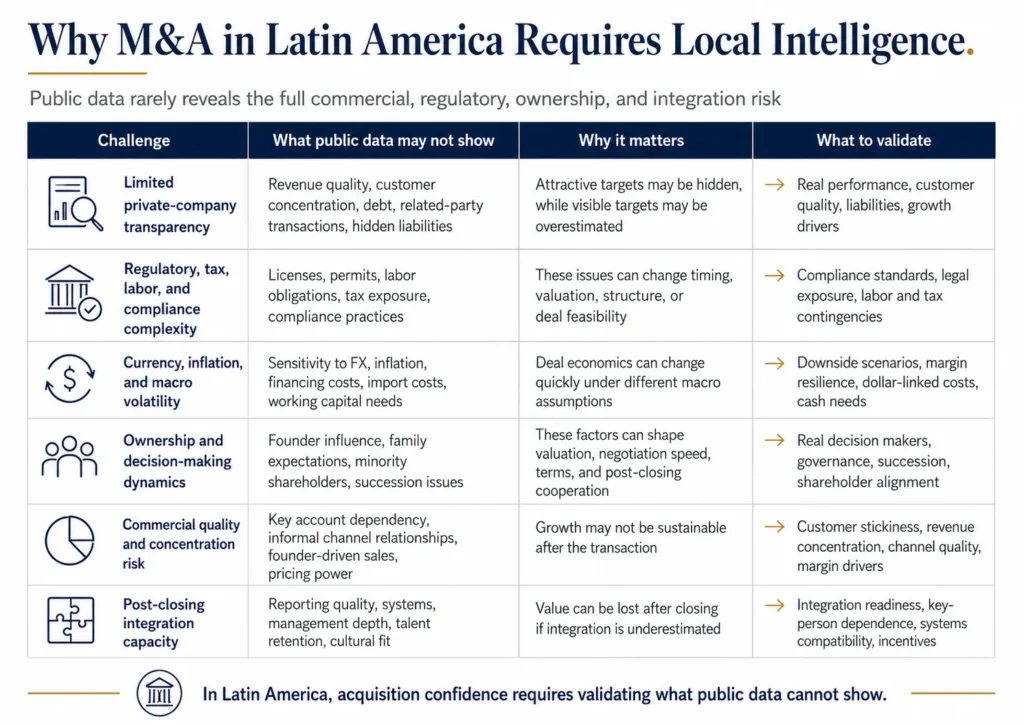
Figure 2. Why M&A in Latin America Requires Local Intelligence: Acquisition confidence requires validating what public data cannot show.
The challenges we see most often are:
- Limited transparency in private-company information. Many attractive acquisition targets in Latin America are privately held, family-owned, or not actively marketed for sale. Public data may be incomplete, outdated, or inconsistent, which makes it difficult to assess real revenue quality, customer concentration, profitability, debt, related-party transactions, and hidden liabilities. This is why local intelligence and disciplined due diligence are essential before a buyer relies on the numbers.
- Regulatory, tax, labor, and compliance complexity. M&A transactions in the region can be affected by country-specific rules on merger control, foreign investment, licenses, permits, tax exposure, labor obligations, social security liabilities, environmental issues, and sector-specific regulation. These issues can change the timing, valuation, transaction structure, and even the feasibility of the deal.
- Currency, inflation, and macroeconomic volatility. Deal economics in Latin America can change quickly when exchange rates, inflation, interest rates, import costs, financing conditions, or political expectations shift. A target that looks attractive under one set of assumptions may become less compelling if margins, working capital needs, dollar-linked costs, or repatriation assumptions move against the buyer.
- Ownership structure and decision-making dynamics. Many mid-market companies in Latin America are controlled by founders, families, or concentrated shareholder groups. The formal owner may not be the only real decision-maker, and succession, governance, family expectations, minority shareholders, or emotional attachment to the business can influence valuation, negotiation speed, deal terms, and post-closing cooperation.
- Commercial quality and customer concentration risk. A target may look attractive because of revenue growth, but the quality of that growth may depend on a few key accounts, informal channel relationships, non-transferable founder relationships, unusually favorable payment terms, or temporary market conditions. Buyers need to validate whether the customer base, margins, pricing power, and channel access are sustainable after the transaction.
- Post-closing integration capacity. The acquisition may look attractive on paper but fail to create value if the buyer underestimates integration. Key questions include whether the target has reliable reporting, scalable systems, transferable customer relationships, retainable talent, compatible incentives, and management depth. In Latin America, integration planning should begin before signing, not after closing.
For C-level executives, the implication is clear: M&A in Latin America should not be evaluated only through a financial model or a list of apparent targets. The real work is to validate what public information does not show: ownership incentives, customer quality, compliance exposure, tax and labor contingencies, negotiation context, operational reality, and the buyer’s ability to capture value after closing.
This is why our M&A search process combines target mapping, local market intelligence, strategic due diligence, discreet validation, and negotiation preparation. The objective is not simply to find companies that could be acquired. It is to identify targets that fit the acquisition thesis, surface deal-breakers earlier, and help leadership teams acquire with greater confidence.
“We thought we knew the right acquisition candidates, but Midas uncovered two hidden gems we hadn’t even considered. Their intelligence was spot-on.”
Head of Business Development, Consumer Goods Company, M&A Services, 2025
A Step-by-Step Approach to Mergers and Acquisitions
At Midas, we use a phased methodology that balances rigor, confidentiality, and practical deal momentum. The objective is to move from a broad market universe to a prioritized set of targets, then to informed conversations and stronger negotiations.
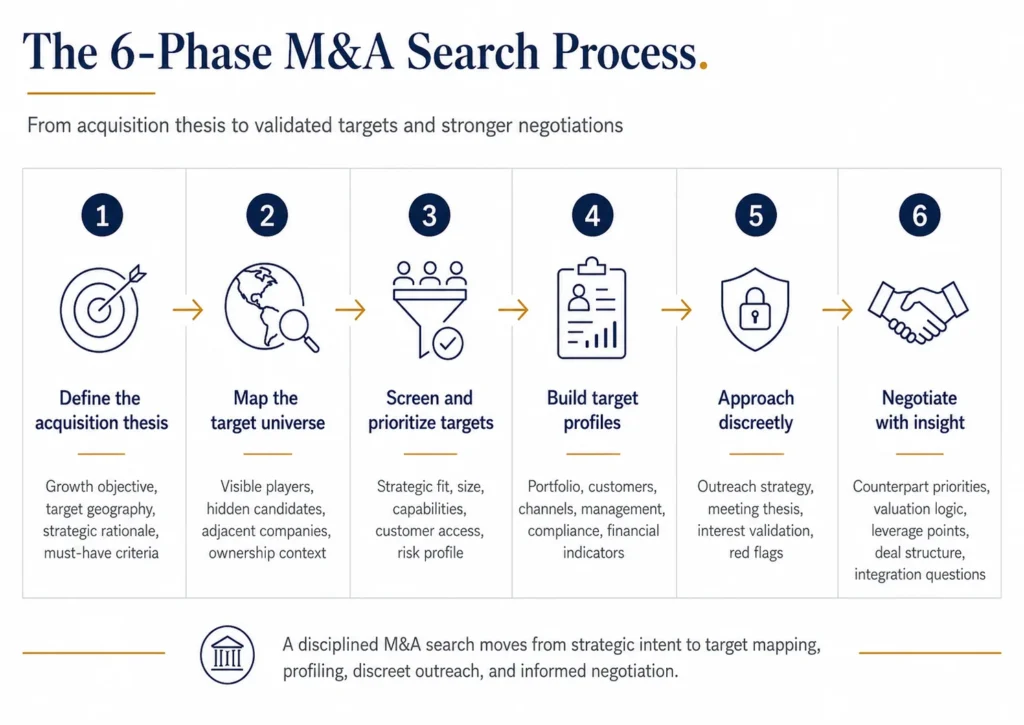
Figure 3. The Midas 6-Phase M&A Search Process: A disciplined M&A search moves from acquisition thesis to market mapping, target profiling, discreet outreach, negotiation insight, and integration readiness.
Phase I: Define the acquisition thesis
We begin by aligning on the strategic objective. Are you seeking market entry, geographic expansion, customer access, portfolio extension, technology, innovation capabilities, vertical integration, or defensive positioning? We then define attractiveness criteria, must-have requirements, deal-breakers, and the level of risk you are willing to accept.
Phase II: Build the market map and screen targets
We develop a master list of potential targets and screen them based on strategic fit, market position, size, portfolio, customer base, geographic reach, ownership structure, regulatory exposure, and available public or proprietary intelligence. This narrows the universe to companies worth analyzing in depth.
Phase III: Develop in-depth target profiles
For priority candidates, we build detailed profiles covering business model, portfolio, customers, channels, management, ownership, capabilities, compliance, financial indicators, government relationships, growth potential, risks, and likely deal considerations. Where needed, we complement secondary research with expert interviews and local intelligence.
Phase IV: Prioritize and prepare the approach
We help you compare targets, identify likely concerns, assess negotiation levers, and prepare a discreet outreach strategy. This includes defining the partnership or acquisition logic in a way that is credible and compelling for the target.
Phase V: Approach and negotiate with insight
Once the right candidates are identified, we support discreet outreach and meeting preparation. During negotiations, our intelligence helps you understand what may matter to the other side: valuation expectations, succession issues, growth ambitions, governance concerns, timing, risk appetite, or preferred deal structures.
Phase VI: Support strategic due diligence and integration thinking
Before a deal advances too far, we help identify strategic, commercial, operational, cultural, and integration questions that need to be validated. The goal is to avoid treating due diligence as a financial checklist and instead connect it to the original acquisition thesis.
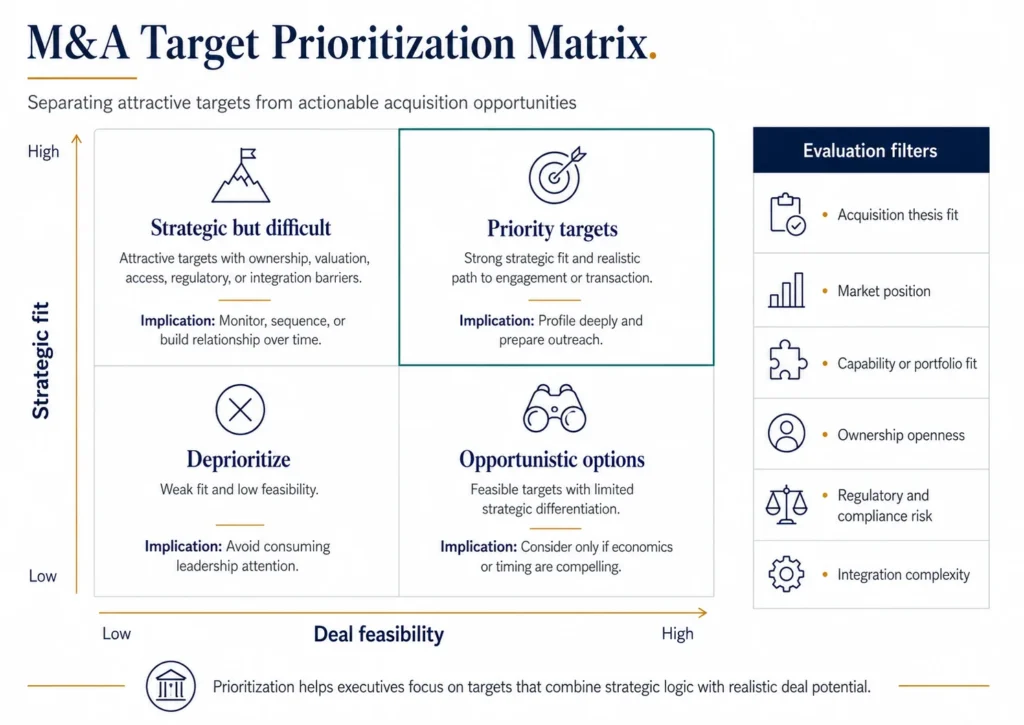
Figure 4. Midas’ M&A Target Prioritization Matrix: Prioritization helps executives focus on targets that combine strategic logic with realistic deal potential.
Depending on the deal objective, M&A search can also connect with market entry consulting when the acquisition is part of a country or regional expansion strategy, go-to-market consulting when the acquisition needs to be translated into commercial execution, distributor search consulting when partnership or channel alternatives must be compared with acquisition, or wargame consulting when the deal could trigger competitor reactions or post-deal countermoves.
Strengths and Limitations of This Mergers and Acquisitions Approach
No M&A process can eliminate risk. But a disciplined approach helps executives identify the right targets, surface deal-breakers earlier, and avoid pursuing opportunities that look attractive only because key information is missing.
Strengths
- Strategic focus. The process starts with the acquisition thesis, so you do not waste time chasing targets that are available but not strategically relevant.
- Hidden-target discovery. In Latin America, attractive companies are not always visible in databases or marketed through formal sell-side processes. Local intelligence can surface candidates that you may otherwise miss.
- Earlier risk detection. Target profiles help identify commercial, operational, regulatory, ownership, cultural, and negotiation risks before the process becomes too costly or politically committed.
- Better negotiation leverage. Understanding the target’s context, constraints, priorities, and potential deal-breakers helps you negotiate with more discipline and confidence.
Limitations
- It requires time and discretion. Rigorous target mapping, profiling, validation, and outreach take time. Rushing the process can lead to weak target selection or confidentiality risks.
- Information may remain incomplete. In private markets, some information can only be validated after direct conversations, data-room access, or formal due diligence.
- Fewer targets may be better. A rigorous process may reduce the list quickly. That can feel restrictive, but it helps leadership focus on the candidates most likely to fit the strategic thesis.
- Search is not a substitute for diligence. Target search and profiling improve decision quality, but they do not replace legal, financial, tax, operational, ESG, or cultural due diligence once a transaction progresses. When the target search raises broader strategic questions, such as whether to acquire, partner, build directly, delay entry, or avoid the opportunity, strategy consulting can help leadership teams clarify the strategic logic, trade-offs, resource implications, and execution requirements before the deal advances too far.
“What stood out for me was how Midas helped us understand the other side’s priorities. That made all the difference in getting the deal across the finish line.”
Strategy Director, Industrial Equipment Company, M&A Project, 2025
Practical Case: Entering a Market Through the Right Partner
One client, a global company without a local presence, needed to launch a product in Latin America but lacked the commercial infrastructure to do it alone. The strategic question was whether to build directly, acquire capabilities, form a joint venture, or partner with an established local player.
In situations like this, market entry analysis can help compare whether the market is attractive and winnable, while distributor search consulting can help evaluate whether a partnership route may be more appropriate than an acquisition.
Midas helped the client define the target profile: portfolio fit, market access, government relationships, regulatory experience, commercial capabilities, management quality, geographic reach, and willingness to invest in the category.
We then screened and profiled dozens of potential candidates, narrowing the field to three strong options. After facilitating introductions and supporting negotiations, the company selected a partner that matched not only the portfolio requirements, but also the local market know-how and institutional relationships needed to execute.
When target screening reveals several possible routes to market, go-to-market consulting can help translate the selected partner, acquisition target, or joint venture into a practical commercial execution plan.
The result was a successful market entry, accelerated revenues, and a long-term partnership that continues today.
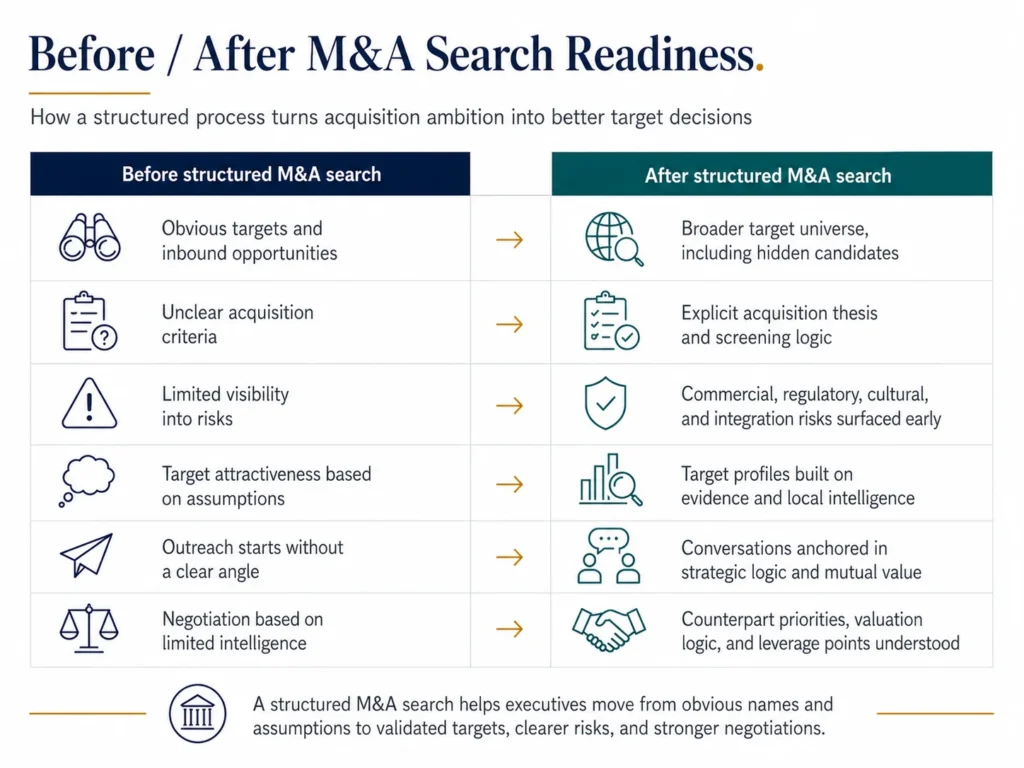
Figure 5. Before / After M&A Search Readiness: Midas’ structured M&A search helps executives move from obvious names and assumptions to validated targets, clearer risks, and stronger negotiations.
Conclusion: Acquire with Confidence
M&A in Latin America offers real opportunities, but only when approached with discipline, local knowledge, and the right intelligence. The difference between a successful acquisition and a costly mistake often comes down to preparation: knowing why you want to acquire, which targets truly fit, which risks matter, and how the deal will create value after closing.
A structured M&A search process helps executives move from opportunity scanning to informed decision-making. It reveals hidden targets, surfaces deal-breakers earlier, improves negotiation leverage, and connects the transaction to the strategic logic that justified it in the first place.
For C-level executives, the goal is not simply to complete a deal. The goal is to acquire with confidence, and to make sure the deal strengthens the company after the transaction is signed.
About the Author:
By Adrian Alvarez, PhD. Adrian Alvarez is Managing Partner at Midas Consulting, a Wharton Alumnus, MBA Professor at Universidad Argentina de la Empresa (UADE), and Competitive Intelligence Fellow. He specializes in competitive strategy, growth strategy, M&A search, target screening, market entry, and strategic decision-making under uncertainty across Latin America.
He has contributed to mergers and acquisitions initiatives including competitive assessment, market evaluation, target screening, strategic due diligence, partner identification, and negotiation support. You can explore more of his thinking in Midas Consulting’s Applied Strategic Intelligence Hub.
Selected External References
This guide is informed by Midas Consulting’s M&A search and strategic due diligence work across Latin America and by respected sources on acquisition strategy, due diligence, negotiation, culture, and integration.
- Harvard Business Review: The New M&A Playbook
- Wharton Executive Education: Mergers and Acquisitions
- Harvard Business Review: A Guide to Building a Unified Culture After a Merger or Acquisition
- Cultural Due Diligence in Mergers and Acquisitions
Related Midas Resources for M&A Decisions
M&A decisions often sit at the intersection of growth strategy, market entry, target screening, strategic due diligence, negotiation, go-to-market execution, and post-deal value creation. These Midas resources can help executives connect acquisition search with the next strategic decision:
- M&A Consulting: When your company needs to identify, evaluate, prioritize, approach, and negotiate with acquisition targets, joint-venture candidates, licensing partners, or strategic partners.
- Market Entry Consulting: When an acquisition is part of a broader decision about which country, segment, or regional opportunity to enter.
- Go-to-Market Consulting: When the acquisition thesis depends on translating the deal into customer targeting, channel design, pricing, sales priorities, and commercial execution.
- Distributor Search Consulting: When leadership teams need to compare acquisition with partnership, licensing, distribution, or channel-based entry options.
- Benchmarking Consulting: When the buyer needs to compare target capabilities, cost structures, channel practices, service levels, operating models, or competitor performance before prioritizing candidates.
- Wargame Consulting: When a deal could trigger competitor reactions, customer concerns, channel conflict, regulatory attention, or post-deal countermoves.
- Strategy Consulting: When M&A raises broader questions about growth priorities, resource allocation, competitive positioning, operating model, or execution.
- Applied Strategic Intelligence: When executives need a stronger fact base to interpret market signals, hidden risks, ownership context, competitor behavior, and local business realities.
For executives who want to explore the analytical foundations behind M&A search and target evaluation, these Midas articles provide additional context:
- Market Analysis: When acquisition decisions depend on understanding demand, customer segments, market structure, barriers, channels, and opportunity attractiveness.
- Competitor Analysis: When target evaluation requires a deeper view of incumbent competitors, local players, positioning, pricing, capabilities, and likely reactions.
- Benchmarking: When leadership teams need to compare target capabilities, operating models, performance gaps, service levels, or commercial practices against competitors or reference companies.
- Market Entry Analysis: When the acquisition is one possible route into a market and leadership needs to compare whether to enter, partner, acquire, monitor, or avoid the opportunity.
Together, these resources show how M&A fits into a broader strategic process: define the acquisition thesis, understand the market, identify the right targets, validate risks, negotiate from insight, and prepare for post-deal value creation.
At Midas Consulting, we help companies identify the right candidates, uncover deal-breakers early, and negotiate from a position of strength. With more than 25 years of experience across major Latin American markets, we understand how local dynamics, hidden risks, and negotiation context can shape deal outcomes.
If you are considering an acquisition, joint venture, licensing agreement, or strategic partnership in the region, do not leave the target search to chance.
Want to acquire with more confidence?
Understanding how mergers and acquisitions work is one thing. Identifying, evaluating, and approaching the right target in Latin America is another.
We help you acquire with more confidence
We support leadership teams before, during, and after the M&A search process: defining the acquisition thesis, mapping the market, screening targets, building target profiles, supporting discreet outreach, and preparing for negotiations.
After conducting hundreds of M&A, market entry, distributor search, and growth strategy projects, we have refined an approach that helps companies move from broad acquisition ambition to better-fit targets and stronger deal decisions.
Some of Our Customers:






Benefits You Can Expect from Our Mergers and Acquisitions Consulting
Gain clarity on the right targets
See the market with greater clarity and focus on acquisition candidates that fit your strategic objectives, risk appetite, and growth priorities.
Spot risks before they become expensive
Identify red flags early, including commercial weaknesses, regulatory exposure, cultural mismatch, ownership complexity, integration concerns, or inflated valuation logic.
Negotiate from a stronger position
Use target intelligence to understand what matters to the other side, where your leverage sits, and which deal terms may protect value.
Ready to Accelerate Your Mergers and Acquisitions Journey?
Schedule a focused conversation
We discuss your acquisition thesis, target geographies, strategic objectives, decision timeline, and the type of company or partner you are looking for.
Define the right M&A search workplan
We design a tailored approach that may include market mapping, target screening, company profiling, strategic due diligence questions, partner outreach, and negotiation support.
Receive a prioritized target list
We help you move from a broad universe of possibilities to a curated set of companies that fit your strategic criteria and risk profile.
Approach and negotiate with confidence
We support discreet outreach and help you prepare for conversations with insight into target priorities, likely concerns, and negotiation levers.
Looking to acquire the right company? Let’s make it happen with discipline, insight, and confidence.