
Consulting for IT Products, Software, SaaS, and Hardware to Turn Technology into Profitable Growth
A strong technology product does not automatically create a strong technology business.
Your software may solve a real problem but struggle to reach the right buyer.
Your SaaS platform may acquire customers but lose value through weak onboarding, low usage, discounting, or churn.
Your hardware may perform well but depend on distributors that do not understand the application, service the installed base, or generate sufficient demand.
In technology markets, growth depends on much more than product functionality.
Your company must connect:
- A valuable customer problem
- A clearly defined use case
- The right buyer and user
- A credible value proposition
- Appropriate packaging and pricing
- An effective route to market
- Successful implementation
- Sustained adoption
- Renewal and expansion
- A defensible competitive position
Midas Consulting helps software, SaaS, and hardware companies make stronger decisions across this entire growth system.
For more than 25 years, we have helped companies evaluate markets, prioritize customers, sharpen value propositions, design go-to-market strategies, select partners, benchmark competitors, test strategies, and expand across Latin America and selected international markets.
We help you answer questions such as:
- Which countries, industries, company sizes, use cases, and buyer groups should you prioritize?
- Where does your product create enough value to support adoption and attractive economics?
- Should your growth model be product-led, sales-led, partner-led, or hybrid?
- Which functions participate in the buying decision?
- How should you position your offer against established vendors, emerging platforms, internal solutions, and doing nothing?
- Which features create differentiation—and which have become expected?
- How should you package and price your software, SaaS plans, hardware, services, and support?
- Why are customers failing to adopt, renew, expand, or migrate?
- Which resellers, distributors, systems integrators, consultants, and technology partners can accelerate growth?
- How should you enter Latin American markets where procurement, localization, support, regulation, and partner structures differ?
- How could competitors respond to your launch, pricing decision, partnership, acquisition, or platform strategy?
- Should you grow organically, partner, license, bundle, acquire, or reposition the business?
You receive more than a description of the technology market.
You receive a clearer view of which customers to pursue, why they should choose you, how to reach them, and what must happen after the sale for growth to become sustainable.
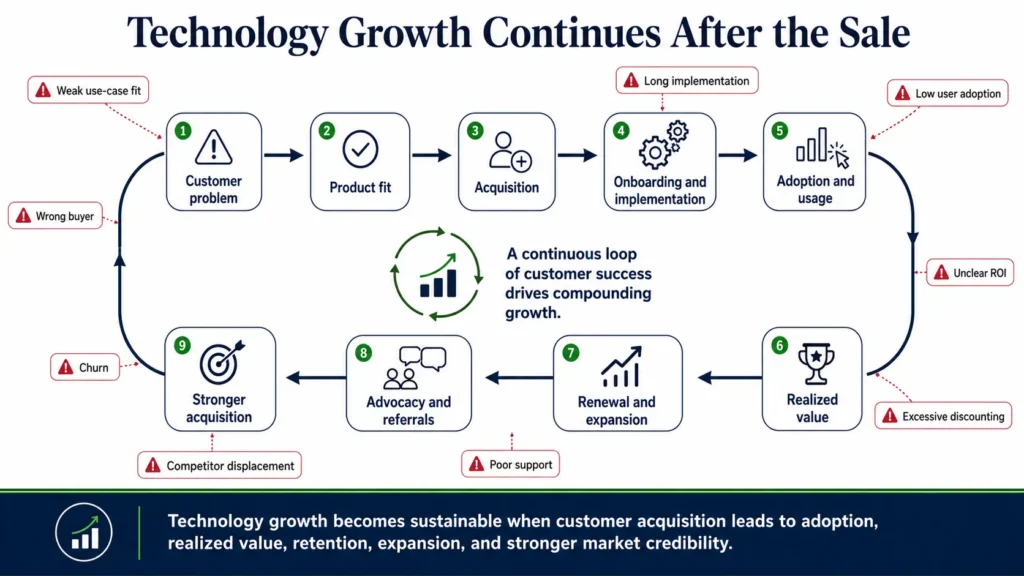
Figure 1. Technology growth becomes sustainable when customer acquisition leads to adoption, realized value, retention, expansion, and stronger market credibility.
Begin with the Use Case, Not the Technology Category
Labels such as “enterprise software,” “SaaS,” “cybersecurity,” “analytics,” “cloud,” “AI,” or “hardware” are often too broad to define a useful market.
Customers do not purchase a technology category in the abstract.
They purchase a solution for a specific problem.
Your product may help them:
- Increase revenue
- Reduce operating costs
- Automate a process
- Improve decision-making
- Strengthen cybersecurity
- Reduce downtime
- Improve employee productivity
- Manage customers
- Comply with regulation
- Integrate systems
- Improve collaboration
- Monitor assets
- Reduce risk
- Improve user experience
The same platform may compete differently according to:
- Industry
- Company size
- Business function
- Workflow
- Current technology stack
- Digital maturity
- Regulatory environment
- Integration requirements
- Data sensitivity
- Geographic footprint
- Urgency
- Budget ownership
A financial-services company evaluating cybersecurity software may have very different requirements from a smaller industrial company considering the same technical capability.
A large enterprise may need integration, governance, auditability, service-level commitments, and implementation support.
A smaller company may prioritize simplicity, speed, transparent pricing, and limited dependence on IT resources.
We therefore define the market through:
- The customer problem
- The use case
- The user
- The economic buyer
- The technology environment
- The adoption barrier
- The route to value
This creates a more accurate opportunity assessment than applying a broad software or IT growth rate to your sales forecast.
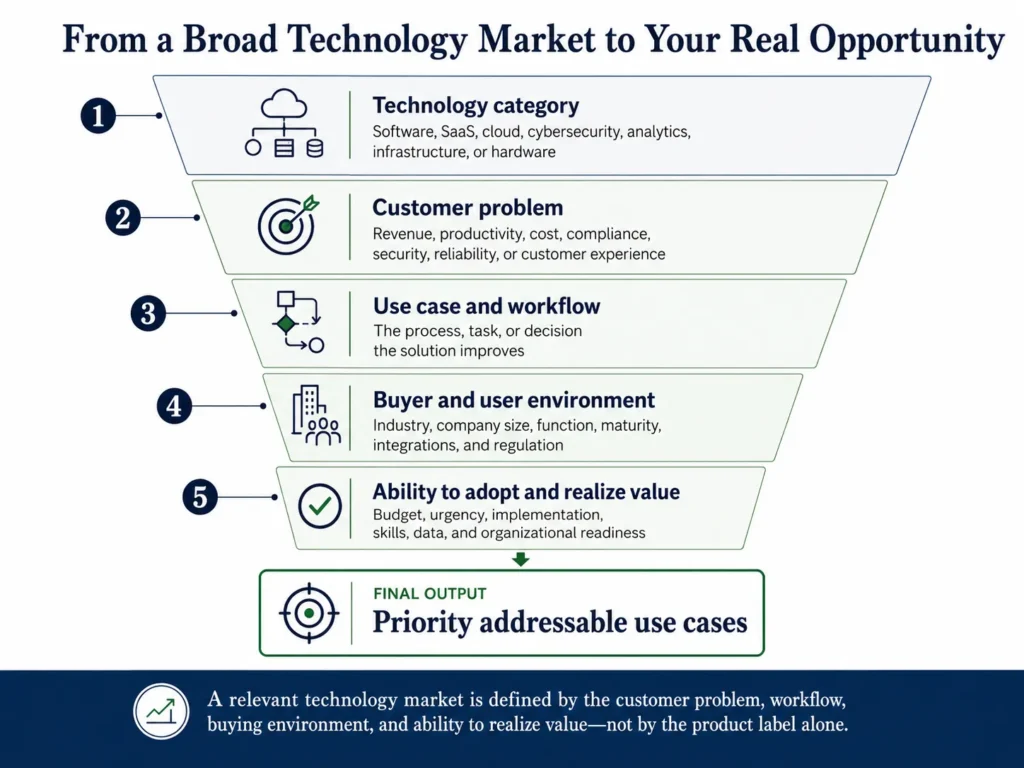
Figure 2. A relevant technology market is defined by the customer problem, workflow, buying environment, and ability to realize value—not by the product label alone.
The Buyer, User, Budget Owner, and Technical Approver May Be Different People
Technology decisions frequently involve a broad buying committee.
Depending on the product, stakeholders may include:
- Business-unit leadership
- Information technology
- Chief information or technology leadership
- Information security
- Operations
- Finance
- Procurement
- Legal
- Compliance
- Data and analytics
- Human resources
- Sales and marketing
- End users
- External consultants
- Systems integrators
Each stakeholder may ask a different question.
The business sponsor may ask:
- Will this improve performance?
- How quickly will we see results?
- Does it solve a priority problem?
- What happens if we do nothing?
IT may ask:
- Will it integrate?
- Is it scalable?
- How difficult is implementation?
- What internal resources will it require?
- Will it create technical debt?
Security and compliance may ask:
- How is data protected?
- Where is it stored?
- Which standards are met?
- What risks does the supplier create?
- How will access and permissions be governed?
Finance may ask:
- What is the return?
- Is the contract flexible?
- How does the total cost compare with alternatives?
- What additional implementation or service costs exist?
Procurement may ask:
- What discounts are available?
- Which competing vendors are approved?
- How favorable are the terms?
- Is vendor concentration creating risk?
Users may ask:
- Is it easy to use?
- Will it improve my work?
- Will it create additional tasks?
- How much training is required?
A technology vendor may win the support of one stakeholder and still lose the decision.
We help you map:
- Who experiences the problem
- Who sponsors the purchase
- Who controls the budget
- Who evaluates the technology
- Who manages risk
- Who uses the product
- Who can block adoption
- Which proof each stakeholder requires
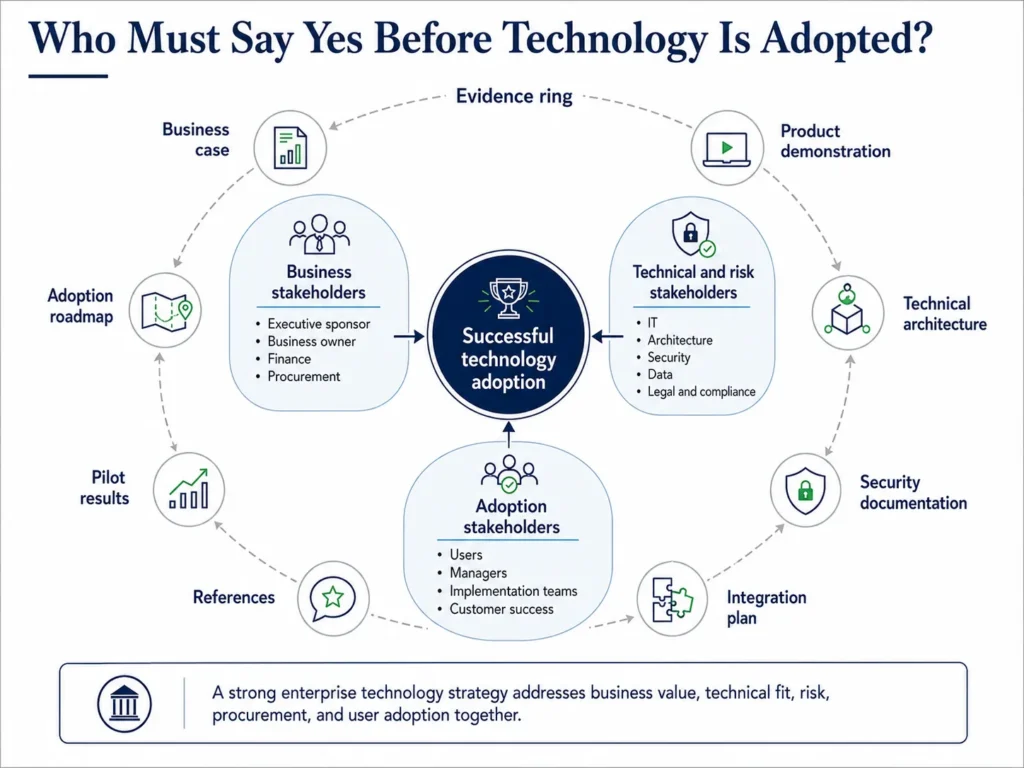
Figuer 3. A strong enterprise technology strategy addresses business value, technical fit, risk, procurement, and user adoption together.
Product-Market Fit Is More Than Customer Interest
Customers may express interest in a product without becoming successful users.
They may request a demonstration, participate in a pilot, or sign a contract, but then fail to adopt the product fully.
True product-market fit requires alignment among:
- A meaningful problem
- A sufficiently urgent need
- A clear product advantage
- An acceptable switching cost
- A viable purchase process
- Successful implementation
- Repeated usage
- Demonstrated value
- Willingness to renew and expand
Early sales can create misleading confidence when they depend on:
- Founder relationships
- Heavy customization
- Exceptional discounts
- Excessive implementation support
- One unusually motivated customer
- A narrow regulatory event
- A temporary budget
- A single dominant channel partner
We help you determine whether growth is repeatable.
Relevant questions include:
- Which customers achieve value fastest?
- Which use cases produce the strongest retention?
- Where is sales effort disproportionately high?
- Which customer types require excessive customization?
- Why do pilots fail to convert?
- Which customers expand after adoption?
- Which users become active and which remain passive?
- What distinguishes successful implementations?
- Which segments have attractive acquisition and support economics?
A Signed Contract Is Not Proof of Product-Market Fit
A technology business has stronger evidence of fit when customers adopt the product, use it consistently, realize value, renew, and expand without requiring an unsustainable level of customization or support.
Acquisition Is Only the First Stage of SaaS Growth
SaaS companies often focus heavily on new customer acquisition.
However, recurring-revenue economics depend on the complete customer lifecycle.
- Acquisition. Can your company generate qualified demand and convert it at an acceptable cost?
- Onboarding. Can customers reach initial value quickly?
- Adoption. Do the right users engage with the product and incorporate it into their work?
- Retention. Does the solution remain relevant and difficult to remove?
- Expansion. Can the customer add users, modules, data, workflows, locations, or business units?
- Advocacy. Will successful customers provide references, reviews, referrals, and market credibility?
Weakness in any stage can damage growth.
A company may generate many new logos but lose value through churn.
It may retain customers but fail to expand because the product serves only a narrow use case.
It may have strong usage but weak pricing and packaging.
We help you examine:
- Customer acquisition cost
- Sales-cycle length
- Trial and pilot conversion
- Time to value
- Activation
- Usage depth
- Adoption by role
- Retention
- Gross and net revenue retention
- Expansion
- Support burden
- Customer profitability
- Reference generation
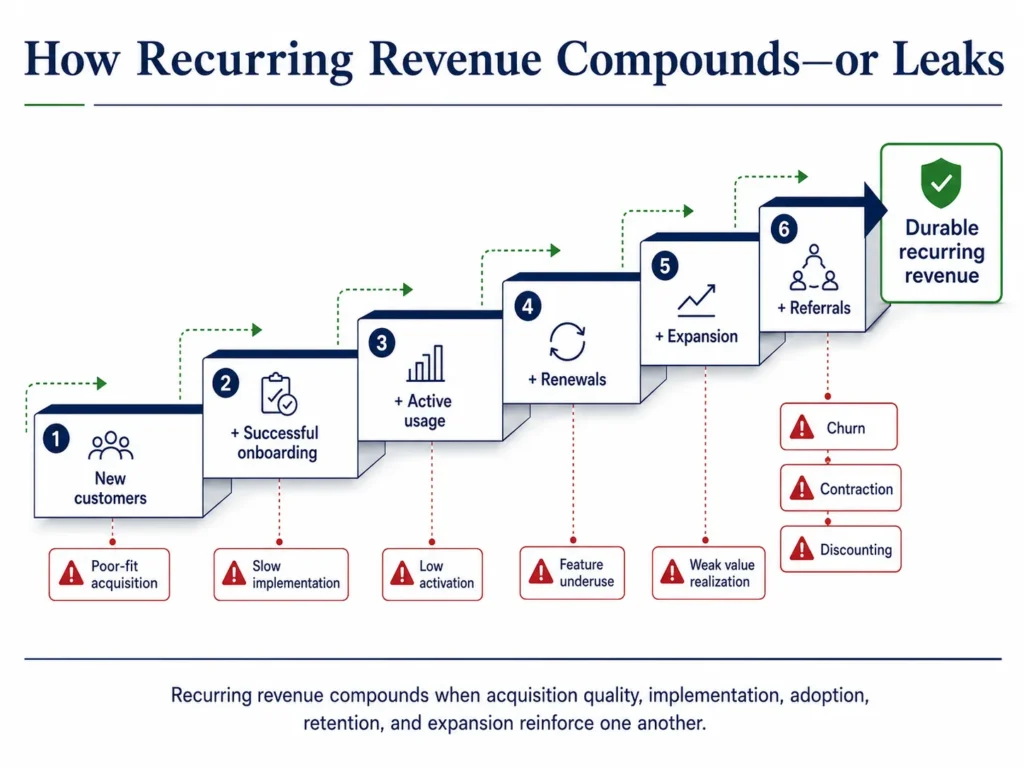
Figure 4. Recurring revenue compounds when acquisition quality, implementation, adoption, retention, and expansion reinforce one another.
Hardware Growth Depends on the Installed Base and the Ecosystem Around It
Hardware businesses have different economics from pure software companies.
Demand may come from:
- New installations
- Replacement
- Technology refresh
- Capacity expansion
- Regulatory upgrades
- Failure
- Performance improvement
- Compatibility requirements
- Bundled projects
The installed base can create recurring opportunities through:
- Spare parts
- Consumables
- Accessories
- Software licenses
- Maintenance
- Warranties
- Upgrades
- Managed services
- Training
- Replacement cycles
However, the commercial value of the installed base depends on whether your company can identify, reach, and support it.
We help hardware companies analyze:
- Installed units
- Age and configuration
- Refresh cycles
- Failure and replacement rates
- Attach rates
- Service penetration
- Software and subscription opportunities
- Channel coverage
- Inventory requirements
- Warranty economics
- Compatibility
- Competitive replacement risk
A hardware strategy may need to connect product sales with:
- Software
- Cloud services
- Data
- Maintenance
- Financing
- Support
- Managed services
- Partner capabilities
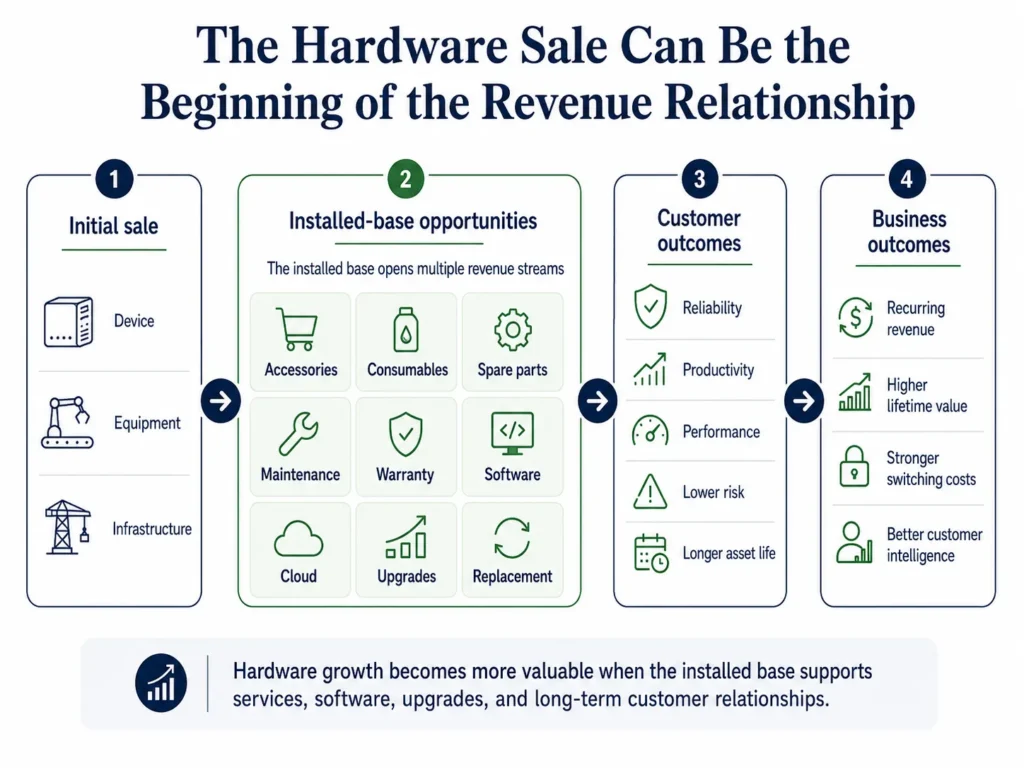
Figure 5. Hardware growth becomes more valuable when the installed base supports services, software, upgrades, and long-term customer relationships.
Choose the Growth Motion That Fits the Product
Technology companies often adopt a fashionable growth model without considering whether it fits the product, buyer, price, complexity, and implementation requirements.
Product-led growth
Product-led growth can work well when customers can:
- Discover the product easily
- Begin using it without extensive assistance
- Reach value quickly
- Invite other users
- Upgrade through clear usage or feature limits
It may be less suitable when implementation requires integration, data migration, security approval, or organizational change.
Sales-led growth
A sales-led model can be appropriate when:
- The contract is large
- The buying committee is complex
- The solution requires education
- Implementation is significant
- The value case must be tailored
- Procurement is formal
Partner-led growth
Partners can create value when they provide:
- Customer access
- Local trust
- Consulting
- Integration
- Implementation
- Support
- Industry knowledge
- Procurement access
Hybrid growth
Many companies need several motions.
For example:
- Product-led adoption within teams
- Enterprise sales for broader contracts
- Integrators for implementation
- Cloud marketplaces for procurement
- Partners for geographic expansion
We help you define the appropriate role of each growth motion.
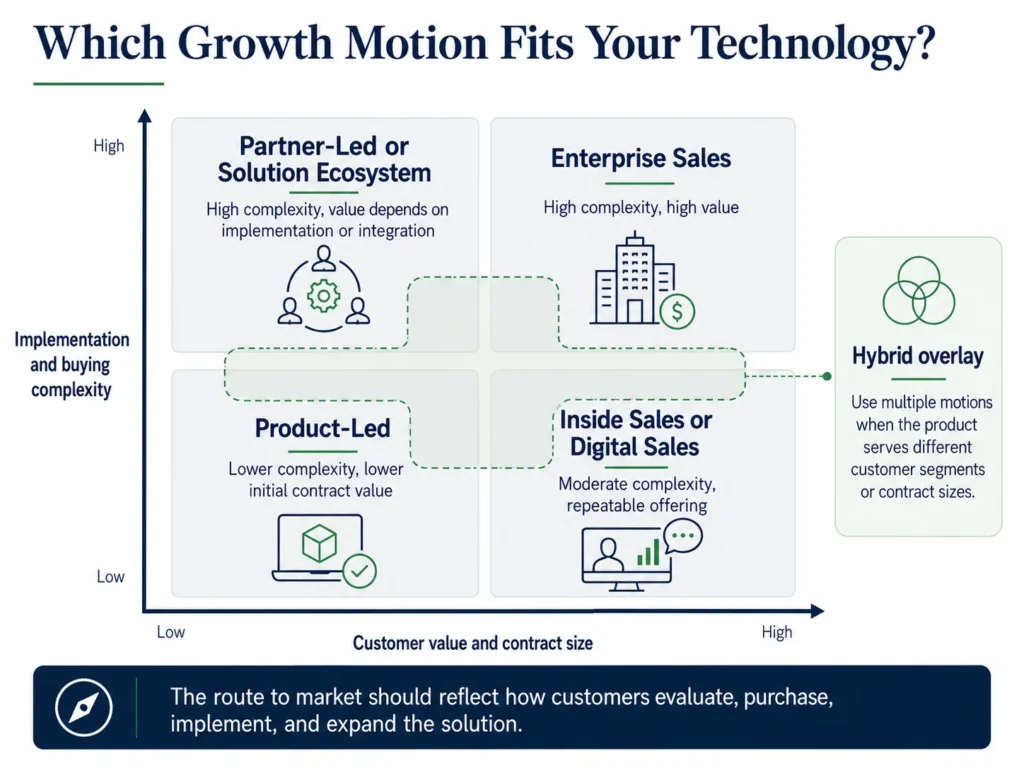
Figure 6. The route to market should reflect how customers evaluate, purchase, implement, and expand the solution.
Packaging and Pricing Shape Adoption and Expansion
Technology pricing is not only a monetization decision.
It influences:
- Which customers enter
- How easily they understand the offer
- Which users adopt
- How usage expands
- Whether procurement accepts the contract
- How revenue grows with customer value
- How competitors compare the product
Software and SaaS pricing may be based on:
- Users or seats
- Usage
- Transactions
- Data volume
- Devices
- Locations
- Features
- Outcomes
- Flat subscription
- Hybrid models
Hardware economics may include:
- Unit price
- Leasing
- Subscription
- Financing
- Maintenance
- Consumables
- Software
- Warranty
- Managed service
Poor packaging can create:
- Confusion
- Long negotiations
- Excessive discounting
- Unprofitable small customers
- Barriers to initial adoption
- Weak expansion
- Revenue leakage
- Channel conflict
We help you evaluate:
- Free trials and freemium
- Entry plans
- Good-better-best tiers
- Enterprise editions
- Usage metrics
- Feature fences
- Bundles
- Add-ons
- Implementation fees
- Support levels
- Contract duration
- Discount governance
- Regional pricing
- Partner margins
- Hardware-service bundles
A strong model should connect price with customer value while remaining understandable and operationally manageable.
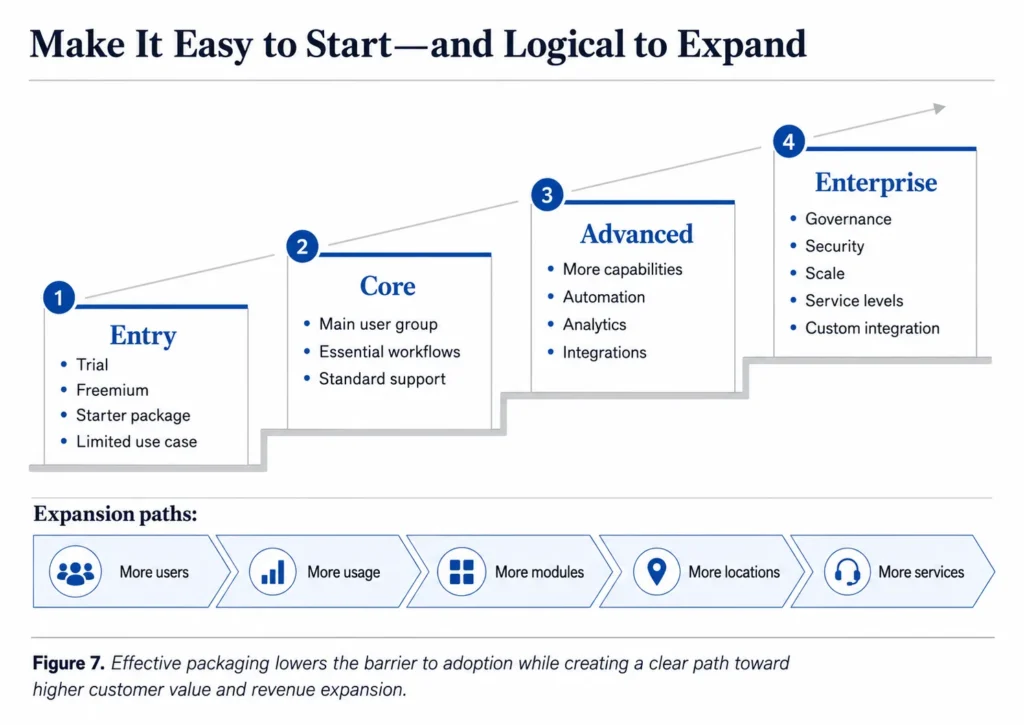
Figure 7. Effective packaging lowers the barrier to adoption while creating a clear path toward higher customer value and revenue expansion.
Winning Enterprise Customers Requires More Than a Product Demonstration
Enterprise technology sales can take months or years.
The process may include:
- Need identification
- Internal sponsorship
- Product discovery
- Demonstration
- Technical evaluation
- Security review
- Pilot
- Procurement
- Legal negotiation
- Budget approval
- Implementation planning
- Vendor onboarding
A strong demonstration may not be enough when:
- The problem lacks executive urgency
- No budget owner is committed
- IT sees integration risk
- Security review begins too late
- Procurement has an incumbent framework
- Users resist change
- The implementation plan appears unrealistic
- The pilot lacks agreed success criteria
We help you examine:
- Opportunity qualification
- Stakeholder coverage
- Champion strength
- Problem urgency
- Budget ownership
- Competitive position
- Technical requirements
- Pilot structure
- Economic case
- Implementation readiness
- Decision process
- Procurement barriers
This can improve sales focus and reduce time spent on opportunities that appear promising but are unlikely to close.
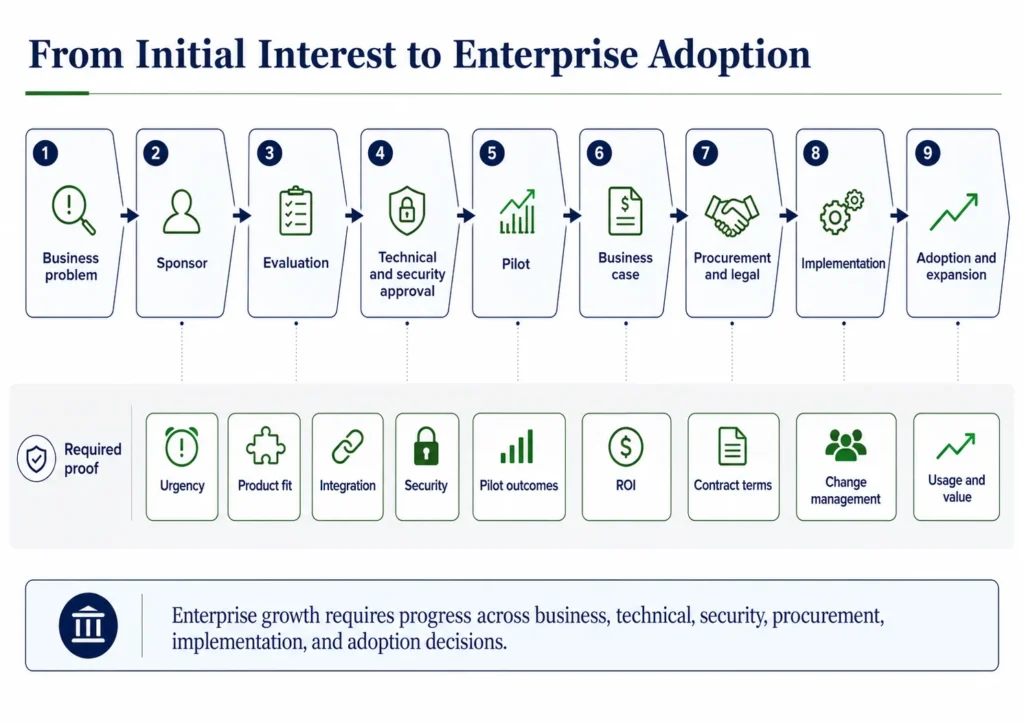
Figure 8. Enterprise growth requires progress across business, technical, security, procurement, implementation, and adoption decisions.
Customer Success Is a Growth Capability
Customer success should not begin when renewal is at risk.
Its purpose is to help customers achieve the value that justified the purchase.
A customer-success model may need to define:
- Desired outcomes
- Onboarding
- Implementation milestones
- Time to value
- Adoption goals
- Usage indicators
- Business reviews
- Risk signals
- Renewal preparation
- Expansion opportunities
- Advocacy
Different customer segments may require different models.
- High-touch. Appropriate for strategic, complex, or high-value accounts requiring significant coordination.
- Tech-touch. Appropriate when digital onboarding, education, usage triggers, and automated support can guide a large customer base.
- Partner-supported. Appropriate when integrators, resellers, or service partners own implementation or local support.
- Hybrid. Appropriate when customer needs change across onboarding, adoption, expansion, and renewal.
We help identify:
- Which behaviors predict retention
- Which customers are at risk
- Which adoption milestones matter
- What customer-success resources are justified
- How sales and customer success should coordinate
- When expansion should be introduced
- Which accounts can become references
Partner and Channel Strategy Consulting for Software, SaaS, and Hardware
Technology partners can perform very different roles.
Potential partners include:
- Distributors
- Value-added resellers
- Systems integrators
- Managed-service providers
- Consultants
- Implementation firms
- Independent software vendors
- Cloud providers
- Telecom operators
- Hardware resellers
- Marketplaces
- Referral partners
A partner may provide:
- Market access
- Industry credibility
- Local relationships
- Procurement access
- Implementation
- Integration
- Support
- Managed services
- Billing
- Financing
- Localization
However, a large partner ecosystem does not guarantee growth.
Partners may underperform because:
- The product is not a priority
- Margins are unattractive
- Salespeople do not understand the use case
- Implementation is difficult
- Lead sharing is weak
- Channel conflict is unresolved
- Enablement is insufficient
- The vendor cannot support joint selling
- Incentives reward registration rather than revenue or adoption
We help you:
- Define the role partners should play
- Identify the ideal partner profile
- Map potential candidates
- Assess technical and commercial capabilities
- Evaluate customer access
- Understand portfolio conflicts
- Approach and qualify candidates
- Compare alternatives
- Design partner economics
- Define enablement
- Establish governance and performance indicators
The objective is not to recruit the maximum number of partners.
It is to build a focused ecosystem that can create qualified demand, support implementation, and improve customer outcomes.
Midas’s broader partner-search approach similarly emphasizes defining the strategic role, validating real capabilities, assessing commitment, and selecting partners that can develop the business rather than merely sign an agreement.
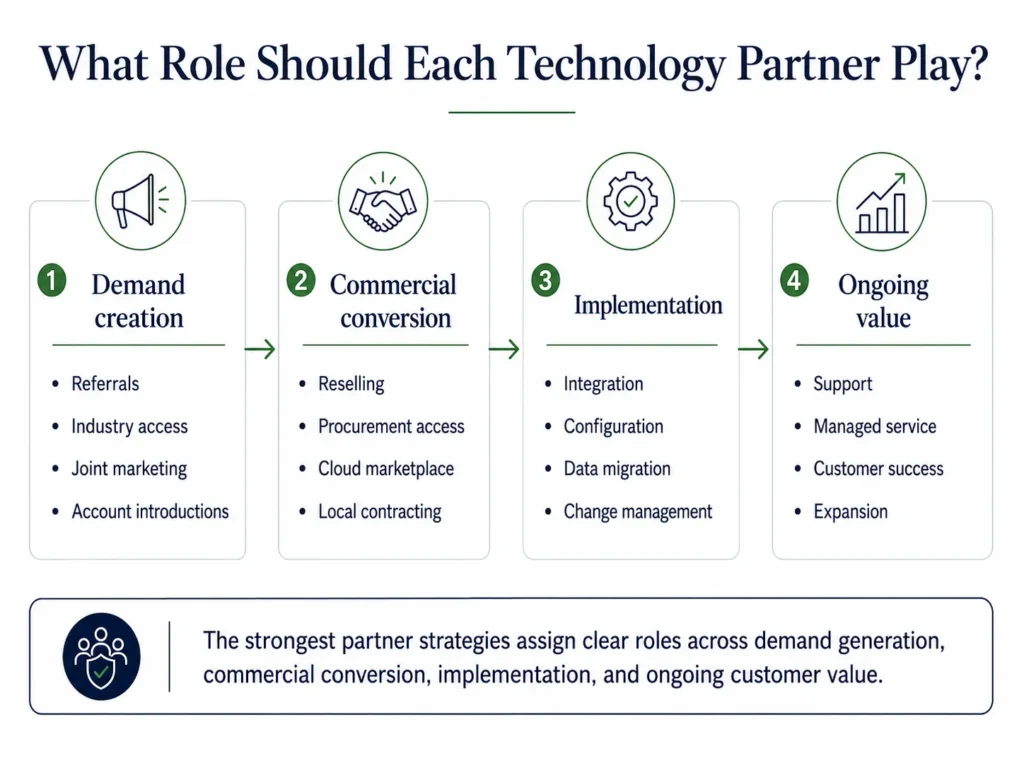
Figure 9. The strongest partner strategies assign clear roles across demand generation, commercial conversion, implementation, and ongoing customer value.
Go-to-Market Strategy Consulting for Software, SaaS, and Hardware Technology Companies
A strong go-to-market strategy connects who to target, why they should buy, how to reach them, how the organization will execute, and how the model will adapt as evidence emerges.
For software, SaaS, and hardware companies, the strategy may need to define:
- Priority industries
- Company sizes
- Use cases
- Buyers and users
- Product positioning
- Packaging
- Pricing
- Product-led and sales-led motions
- Direct and partner channels
- Enterprise sales
- Trials and pilots
- Implementation
- Customer success
- Renewal and expansion
- Metrics and governance
The final roadmap may include:
- Ideal customer profile
- Use-case prioritization
- Buyer and user map
- Value proposition
- Competitive positioning
- Packaging and pricing
- Demand-generation priorities
- Sales model
- Partner strategy
- Pilot and proof-of-value approach
- Implementation requirements
- Customer-success model
- Expansion strategy
- Organizational roles
- Funnel, usage, retention, and revenue indicators
Market Entry Consulting for Software, SaaS, and Hardware
Technology products can appear highly scalable because software can be delivered remotely and hardware can be exported.
Commercial scalability is more complex.
Countries may differ in:
- Customer digital maturity
- Cloud adoption
- IT budgets
- Security requirements
- Data-residency expectations
- Privacy regulation
- Procurement
- Local invoicing
- Taxation
- Currency
- Payment methods
- Language
- Support expectations
- Partner capabilities
- Hardware imports
- Certification
- Financing
- Competitive structure
A product that succeeds through direct digital acquisition in one country may require enterprise sales, local references, a reseller, or an implementation partner elsewhere.
We help you evaluate:
- Country and segment attractiveness
- Priority use cases
- Customer readiness
- Competitor position
- Procurement and localization requirements
- Direct and indirect channel options
- Pricing and payment
- Local support
- Partner needs
- Hardware logistics
- Entry-mode alternatives
- Investment and timing
Potential entry models include:
- Remote direct sales
- Local enterprise sales
- Product-led digital entry
- Distributor
- Value-added reseller
- Systems integrator
- Cloud marketplace
- Telecom or platform partnership
- Local office
- Licensing
- Joint venture
- Acquisition
The right model should balance:
- Speed
- Customer access
- Trust
- Implementation
- Support
- Control
- Margin
- Investment
- Long-term strategic value
Benchmarking the Software, SaaS, and Hardware Companies That Win
Competitor product pages rarely explain why one technology company grows faster, retains customers more effectively, or achieves stronger economics.
The difference may come from:
- Better market focus
- Clearer product positioning
- Faster onboarding
- Simpler packaging
- Stronger partner channels
- More effective enterprise sales
- Lower implementation effort
- Better customer success
- Superior integrations
- Stronger ecosystem relationships
- Better pricing discipline
- Higher product adoption
- Faster innovation
- More efficient support
Depending on your decision, we may benchmark:
Market and customer focus
- Industries
- Company sizes
- Use cases
- Ideal customer profiles
- Buyer roles
- Geographic priorities
Product and packaging
- Features
- Editions
- Bundles
- Usage limits
- Integrations
- Hardware and software combinations
- Roadmaps
Pricing and commercial terms
- Subscription structure
- User and usage pricing
- Implementation
- Support
- Discounts
- Contract length
- Partner economics
Go-to-market
- Product-led growth
- Digital sales
- Enterprise sales
- Partner channels
- Marketplaces
- Demand generation
Customer lifecycle
- Onboarding
- Adoption
- Support
- Customer success
- Renewal
- Expansion
- Community
Organization
- Sales roles
- Product management
- Marketing
- Revenue operations
- Partner management
- Customer success
- Regional structure
- Metrics
We normalize differences in customer size, contract value, product complexity, service intensity, and geography before drawing conclusions.
The objective is not to copy another company.
It is to identify what explains the performance gap and which capabilities your company should improve, adapt, or deliberately avoid.
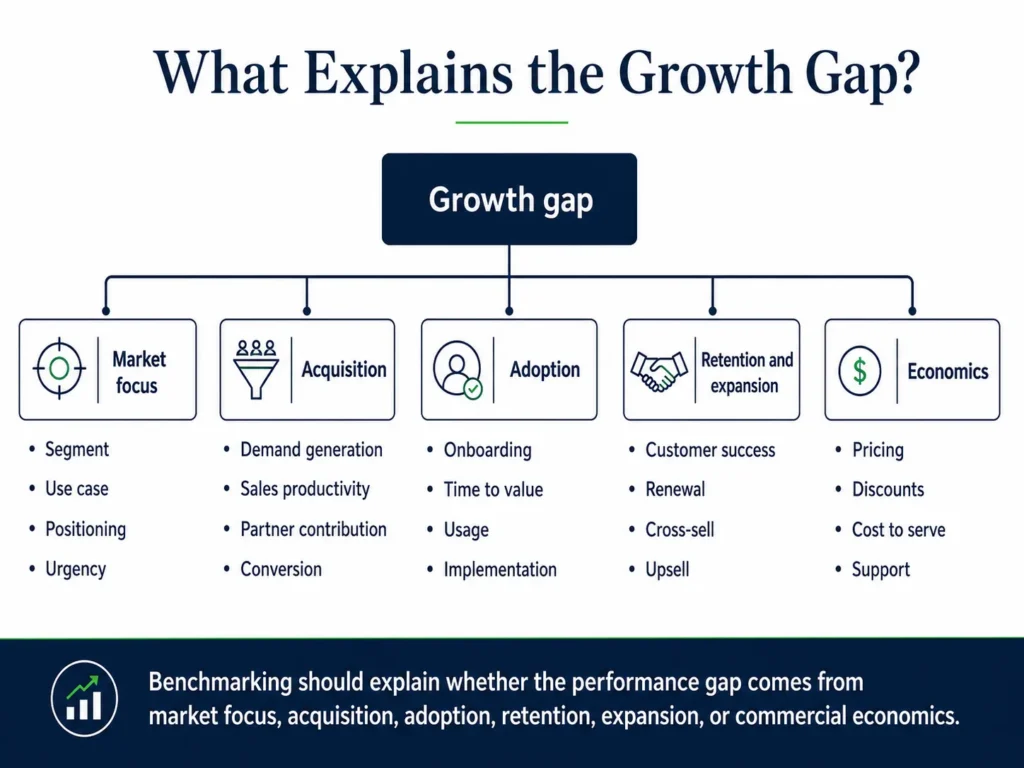
Figure 10. Benchmarking should explain whether the performance gap comes from market focus, acquisition, adoption, retention, expansion, or commercial economics.
Competitive Positioning in Markets Where Features Are Easily Copied
Technology companies often describe their differentiation through features.
Feature advantages can erode quickly when competitors:
- Copy functionality
- Bundle the feature
- Reduce price
- Open an API
- Integrate with a larger platform
- Offer it as part of an existing contract
- Use AI or automation to narrow the performance gap
More durable differentiation may come from:
- Workflow integration
- Proprietary data
- Network effects
- Ecosystem
- Switching costs
- Implementation expertise
- Industry specialization
- Trust
- Security
- Reliability
- User experience
- Customer success
- Brand
- Installed base
We help you evaluate:
- Which differences customers recognize
- Which differences matter economically
- Which advantages can be defended
- Which claims require stronger evidence
- Where incumbents have structural advantages
- Where focused challengers can win
- How the company should respond to bundling
- Whether specialization or platform expansion is more attractive
A strong positioning statement should connect:
Distinctive capability → Better customer outcome → Credible reason to believe
Artificial Intelligence Must Improve the Customer Outcome
Adding AI to the product description does not automatically strengthen the proposition.
Customers may evaluate:
- What task becomes faster or better
- Whether the output is reliable
- How data is protected
- Whether the process remains explainable
- What human oversight is required
- Whether integration is difficult
- How usage affects pricing
- What risk the feature introduces
- Whether the benefit is incremental or merely expected
We help you distinguish among:
- Core value creation. AI materially improves the customer outcome or enables a new use case.
- Workflow enhancement. AI makes an existing task faster, easier, or more accurate.
- Expected functionality.Customers increasingly assume the capability will be included.
- Marketing without sufficient value. The claim attracts attention but does not improve adoption, retention, or willingness to pay.
This helps your team focus product and commercial investment on AI capabilities that strengthen customer value and competitive position.
Scenario Planning Consulting for Software, SaaS, and Hardware Technology Markets
Technology companies face uncertainty from:
- AI development
- Cloud economics
- Regulation
- Cybersecurity threats
- Platform power
- Open-source alternatives
- Consolidation
- Customer budgets
- Procurement
- Data requirements
- Hardware supply chains
- Channel transformation
- Competitor bundling
- Technology standards
An illustrative scenario exercise could use:
Critical uncertainty 1: Customer technology investment (Restricted ↔ Expansive)
Critical uncertainty 2: Platform consolidation and competitive bundling (Moderate ↔ Intense)
This could produce four environments:
- Focused Digital Growth. Investment expands while competitive structure remains relatively open, supporting category specialists and new use cases.
- Platform Acceleration. Investment expands while large platforms bundle capabilities, integrate ecosystems, and reshape purchasing.
- Efficiency and Consolidation. Budgets remain constrained, increasing demand for measurable ROI, vendor consolidation, automation, and cost reduction.
- Bundled Value Pressure. Restricted budgets combine with intense platform competition, placing pressure on standalone tools, pricing, and customer acquisition.
For each scenario, we identify:
- Attractive use cases
- Vulnerable products
- Packaging implications
- Pricing pressure
- Channel effects
- Partner opportunities
- Competitor behavior
- No-regret actions
- Strategic options
- Early-warning indicators
- Decision triggers
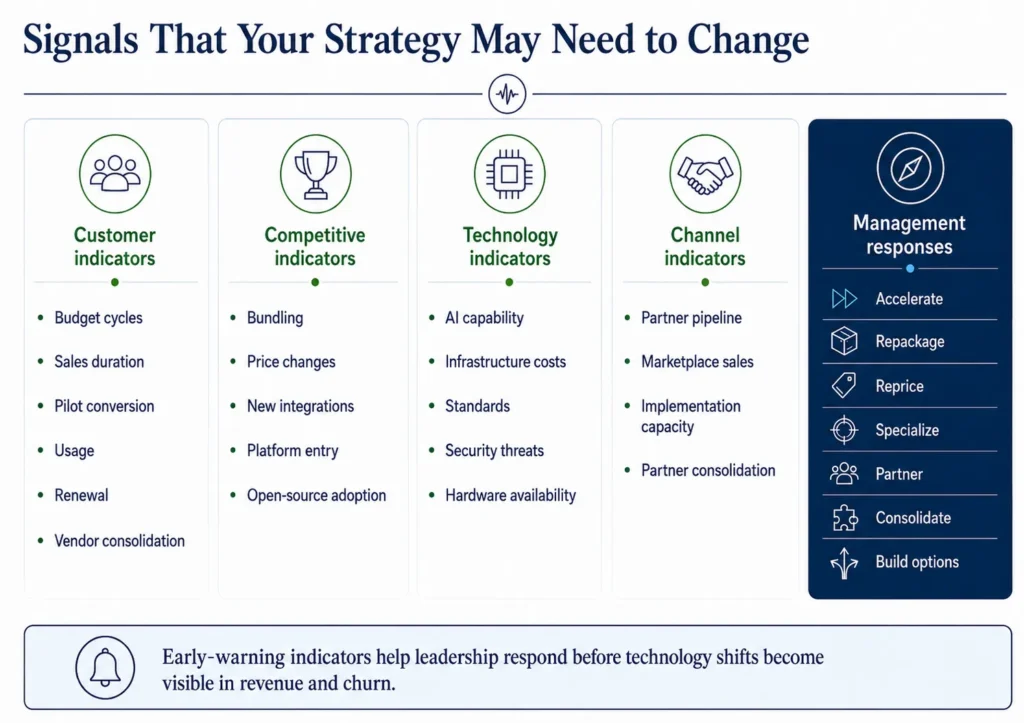
Figure 11. Early-warning indicators help leadership respond before technology shifts become visible in revenue and churn.
Business Wargames Consulting for Software, SaaS, and Hardware Strategy
Technology strategies rarely unfold without competitive response.
A new product, pricing model, market entry, acquisition, partnership, or feature launch may cause competitors to:
- Match the feature
- Bundle it
- Reduce price
- Change contract terms
- Strengthen integrations
- Lock in partners
- Increase free usage
- Target your customers
- Acquire a complementary company
- Question security or scalability
- Accelerate their roadmap
Partners and customers may also react.
A reseller may resist direct selling. An enterprise account may use your new packaging to renegotiate. A platform may limit access or launch a competing capability.
A business wargame helps your team explore those reactions before implementation.
Participants may represent:
- Your company
- Established technology vendors
- Emerging challengers
- Large platforms
- Open-source alternatives
- Hardware manufacturers
- Integrators
- Channel partners
- Enterprise customers
- Regulators
The exercise helps reveal:
- Fragile assumptions
- Likely competitor moves
- Platform risks
- Pricing vulnerabilities
- Channel conflict
- Customer reactions
- Alternative strategies
- Early-warning signals
- Prepared responses
Midas’s broader wargame work focuses on challenging assumptions, simulating market reactions, creating countermoves, and translating the exercise into an actionable response plan.
M&A, Partnerships, and Ecosystem Consulting Strategy for Software, SaaS, and Hardware
Acquisitions and partnerships can provide faster access to:
- Technology
- Talent
- Customers
- Data
- Integrations
- Intellectual property
- Distribution
- Geographic reach
- Installed base
- Cloud or platform relationships
- Industry expertise
- Recurring revenue
They can also conceal risks:
- Weak retention
- Unprofitable customers
- Excessive customization
- Fragile architecture
- Technical debt
- Security exposure
- Poor integration
- Founder dependence
- Channel conflict
- Low adoption
- Overstated pipeline
- Concentrated revenue
- Unsustainable discounts
We help technology companies with:
- Acquisition strategy
- Target-profile definition
- Target identification
- Market and competitor intelligence
- Commercial due diligence
- Customer and partner interviews
- Product and portfolio assessment
- Recurring-revenue quality analysis
- Strategic-fit evaluation
- Partnership screening
- Ecosystem strategy
- Negotiation preparation
- Post-deal growth priorities
Financial, legal, tax, cybersecurity, technical, intellectual-property, and operational due diligence should be completed by appropriately qualified specialists.
Our role is to strengthen the strategic and commercial understanding of the opportunity.
How We Build Reliable Technology-Market Intelligence
Technology markets generate large amounts of visible information.
However, product pages, funding announcements, customer logos, app-store reviews, analyst reports, and public pricing do not always explain:
- Actual product usage
- Discounting
- Customer retention
- Implementation effort
- Partner contribution
- Enterprise procurement
- Customer satisfaction
- Competitive win rates
- Roadmap priorities
- Product profitability
- Switching willingness
We may combine:
- Product and feature analysis
- Pricing and packaging
- Customer reviews
- Public customer references
- Partner and marketplace information
- Company disclosures
- User and buyer interviews
- Former executives
- Technology partners
- Systems integrators
- Industry experts
- Competitive intelligence
- Midas’s accumulated project experience
Important conclusions are tested against multiple sources whenever feasible.
We distinguish among:
- Verified facts
- Supported estimates
- User and market perceptions
- Analytical inferences
- Management hypotheses
- Unresolved information gaps
When exact information is unavailable, we explain the assumptions and use ranges rather than presenting false precision.
Better Technology Intelligence Goes Beyond Feature Comparison
Feature tables show what products claim to do.
Customer, partner, user, pricing, implementation, and competitive evidence helps explain which differences matter, why customers choose, and what may happen next.
We use lawful and ethical research methods and do not request confidential source code, trade secrets, or information that sources are not authorized to share.
A Consulting Approach Built Around Software, SaaS, and Hardware Growth
Our work is designed around your strategic decision rather than a fixed technology-industry template.
Depending on your requirements, the engagement may include five connected lenses.
1. Define the problem and use case
We identify the customer need, buyer, user, workflow, urgency, and value created.
2. Prioritize the market
We compare industries, company sizes, geographies, customer segments, and use cases.
3. Design the growth model
We define positioning, packaging, pricing, sales motion, partners, implementation, and customer success.
4. Test the competitive logic
We benchmark competitors, challenge assumptions, evaluate scenarios, and anticipate reactions.
5. Build the execution system
We translate the strategy into priorities, ownership, milestones, funnel metrics, adoption indicators, and decision triggers.
Your deliverables may include:
- Market and use-case assessment
- Ideal customer profile
- Buyer and user research
- Competitive landscape
- Product and positioning analysis
- Packaging and pricing recommendations
- Sales-motion strategy
- Partner ecosystem map
- Partner long list and shortlist
- Enterprise-sales process
- Customer-success model
- SaaS lifecycle analysis
- Hardware installed-base model
- Go-to-market strategy
- Market-entry recommendation
- Scenario framework
- Business-wargame conclusions
- Acquisition target profiles
- Implementation roadmap
- Executive workshop
- Supporting evidence and databases
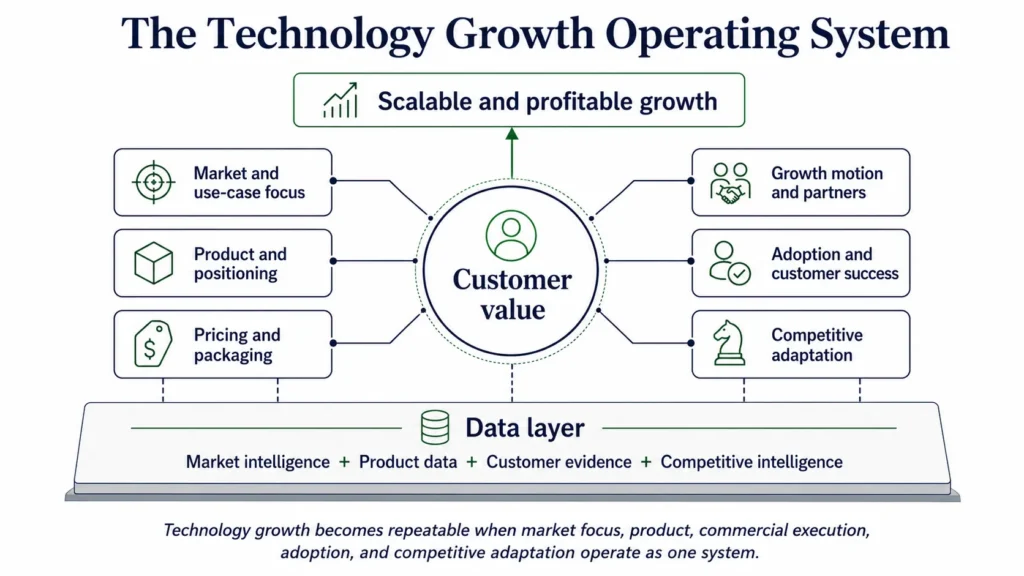
Figure 12. Technology growth becomes repeatable when market focus, product, commercial execution, adoption, and competitive adaptation operate as one system.
Executive Workshop Consulting for Software, SaaS, and Hardware Technology Decisions
Technology strategy often requires alignment among:
- General management
- Product
- Engineering
- Sales
- Marketing
- Revenue operations
- Customer success
- Partnerships
- Finance
- Security
- Operations
- Regional teams
Different functions may see the market differently.
Product may prioritize roadmap opportunities. Sales may request more features or flexibility. Finance may focus on pricing, retention, and unit economics. Customer success may see adoption problems. Regional teams may need local partners or pricing adaptations.
We design and facilitate workshops that help your team:
- Build a shared view of the market
- Separate evidence from assumptions
- Prioritize use cases and customers
- Resolve product and commercial trade-offs
- Clarify packaging and pricing choices
- Compare growth motions
- Anticipate competitor reactions
- Assign ownership
- Define metrics
- Translate choices into an executable roadmap
Midas’s strategy-workshop methodology emphasizes explicit decisions, evidence, ownership, metrics, and implementation rather than treating the session as a generic brainstorming meeting.
Why Software, SaaS, and Hardware Companies Work with Midas Consulting
More than 25 years of experience
Since 2000, we have supported companies in technology, digital, industrial, consumer, and complex B2B markets.
A customer-value perspective
We do not evaluate technology only through features.
We examine the problem solved, buying process, implementation, adoption, business value, retention, and competitive position.
Experience across Latin America
We work across Spanish- and Portuguese-speaking Latin America, as well as Spain, Portugal, and selected international markets.
We understand how procurement, localization, partners, digital maturity, support expectations, payments, and regulation differ by country.
Software, SaaS, and hardware consulting coverage
Our approach can be adapted to:
- Enterprise software
- SaaS
- Cloud services
- Cybersecurity
- Analytics
- Business applications
- Operational technology
- Hardware
- Infrastructure
- Devices
- Technology-enabled services
Primary market intelligence
When public information is insufficient, we develop evidence through customers, users, buyers, partners, integrators, former executives, experts, and other informed participants.
Senior involvement
Senior consultants remain involved in problem definition, research design, strategic interpretation, and executive discussions.
Commercial and product integration
We connect market needs with product, pricing, sales, partners, implementation, customer success, and recurring-revenue economics.
Collaboration with your team
We combine your technical and product knowledge with an independent perspective that can challenge assumptions and identify strategic blind spots.
Transparent limitations
Technology markets move quickly.
We make assumptions, evidence gaps, uncertainty, and the date of relevant market intelligence visible.
Selected Software, SaaS, and Hardware Consulting Experience
We have supported software, SaaS, hardware, and technology-services companies across different products, markets, customer segments, and strategic decisions. Each logo represents a separate client relationship; project scope, timing, and services differed.





What Software, SaaS, and Hardware Clients Say About Working with Midas Consulting
“Midas delivered practical, high-impact ideas that helped us expand market share in a competitive environment.”
Marketing Manager
Technology Company
Client identity withheld due to confidentiality
“Midas was highly effective, giving us the insights and tools we needed to co-create a robust strategy for complex markets.”
Chief Financial Officer
Software, SaaS, or Hardware Company
Client identity withheld due to confidentiality
“Midas helped us reassess priorities and focus our efforts where they truly mattered.”
Global Market Segment Leader
Technology Company
Client identity withheld due to confidentiality
“For more than a decade, Midas has been our trusted partner in Latin America.”
President
Technology Company
Client identity withheld due to confidentiality
“Midas combined deep market experience with thorough analysis, collaborating effectively across our teams to deliver actionable results.”
Global Product Manager
Technology Company
Client identity withheld due to confidentiality
Strategic Intelligence for Technology Leadership
Technology companies have access to product analytics, sales data, customer feedback, competitor websites, market reports, and funding announcements.
But data does not automatically produce strategic clarity.
Leadership teams still need to understand:
- Which use cases deserve priority
- Why customers choose or reject the product
- Which competitors are structurally advantaged
- How platforms and partners may react
- Which technology developments matter commercially
- Whether customer adoption is strengthening
- Which signal requires a strategic response
Strategic intelligence connects:
- Market information
- Product evidence
- Customer behavior
- Competitive moves
- Partner ecosystems
- Technology change
- Scenario analysis
- Management choices
Midas Consulting’s Applied Strategic Intelligence Hub brings together market intelligence, competitive analysis, scenario planning, wargaming, strategic frameworks, and executive decision-making.
Frequently Asked Questions
What types of software, SaaS, and hardware companies does Midas Consulting support?
We work primarily with companies selling:
- Software
- SaaS
- Enterprise applications
- Cloud solutions
- Cybersecurity products
- Analytics
- Business and operational platforms
- Hardware
- Devices
- Technology infrastructure
- Technology-enabled services
The methodology is adapted to the product, use case, customer, sales motion, geography, and strategic decision.
Is this service for IT consulting and implementation firms?
The primary audience is companies selling software, SaaS, and hardware products.
We may also support technology-services, implementation, managed-service, or integration companies when the strategic decision involves market growth, positioning, channels, partnerships, or acquisitions.
Can you help us assess product-market fit with your software, SaaS, and hardware consulting?
Yes. We can examine customer need, use cases, buyer urgency, implementation, adoption, usage, value realization, retention, expansion, customization, and customer economics.
The objective is to determine where the product has the strongest evidence of repeatable and scalable fit.
Can you help us identify our ideal customer profile for Software, SaaS, and Hardware with your consulting?
Yes. We can compare:
- Industries
- Company sizes
- Business functions
- Use cases
- Digital maturity
- Current systems
- Purchase urgency
- Contract value
- Implementation requirements
- Retention and expansion potential
Can you research users and enterprise buyers with your software, SaaS, and hardware consulting?
Yes. Depending on the project, we may interview:
- Executives
- Business buyers
- IT
- Security
- Procurement
- Finance
- Administrators
- End users
- Implementation partners
- Former customers
- Channel partners
Can you help us improve positioning?
Yes. We identify relevant customer problems, alternatives, buying criteria, competitor claims, perceived differentiation, proof points, and barriers to adoption.
The final positioning connects a distinctive capability with a customer outcome and a credible reason to believe.
Can you help us develop SaaS packaging and pricing?
Yes. We can evaluate:
- User-based pricing
- Usage pricing
- Feature tiers
- Free trials
- Freemium
- Enterprise plans
- Add-ons
- Implementation
- Support
- Discounts
- Contract duration
- Regional pricing
- Expansion paths
Can you help us reduce churn with your software, SaaS, and hardware consulting?
We can help identify strategic causes of churn by examining:
- Customer fit
- Onboarding
- Implementation
- Adoption
- Usage
- Product value
- Support
- Pricing
- Competitive displacement
- Renewal processes
Detailed operational improvement may require access to customer, usage, support, and revenue data.
Can you help us improve customer expansion with your software, SaaS, and hardware consulting?
Yes. We can assess opportunities involving:
- More users
- More usage
- Additional modules
- New workflows
- More locations
- Premium services
- Hardware refresh
- Cross-selling
- Partner-supported expansion
Can you help hardware companies?
Yes. We can analyze:
- Installed base
- Refresh and replacement cycles
- Product applications
- Distribution
- Resellers
- Pricing
- Service
- Spare parts
- Software attach
- Subscriptions
- Maintenance
- Customer lifetime value
Can you help us decide between product-led and sales-led growth?
Yes. We assess product complexity, time to value, customer type, contract value, implementation needs, buyer involvement, expansion potential, and unit economics.
The recommendation may be product-led, sales-led, partner-led, or hybrid.
Can you help us build a partner ecosystem with your software, SaaS, and hardware consulting?
Yes. We can define partner roles, identify and evaluate distributors, resellers, integrators, consultants, managed-service providers, marketplaces, and technology partners.
We can also support partner economics, enablement, governance, and performance indicators.
Can you help us enter enterprise accounts?
Yes. We can help map buying committees, clarify value propositions, evaluate opportunity qualification, structure pilots, understand procurement and security barriers, and strengthen account-development strategy.
Can you help us enter a new country?
Yes. We can compare countries, customer readiness, use cases, competition, pricing, localization, procurement, regulation, partners, support requirements, and market-entry models.
Can you benchmark technology competitors?
Yes. We may compare:
- Use cases
- Features
- Packaging
- Pricing
- Sales motions
- Partners
- Integrations
- Onboarding
- Customer success
- Service
- Positioning
- Organization
We distinguish visible information from estimates and market perceptions.
Can you benchmark competitor prices and discounts?
We can analyze public prices, packaging, contract structures, customer feedback, partner economics, and market intelligence where available.
Enterprise prices and discounts are often confidential and may vary substantially. Some research is therefore performed on a best-efforts basis, with assumptions and confidence levels made explicit.
Can you support a product launch?
Yes. We can evaluate market need, use cases, customer segments, positioning, packaging, pricing, routes to market, pilots, partners, competitor reactions, and launch metrics.
Can you support an acquisition or partnership?
Yes. We can help define strategy, identify targets or partners, assess markets and customers, conduct commercial due diligence, evaluate recurring-revenue quality, assess strategic fit, and support negotiation preparation.
Technical, cybersecurity, intellectual-property, financial, tax, legal, and operational due diligence should be completed by qualified specialists.
Do you provide technical architecture or software-development consulting?
Our focus is market, competitive, commercial, growth, and strategic consulting.
We do not replace software architects, developers, cybersecurity auditors, penetration testers, data-protection counsel, or technical due-diligence specialists.
We may work alongside those experts when the strategic decision requires their input.
How long does a Software, SaaS, and Hardware consulting project take?
A focused market, positioning, pricing, partner, or customer assessment may require several weeks.
A multicountry go-to-market strategy, benchmarking program, partner search, scenario exercise, or acquisition-related project may require several months.
The proposal defines the scope, methodology, milestones, deliverables, and expected timing.
What information will you need from us?
Useful inputs may include:
- Product and roadmap
- Target use cases
- Customer segments
- Sales pipeline
- Revenue
- Pricing and packaging
- Usage
- Retention
- Expansion
- Customer feedback
- Partner network
- Sales and marketing data
- Competitor hypotheses
- Strategic priorities
- Decision timetable
We begin with the information available and identify which gaps materially affect the decision.
How do you protect confidential information?
We treat client information as confidential and can work under a nondisclosure agreement.
Access is limited to relevant project participants. Public case examples, client identities, roadmaps, pricing, customer information, and results may be anonymized when disclosure has not been authorized.
Do you guarantee growth or investment results?
No responsible consulting firm should guarantee a specific revenue, growth, retention, market-share, partner, investment, or acquisition result.
Outcomes depend on product quality, customer need, pricing, implementation, adoption, execution, partner commitment, competitive response, technology change, and economic conditions.
Our role is to improve the evidence, strategic choices, preparation, and execution behind your decision.
The Cost of Misreading a Technology Opportunity
Your company may:
- Pursue a broad market with weak use-case fit
- Confuse customer interest with product-market fit
- Acquire customers who never adopt
- Increase new-logo sales while churn offsets growth
- Use a fashionable growth motion that does not fit the product
- Create pricing that discourages adoption or expansion
- Invest in features customers do not value
- Choose partners that sign agreements but generate little revenue
- Enter a country without adequate localization, support, or procurement access
- Underestimate security and integration barriers
- Lose enterprise opportunities through poorly structured pilots
- Ignore the value of the hardware installed base
- Build AI features that create attention but little customer value
- Acquire a company with weak retention or excessive customization
Better intelligence cannot eliminate technology change.
It can help your team determine which customers, use cases, capabilities, and growth investments deserve priority.
Let’s Clarify Your Next Software, SaaS, and Hardware Growth Decision with Our Consulting
You may be evaluating a market, use case, product, pricing model, growth motion, channel, partner, enterprise segment, launch, or acquisition.
We begin with your decision, not with a predetermined consulting package.
Tell us what is at stake
Share the product, customer, use case, market, partner, or investment choice your company is considering.
Define the evidence
Together, we determine which customer, product, usage, competitor, pricing, partner, adoption, and market questions must be answered.
Develop the strategy
We compare alternatives, make relevant assumptions visible, and recommend the strongest path supported by the evidence.
Prepare for execution
You receive clear priorities, actions, responsibilities, milestones, indicators, and decision triggers.
About Midas Consulting
Midas Consulting is a strategy and market intelligence consulting firm that helps companies grow, compete, enter markets, select partners, evaluate investments, and make stronger decisions across Latin America and selected international markets.
For more than 25 years, we have supported companies through market entry, go-to-market strategy, distributor and partner search, benchmarking, strategy consulting, scenario planning, business wargaming, and M&A-related decisions.
Our work combines local market research, competitive intelligence, executive experience, and collaborative strategy development.