Automotive Products Consulting for a Market That Is Being Redefined
The automotive market is not changing in one direction.
Traditional vehicles remain essential across much of Latin America. At the same time, electrification, connected technologies, new Asian brands, changing import conditions, digital purchasing, fleet transformation, and increasingly complex aftermarket channels are changing where value is created—and who captures it.
For your company, the central question is not simply whether the market will grow.
It is where growth will occur, which competitors will shape it, which channels will control customer access, and what your business must do differently to win.
Midas Consulting helps automotive and auto-parts companies make those decisions with greater confidence.
For more than 25 years, we have supported companies across Latin America with market intelligence, growth strategy, competitive analysis, distributor search, benchmarking, go-to-market strategy, scenario planning, business wargaming, and M&A-related decisions.
Our experience covers automotive components, replacement parts, accessories, lubricants, batteries, tires, workshop equipment, mobility technologies, commercial vehicles, vehicle services, and related products.
We help you address questions such as:
- Which markets, vehicle segments, applications, and customer groups should you prioritize?
- How large is the real addressable opportunity?
- Which brands, technologies, and competitors are gaining ground?
- How is the vehicle parc changing demand for replacement products?
- Should you sell through distributors, retailers, workshops, fleets, digital channels, or a hybrid model?
- Which distributors or strategic partners can build the market rather than simply list your products?
- How should you adapt your offer to local prices, technical requirements, regulations, and service expectations?
- How could electrification, new market entrants, or policy changes affect your existing business?
- Should you grow organically, partner with a local company, license technology, or acquire a competitor?
- How will competitors and channel partners react to your next move?
You receive a fact-based view of the market, a clear strategic recommendation, and a practical path to implementation.
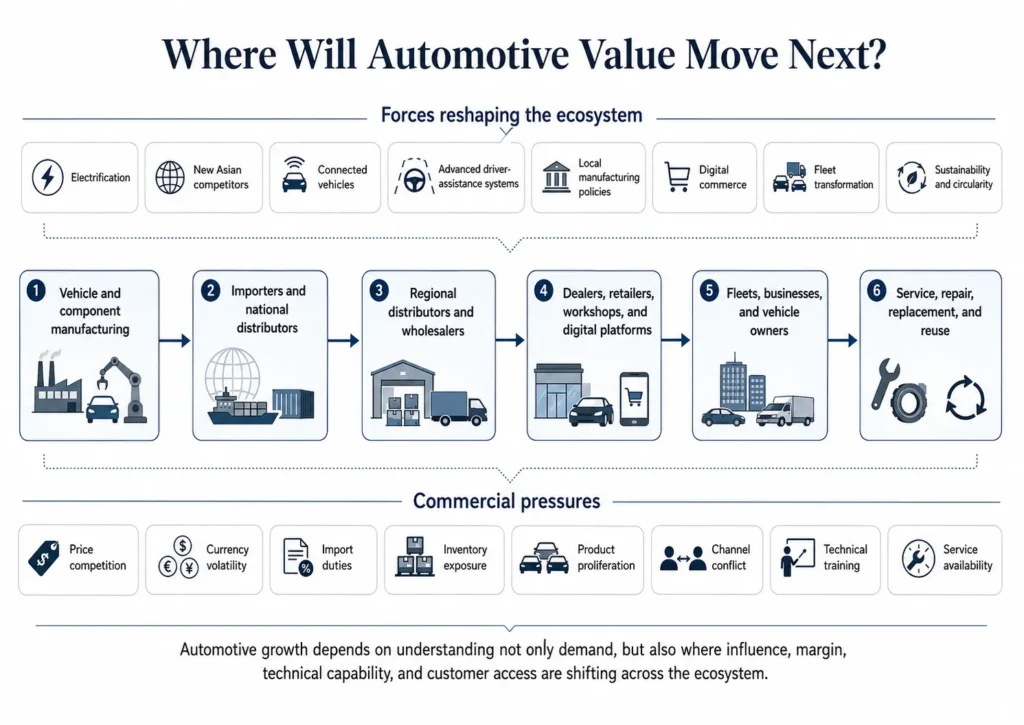
Figure 1. Automotive growth depends on understanding not only demand, but also where influence, margin, technical capability, and customer access are shifting across the ecosystem.
The Automotive Market Is Becoming More Difficult to Read
Industry change is visible. Its commercial implications are not always obvious.
An increase in vehicle registrations does not automatically mean that every component or service category will grow. Newer vehicle technologies may reduce demand for some replacement parts while creating entirely new opportunities elsewhere.
A growing vehicle parc may appear attractive, but the opportunity depends on:
- Vehicle age
- Brand and model composition
- Annual mileage
- Road conditions
- Maintenance behavior
- Product durability
- Repair practices
- Warranty coverage
- Workshop capabilities
- Availability of original and alternative parts
- Informal and counterfeit competition
- Customer purchasing power
Electrification creates another layer of complexity. The transition is progressing at different speeds across countries, vehicle types, and customer segments. Hybrid vehicles may expand before battery-electric vehicles in some markets. Fleets may adopt new technologies more rapidly than private buyers. Charging infrastructure, import policy, local production, electricity prices, financing, resale expectations, and service availability can all influence adoption.
Meanwhile, new brands can alter competition well before they achieve dominant market share. They may change price expectations, dealer economics, product features, warranty standards, and the bargaining power of established participants.
Your strategy therefore needs to separate visible market activity from the underlying forces that will determine your future revenue and margins.
A Growing Market Can Still Produce Declining Value
Volume growth does not guarantee attractive economics.
If price competition intensifies, distributors demand higher margins, products become commoditized, or new technology reduces replacement frequency, your category may grow while your profitability falls.
We help you evaluate market attractiveness together with your ability to capture value.
Start with the Market You Actually Serve
“Automotive” is too broad to be a useful market definition.
A company selling engine components operates in a different commercial system from a company offering batteries, fleet technologies, workshop equipment, vehicle electronics, tires, lubricants, or charging solutions.
Even within one product category, the relevant market may differ according to:
- Passenger vehicles
- Light commercial vehicles
- Heavy trucks
- Buses
- Motorcycles
- Agricultural or off-highway vehicles
- Internal-combustion vehicles
- Hybrid vehicles
- Battery-electric vehicles
- Original equipment
- Original replacement parts
- Independent aftermarket products
- Premium, standard, or economy segments
- Private owners
- Corporate fleets
- Public transportation
- Logistics operators
- Dealers
- Independent workshops
We begin by defining the demand system around your product.
That means identifying which vehicles use it, when and why it is purchased, who specifies it, who pays for it, where it is installed, which alternatives compete with it, and what causes customers to switch.
This produces a more accurate view of your addressable opportunity than a top-down estimate of the overall automotive market.
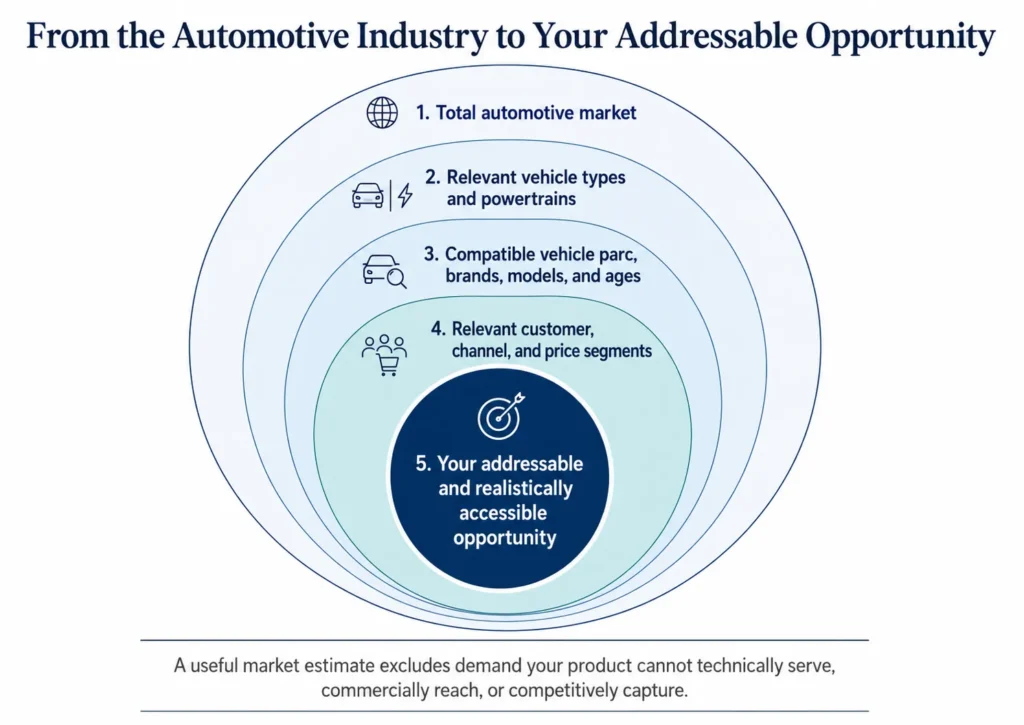
Figure 2. A useful market estimate excludes demand your product cannot technically serve, commercially reach, or competitively capture.
Decisions We Help Automotive Companies Make
Where should you compete?
We compare countries, segments, vehicle types, technologies, channels, and product categories to identify where your company has the strongest risk-adjusted growth potential.
The assessment may consider:
- Current market size
- Vehicle sales and production
- Vehicle parc and average age
- Replacement rates
- Vehicle kilometers traveled
- Product penetration
- Technology transition
- Customer needs
- Competitive concentration
- Price architecture
- Channel accessibility
- Regulatory requirements
- Import conditions
- Local manufacturing
- Service and installation capabilities
- Strategic fit
- Expected investment
- Ability to win
The objective is not to identify every theoretically attractive opportunity. It is to show where your resources can create the greatest strategic and financial impact.
Which customers should you prioritize?
The purchaser, user, installer, specifier, and economic decision-maker may be different people or organizations.
Depending on your product, purchase decisions may be influenced by:
- Vehicle manufacturers
- Importers
- Dealers
- National distributors
- Regional wholesalers
- Retail chains
- E-commerce platforms
- Workshops
- Mechanics and technicians
- Fleet managers
- Procurement teams
- Leasing companies
- Insurers
- Vehicle owners
- Industry associations
- Regulators
We map these roles and determine which participants influence product selection, brand preference, stocking, installation, recommendation, and repeat purchase.
How should you reach the market?
Automotive channels often contain several layers. Each layer affects price, availability, brand control, customer data, and technical support.
We help you evaluate options such as:
- Direct sales
- National distributors
- Multiple regional distributors
- Specialized importers
- OEM relationships
- Dealer networks
- Retail chains
- Independent workshops
- Fleet accounts
- E-commerce
- Marketplaces
- Technical-service partners
- Hybrid channel structures
The right model depends on your category, economics, required service level, geographic coverage, customer concentration, and desired degree of control.
How should you position and price your offer?
Automotive purchasing decisions can involve complex trade-offs among acquisition price, product life, safety, vehicle uptime, warranty, fuel or energy efficiency, installation, availability, and total cost of ownership.
We help you identify:
- The customer problem your offer solves
- The attributes customers genuinely value
- The economic value created
- The most credible proof points
- Relevant competitive reference points
- Acceptable price ranges
- Channel margin requirements
- Potential price corridors
- Premium or economy positioning
- Risks of price inconsistency or channel conflict
How should you respond to market disruption?
Electrification, connected systems, software, automation, sustainability requirements, and new entrants may affect your business at different speeds.
We help your team determine:
- Which changes are already affecting demand
- Which changes are likely but uncertain
- Which product lines are most exposed
- Which capabilities may become more valuable
- Which investments can be postponed
- Which actions should begin now
- Which indicators should trigger a strategic response
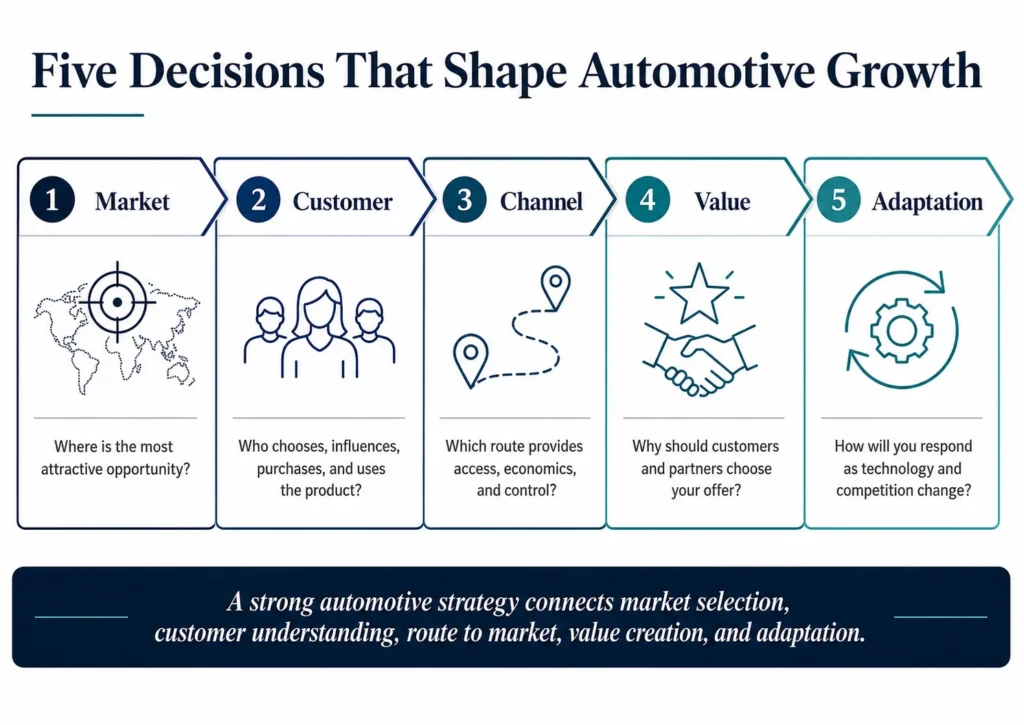
Figure 3. A strong automotive strategy connects market selection, customer understanding, route to market, value creation, and adaptation.
The Vehicle Parc Often Matters More Than Annual Vehicle Sales
New-vehicle sales receive substantial attention, but they are only one part of the commercial picture.
For many replacement parts, consumables, services, and workshop products, demand is driven more directly by the vehicles already operating in the market.
A vehicle-parc analysis can help answer:
- How many relevant vehicles are in operation?
- Which brands and models dominate?
- What is their average age?
- How quickly is the parc changing?
- Which vehicle cohorts are leaving warranty coverage?
- Which powertrains are expanding or declining?
- Where are vehicles geographically concentrated?
- How many units use the relevant product specification?
- How frequently is the product replaced?
- What proportion of demand goes to OEM, branded aftermarket, economy, used, repaired, or counterfeit alternatives?
We combine parc data with usage and replacement assumptions to construct a demand model adapted to your category.
This may involve estimating demand through:
Compatible vehicle parc × annual usage × replacement frequency × product penetration
The formula is only a starting point.
We then test the assumptions with distributors, workshops, fleet operators, technicians, customers, and other market participants. Where reliable data is limited, we present ranges and explain the variables with the greatest effect on the result.
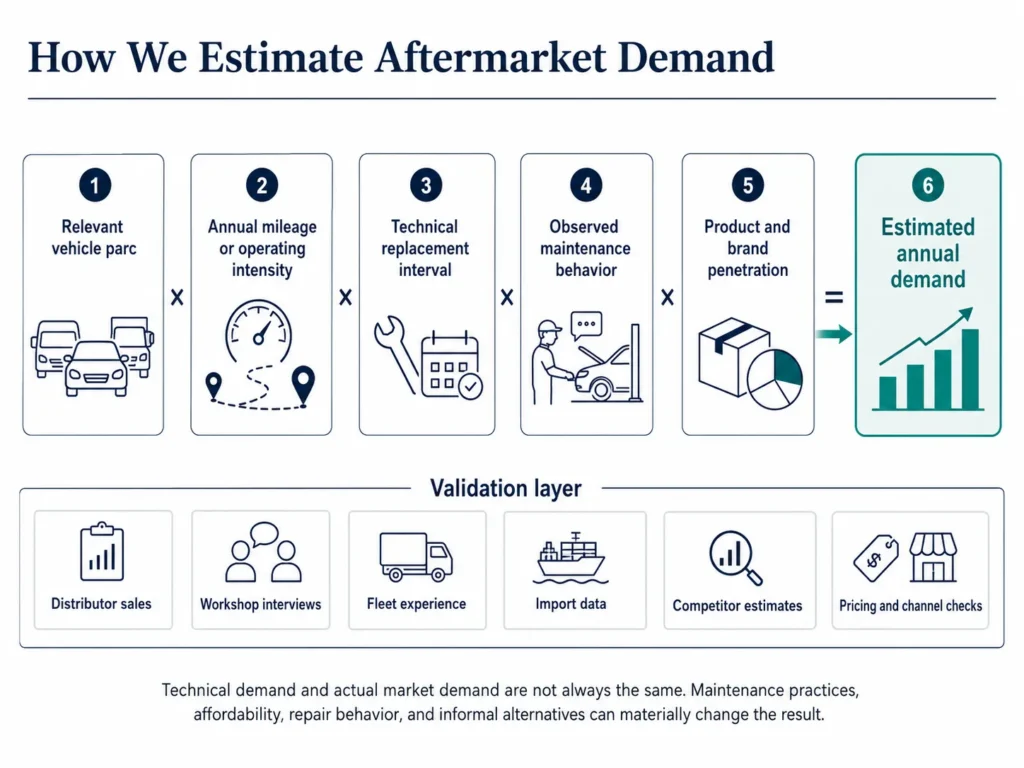
Figure 4. Technical demand and actual market demand are not always the same. Maintenance practices, affordability, repair behavior, and informal alternatives can materially change the result.
Understanding the Aftermarket Requires Following the Product
A product may pass through several companies before reaching the vehicle.
At each stage, participants make decisions about:
- Whether to import or stock the product
- Which brands to prioritize
- How much inventory to carry
- Which customers receive credit
- What margin is required
- Which products salespeople recommend
- Whether technical training is necessary
- How warranty claims are handled
- Which competing products receive more attention
- How quickly products are delivered
- Whether the product is available outside major cities
As a result, nominal distribution coverage can be misleading.
A distributor may claim national reach but rely heavily on passive resellers. Another may have a smaller footprint but stronger relationships with the workshops or fleets that determine product choice.
We evaluate not only who participates in the channel, but also:
- Where decision power sits
- Who controls access to key customers
- Where margin accumulates
- Which incentives shape behavior
- Where information becomes distorted
- Which bottlenecks limit availability
- Where channel conflict may emerge
This provides a clearer basis for selecting partners, redesigning incentives, or changing your route to market.
Distributor Search Consulting for Automotive and Auto-Parts Companies
The largest distributor is not necessarily the best partner.
An automotive distributor can appear attractive because of its revenue, warehouse network, brand portfolio, or geographic coverage. Those characteristics matter, but they do not reveal how much attention your products will receive.
We evaluate potential partners against a profile built around your strategy.
Criteria may include:
- Relevant vehicle and product categories
- Access to priority customers
- Workshop, dealer, fleet, or retail coverage
- Geographic reach
- Sales-force quality
- Technical capabilities
- Inventory management
- Import and logistics infrastructure
- E-commerce capabilities
- Financial strength
- Credit practices
- Existing portfolio
- Direct or indirect conflicts
- Reputation and compliance
- Brand-building capabilities
- Data and reporting quality
- Management commitment
- Investment willingness
- Cultural and strategic alignment
Our work can include:
- Defining the ideal partner profile
- Mapping potential distributors
- Screening and ranking candidates
- Validating capabilities through market interviews
- Approaching selected candidates
- Assessing interest and strategic fit
- Comparing proposals
- Supporting negotiation preparation
- Developing partner governance and performance indicators
A partner search is successful when you identify a company that can help build your business—not simply one willing to sign an agreement.
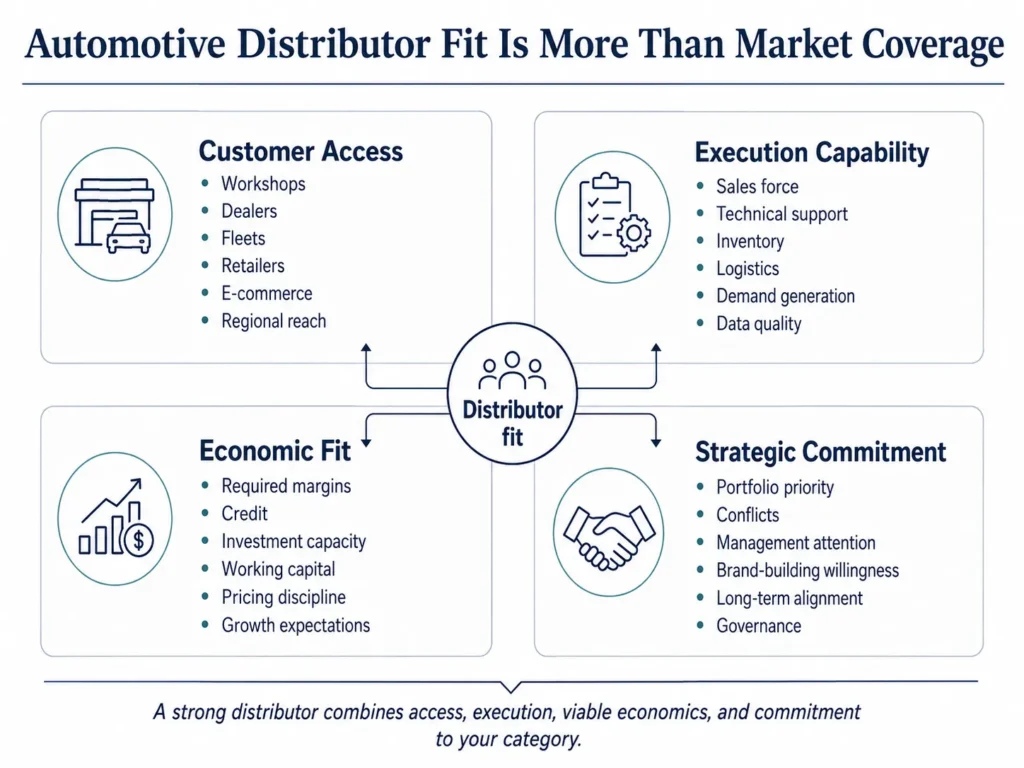
Figure 5. A strong distributor combines access, execution, viable economics, and commitment to your category.
Go-to-Market Strategy Consulting for Automotive Products
A go-to-market strategy should explain how your company will create demand, reach customers, support the channel, and convert market potential into profitable sales.
For automotive products, this may require decisions about:
- Priority vehicle segments
- Customer and application focus
- OEM versus aftermarket opportunity
- National versus regional channels
- Distributor coverage
- Workshop influence
- Fleet development
- Product assortment
- Technical certification
- Installation and service
- Value proposition
- Price architecture
- Distributor and retailer incentives
- Sales-force organization
- Digital channels
- Launch sequence
- Demand generation
- Performance indicators
We help connect these decisions into a coherent commercial system.
Your final roadmap may include:
- Target customers and segments
- Market and account priorities
- Channel roles
- Partner requirements
- Value proposition
- Price and margin logic
- Commercial activities
- Technical-support model
- Organizational responsibilities
- Launch stages
- Metrics
- Test-and-learn priorities
Benchmarking Consulting to Improve Automotive Products’ Performance
Competitors’ visible results rarely explain how those results were achieved.
A company may gain share because of price, but it may also benefit from:
- Better product availability
- Broader vehicle coverage
- Faster catalog updates
- More attractive distributor incentives
- Stronger technical support
- Better relationships with workshops
- More effective fleet development
- Superior digital tools
- A different sales-force structure
- More disciplined inventory management
- Local sourcing
- Faster warranty resolution
- A more focused product portfolio
Benchmarking helps your team understand the practices and capabilities behind performance.
Depending on the decision, we may compare:
- Product range
- Cross-reference coverage
- Prices and discounts
- Channel margins
- Credit conditions
- Commercial incentives
- Distributor structures
- Territory coverage
- Sales-force productivity
- Key-account management
- Technical support
- Workshop programs
- Digital channels
- Delivery times
- Inventory policies
- Service levels
- Warranty practices
- Marketing investments
- Organization and costs
We normalize differences in market size, product mix, channel structure, and operating model to avoid misleading comparisons.
The purpose is not to copy a competitor. It is to understand which performance gaps matter, which practices explain them, and what your company should adapt.
Preparing for Electrification Without Abandoning Today’s Business
Electrification is strategically important, but its impact differs by country, vehicle segment, product category, and time horizon.
For some companies, electrification creates immediate demand for new components, infrastructure, software, thermal-management systems, workshop equipment, and technical services.
For others, the first impact may be indirect:
- Changes in vehicle mix
- New competitors
- Greater price pressure
- Different dealer standards
- New technical requirements
- Reduced demand for selected engine-related components
- Different maintenance intervals
- New workshop capabilities
- Battery diagnostics and repair
- Changing residual-value assumptions
- New partnerships across energy and mobility
The central strategic challenge is to manage two horizons at the same time.
Your existing business may remain important for years, particularly in markets with an older vehicle parc. However, waiting until the transition is fully visible can leave your company without the capabilities, partnerships, or market access needed for the next phase.
We help you distinguish among:
- No-regret actions. Actions that are valuable across several plausible futures, such as monitoring the vehicle parc, building technology intelligence, developing new partnerships, or training selected commercial and technical teams.
- Option-building actions. Limited investments that preserve your ability to participate as the opportunity develops.
- Trigger-based investments. Larger commitments linked to observable indicators such as vehicle penetration, regulation, charging availability, fleet adoption, local manufacturing, or customer economics.
- Actions to defer. Investments that appear strategically attractive but are not yet supported by market evidence or execution readiness.
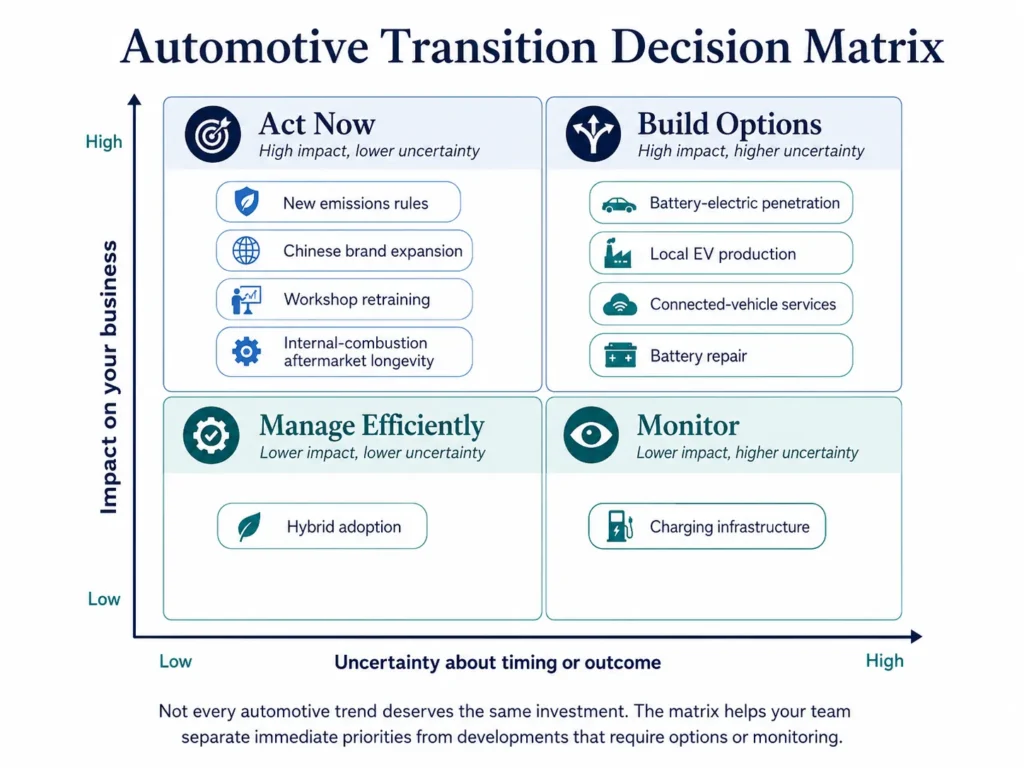
Figure 6. Not every automotive trend deserves the same investment. The matrix helps your team separate immediate priorities from developments that require options or monitoring.
Scenario Planning Consulting for Automotive Products
A single forecast can create false confidence.
Automotive demand depends on variables that can change quickly or develop in unexpected combinations:
- Economic growth
- Interest rates and vehicle financing
- Exchange rates
- Import duties
- Industrial policy
- Fuel and electricity prices
- Emissions regulation
- Consumer purchasing power
- Fleet investment
- Technology costs
- Charging availability
- New manufacturing capacity
- Competitor entry
- Trade restrictions
Scenario planning helps your team explore several credible market environments.
For example, an automotive company might examine scenarios built around:
Uncertainty 1: Speed of electrified-vehicle adoption (Gradual ↔ Rapid)
Uncertainty 2: Intensity of price competition (Moderate ↔ Severe)
The resulting scenarios could include:
- Profitable Evolution. Electrification advances gradually and competition remains manageable, allowing established businesses to adapt without destroying current economics.
- Technology Price War. Electrification accelerates as aggressive entrants use price, features, and financing to capture share.
- Extended Combustion Market. Adoption remains slow, extending the value of the traditional aftermarket but delaying returns on newer technologies.
- Margin Under Pressure. The technology transition remains uneven, but intense competition compresses prices across both conventional and electrified products.
For each scenario, we identify:
- Market implications
- Vulnerable product lines
- Emerging opportunities
- Channel consequences
- Strategic options
- No-regret actions
- Early-warning indicators
- Decision triggers
- Management responses
Business Wargames Consulting for Automotive Products: Test the Move Before the Market Tests It
Your decision will change the behavior of others.
A price reduction may trigger retaliation. A new distributor may affect existing partners. A product launch may cause competitors to increase discounts, lock in key accounts, accelerate innovation, or question your technical credentials.
New entrants may also behave differently from established competitors. They may prioritize installed base, visibility, data, or long-term ecosystem control rather than near-term profitability.
A business wargame allows your team to explore those reactions before implementation.
Participants may represent:
- Your company
- Established competitors
- New market entrants
- Distributors
- Dealers
- Workshops
- Fleets
- Digital platforms
- Regulators
- Technology partners
The simulation helps reveal:
- Hidden assumptions
- Likely competitor countermoves
- Channel reactions
- Customer switching behavior
- Second-round consequences
- Strategic vulnerabilities
- Required safeguards
- Early-warning signals
- Alternative responses
Wargaming is particularly valuable before:
- A market entry
- A major product launch
- A distributor change
- A pricing decision
- Entry into a new channel
- An acquisition
- A technology transition
- A significant competitive attack
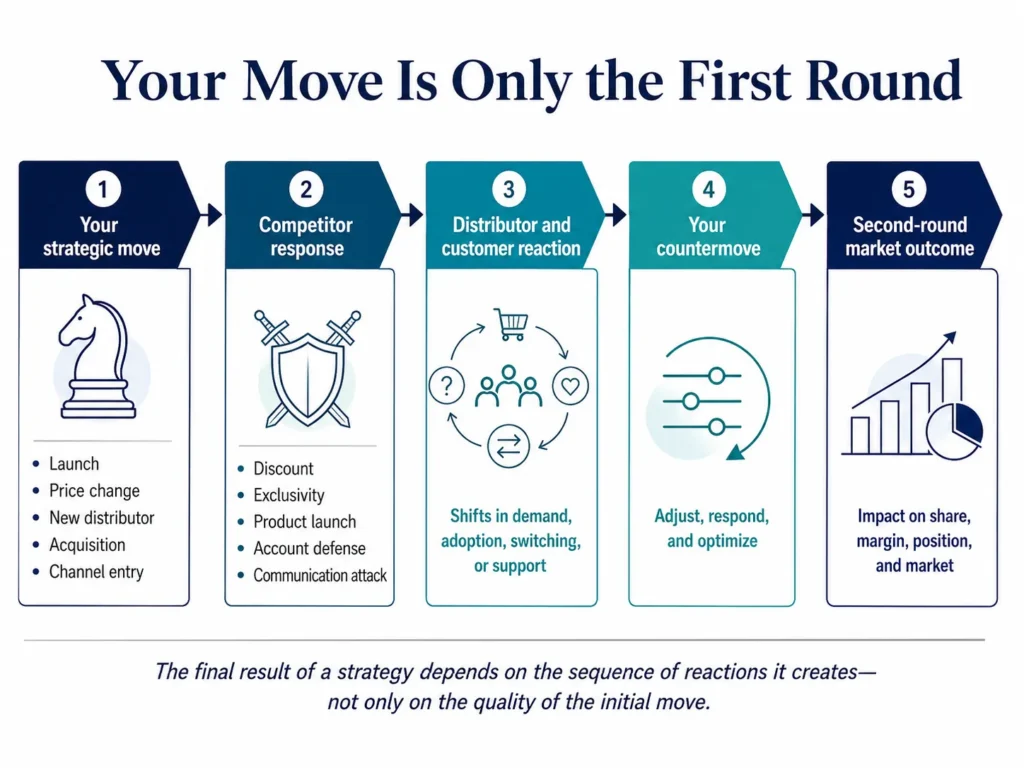
Figure 7. The final result of a strategy depends on the sequence of reactions it creates—not only on the quality of the initial move.
M&A, Licensing, and Strategic Partnerships Consulting for Automotive Products
Acquisitions and partnerships can provide faster access to:
- Local manufacturing
- Customers
- Distribution
- Product registrations
- Technical capabilities
- Workshop networks
- Engineering talent
- Technology
- Service infrastructure
- Market credibility
They can also create substantial risk when the target’s commercial position, financial quality, ownership expectations, environmental exposure, labor situation, or operational capabilities are not fully understood.
We help automotive companies with:
- Acquisition strategy
- Target-profile definition
- Target identification
- Competitor and company intelligence
- Commercial due diligence
- Market validation
- Customer and channel interviews
- Strategic-fit assessment
- Partner and license screening
- Approach strategy
- Negotiation preparation
- Post-acquisition growth priorities
Case Example: Using Competitive Intelligence to Support an Acquisition in Brazil
The decision
A multinational automotive-products company wanted to strengthen its position in Brazil through an acquisition.
Management had identified five potential competitors, but reliable public information about the businesses was extremely limited.
Before approaching the owners, the company needed to understand:
- Revenue by product and segment
- Production capabilities
- Market position
- Growth trajectory
- Profitability
- Competitive strengths and weaknesses
- Tax, labor, and environmental exposure
- Ownership expectations
- Willingness to consider a transaction
The intelligence challenge
Some owners were reluctant to provide financial information.
In selected cases, reported revenue did not appear to reflect the full level of commercial activity. Market estimates also varied significantly depending on the source.
Relying exclusively on formal company information would not have provided a sufficiently reliable basis for comparison.
Our approach
We developed a structured intelligence program combining:
- Company and market research
- Competitor interviews
- Distributor and channel interviews
- Production-capacity assessment
- Revenue triangulation
- Segment-level estimates
- Competitive-position analysis
- Commercial and operational risk assessment
- Evaluation of owner interest and transaction feasibility
We compared all five companies using a consistent framework, while making the assumptions and evidence limitations visible.
The decision support
The resulting analysis gave the client a clearer view of:
- Which companies had the strongest market position
- Which capabilities would strengthen the client’s business
- Which risks required deeper examination
- Which owners might realistically consider a transaction
- Which target offered the best strategic combination
The outcome
The client acquired one of the assessed companies and strengthened its competitive position in Brazil.
Important context: Confidential company and transaction details are withheld. The outcome reflects the circumstances of this specific engagement and does not guarantee an equivalent result in another transaction.
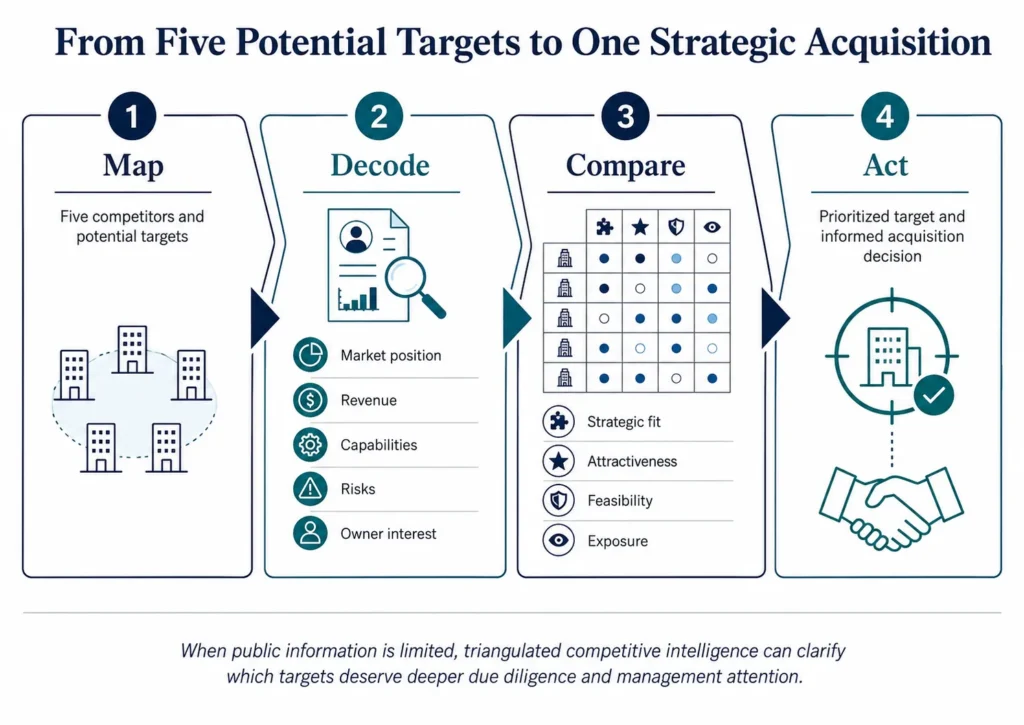
Figure 8. When public information is limited, triangulated competitive intelligence can clarify which targets deserve deeper due diligence and management attention.
How We Develop Automotive Market Intelligence
Automotive data can appear abundant, but important commercial questions often remain unanswered.
Registration, production, import, and vehicle-parc statistics provide useful context. They may not reveal:
- Actual sales by product segment
- Real transaction prices
- Distributor discounts
- Workshop recommendations
- Informal imports
- Counterfeit or remanufactured-product activity
- Inventory levels
- Competitor incentives
- Customer switching behavior
- Product availability
- Geographic coverage
- Partner commitment
- Acquisition willingness
Our research may combine:
- Vehicle sales and registration data
- Vehicle production statistics
- Vehicle-parc data
- Import and export information
- Product and catalog analysis
- Competitor information
- Distributor interviews
- Workshop interviews
- Fleet interviews
- Dealer and retailer perspectives
- Former industry executives
- Technical specialists
- Customer research
- Site and market visits
- Internal client data
- Cross-country comparisons
- Midas project experience
Important findings are tested against multiple sources whenever feasible.
We distinguish among:
- Verified facts
- Supported estimates
- Market perceptions
- Management hypotheses
- Unresolved information gaps
When a precise figure cannot be defended, we use a range and identify the assumptions that influence it.
Evidence Before Precision
A detailed number is not necessarily a reliable number.
We prefer an explainable estimate supported by several sources over false precision derived from one database or untested assumption.
Our objective is to help your team understand both the conclusion and the strength of the evidence behind it.
From Intelligence to an Automotive Growth Roadmap
Our engagements do not all follow the same sequence.
The work is designed around the decision you need to make and may combine four modules.
Decode the market
We establish how the market works, where demand originates, how products flow, which players hold influence, and where information gaps exist.
Identify the value pools
We compare segments, technologies, channels, countries, customers, and business models to determine where attractive value may be captured.
Test the strategy
We validate customer needs, challenge assumptions, compare alternatives, assess competitor reactions, and examine how the decision performs under uncertainty.
Mobilize execution
We translate the recommendation into priorities, initiatives, ownership, milestones, indicators, and decision triggers.
Your deliverables may include:
- Market model
- Vehicle-parc and replacement analysis
- Customer segmentation
- Channel map
- Competitor profiles
- Benchmarking database
- Price and margin analysis
- Distributor long list and short list
- Partner assessments
- Go-to-market strategy
- Market-entry recommendation
- Scenario framework
- Wargame conclusions
- Acquisition target profiles
- Strategic roadmap
- Management workshop
- Implementation metrics
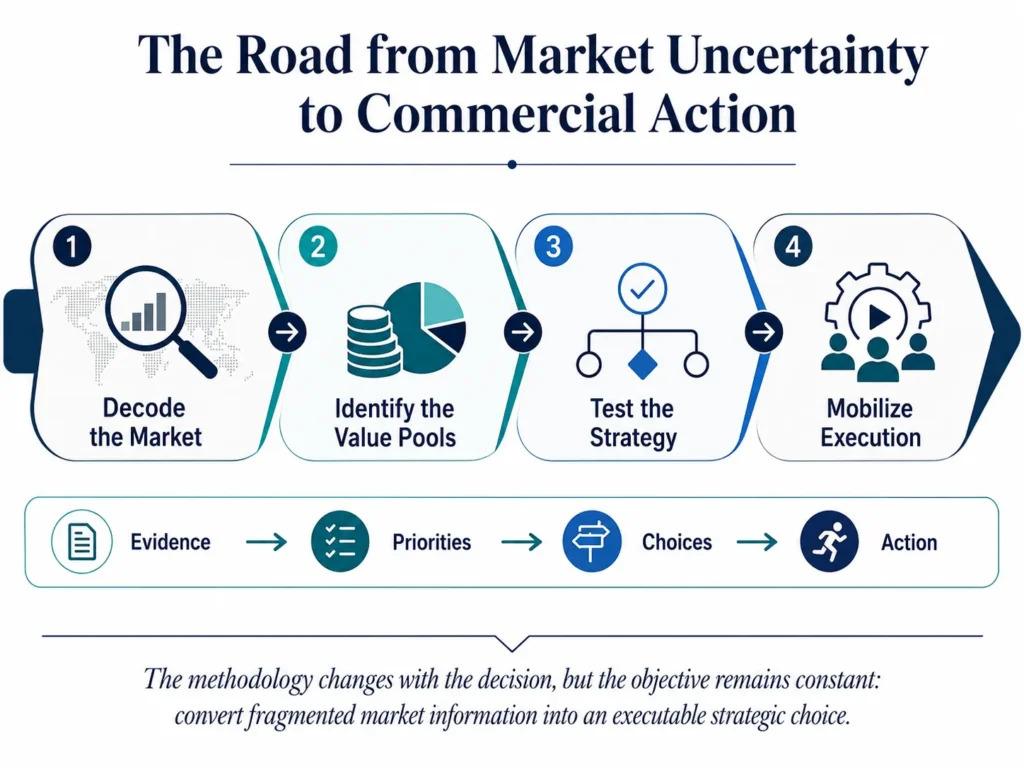
Figure 9. The methodology changes with the decision, but the objective remains constant: convert fragmented market information into an executable strategic choice.
Strategy Workshops Consulting for Automotive Products That Move the Decision Forward
Automotive decisions often involve different perspectives from regional management, country teams, sales, marketing, technical functions, supply chain, finance, and operations.
These differences can be valuable, but only when they are made explicit and resolved.
We design and facilitate workshops to help your team:
- Establish a shared view of the market
- Separate evidence from assumptions
- Evaluate alternative strategies
- Discuss difficult trade-offs
- Anticipate competitor and channel responses
- Prioritize initiatives
- Define decision criteria
- Assign responsibility
- Agree on milestones and metrics
The workshop is built around your decision and the evidence developed during the engagement.
It is not a generic brainstorming session.
What You Can Expect from Midas Automotive Products Consulting
Automotive products consulting experience that goes beyond one product category
Since 2000, we have completed hundreds of projects involving automotive products, auto parts, vehicles, channels, competitors, and related services.
Our experience helps us recognize the differences among OEM, replacement, fleet, workshop, retail, and technology-driven markets.
Direct regional experience
We have worked across Spanish- and Portuguese-speaking Latin America, as well as Spain and Portugal.
This allows us to compare markets while recognizing the country-level differences that affect demand, regulation, pricing, distribution, competition, and execution.
Senior involvement
Senior consultants remain directly involved in problem definition, research design, interviews, analysis, strategic interpretation, and management discussions.
Tailored research
We do not begin with a standard industry report.
The market definition, methodology, interview universe, analytical framework, and deliverables are designed around your product and decision.
Practical commercial perspective
Our work considers how the recommendation will affect customers, distributors, workshops, sales teams, inventories, prices, margins, capabilities, and implementation.
Collaboration without loss of independence
We incorporate your team’s knowledge while maintaining the external perspective needed to challenge assumptions and identify blind spots.
Confidentiality
Automotive projects frequently involve sensitive information about products, prices, volumes, distributors, competitors, technologies, acquisitions, and future investments.
We can work under a nondisclosure agreement and anonymize public case material when disclosure has not been authorized.
Transparent limitations
Research access and data quality vary across automotive markets.
We explain limitations, make relevant assumptions visible, and identify conclusions that require further technical, financial, legal, tax, regulatory, or environmental review.
Selected Automotive Products Consulting Experience
We have supported automotive and auto-parts companies across different products, countries, and strategic decisions. Each logo represents a distinct client relationship; project scope and timing varied.

What Automotive Products Consulting Clients Say About Working with Midas
“Midas gave us practical, high-impact ideas that supported our growth in a competitive market.”
Marketing Manager
Automotive Products Company
Client identity withheld for confidentiality
“Midas gave us the insight and tools we needed to co-create a robust strategy for a complex market.”
Chief Financial Officer
Automotive Products Company
Client identity withheld for confidentiality
“Midas helped us focus on what mattered most and translate the analysis into clear actions.”
Global Market Segment Leader
Automotive Products Company
Client identity withheld for confidentiality
“Midas combined extensive market experience with rigorous analysis and collaborated effectively with our teams to deliver actionable results.”
Global Product Manager
Automotive Products Company
Client identity withheld for confidentiality
Strategic Intelligence Consulting for Automotive Products Decisions
Automotive leadership requires more than collecting market information.
Your team must interpret fragmented signals, understand how competitors and channels may react, distinguish structural changes from temporary disruption, and decide which developments deserve immediate action.
Midas Consulting’s applied strategic intelligence work brings together:
- Competitive intelligence
- Market analysis
- Competitor profiling
- Scenario planning
- Business wargaming
- Early-warning systems
- Strategic decision-making
- Growth strategy
- Market-entry analysis
- M&A intelligence
These disciplines help us move from describing the market to explaining what the evidence means for your company.
Selected Automotive Industry Sources
Our recommendations are based primarily on client-specific research, local interviews, market evidence, and Midas Consulting’s accumulated project experience.
We also use recognized industry and institutional sources where relevant to establish market context or validate underlying trends.
Suggested references include:
- International Energy Agency — Global EV Outlook
- International Organization of Motor Vehicle Manufacturers — Production Statistics
- International Council on Clean Transportation
- Inter-American Development Bank — Transport and Electric Mobility Publications
These sources provide valuable context. They do not replace category-specific research into customers, channels, vehicle applications, competitors, prices, replacement behavior, or partner capabilities.
Frequently Asked Questions
What types of automotive products does Midas Consulting cover?
We work with automotive components, replacement parts, accessories, batteries, tires, lubricants, workshop equipment, vehicle technologies, commercial vehicles, mobility services, and related industrial products.
The methodology is adapted to the product, vehicle application, customer, channel, geography, and strategic decision.
Do you work in both OEM and aftermarket markets?
Yes. OEM and aftermarket opportunities require different research approaches, customer maps, commercial models, and success criteria.
OEM analysis may emphasize vehicle platforms, specifications, sourcing, certification, production programs, and manufacturer relationships.
Aftermarket analysis may emphasize the vehicle parc, replacement cycles, distributors, workshops, retailers, fleets, product availability, pricing, and brand recommendation.
Can you estimate the size of an automotive aftermarket category with your automotive products consulting?
Yes, when sufficient evidence is available.
Depending on the product, we may combine:
- Vehicle parc
- Vehicle age
- Compatible models
- Annual mileage
- Replacement intervals
- Maintenance behavior
- Product penetration
- Imports
- Distributor sales
- Workshop research
- Fleet data
- Competitor estimates
- Pricing
We explain the assumptions and normally use ranges where the evidence does not support a single precise figure.
Can you analyze the vehicle parc?
Yes. We can segment the relevant parc by country, vehicle type, brand, model, age, powertrain, application, geography, or other available variables.
The analysis is designed around the product and commercial question rather than being limited to a general vehicle-count exercise.
Can you help us evaluate how electrification will affect our business?
Yes. We assess how different adoption paths could affect your product portfolio, customers, channels, capabilities, and investment priorities.
The analysis may include scenarios, no-regret actions, strategic options, early-warning indicators, and decision triggers.
We do not assume that electrification will affect every category or country at the same speed.
Can you help us assess Chinese automotive competitors with your automotive products consulting?
Yes. Depending on the scope and available evidence, we can evaluate market entry, product positioning, prices, channel development, local partnerships, customer response, manufacturing plans, strategic intent, and likely future moves.
The analysis can cover vehicle brands, component suppliers, technology companies, and other relevant participants.
Can you help us find distributors?
Yes. We can define the ideal distributor profile, map and screen candidates, validate their capabilities, assess interest, support initial contact, compare alternatives, and prepare your team for negotiations.
We evaluate both current capabilities and the partner’s willingness to invest behind your business.
Can you evaluate our existing distributor network with your automotive products consulting?
Yes. We can analyze:
- Coverage
- Customer access
- Product availability
- Sales-force effectiveness
- Technical support
- Inventory
- Portfolio attention
- Pricing discipline
- Reporting
- Investment
- Profitability
- Strategic alignment
The recommendation may involve improving the current network, changing responsibilities, adding partners, reducing channel layers, renegotiating agreements, or replacing selected distributors.
Can you benchmark competitor prices and commercial conditions?
Yes, subject to the accessibility and reliability of market information.
Automotive pricing can vary by customer, channel, volume, payment terms, geography, promotion, specification, and service level.
We define comparable products and normalize relevant differences before drawing conclusions.
Some assignments are necessarily conducted on a best-efforts basis because participants may be unwilling to disclose confidential commercial information.
Can you interview workshops, distributors, fleets, or dealers in your automotive products consulting?
Yes. Depending on the project, we may conduct interviews with distributors, wholesalers, retailers, workshops, mechanics, technicians, fleet operators, dealers, former industry executives, technical experts, and other informed market participants.
Access depends on the topic, geography, timing, and participant willingness.
Can you support an automotive acquisition?
Yes. We can help define the acquisition strategy, identify targets, profile competitors, assess strategic fit, conduct commercial due diligence, validate market assumptions, evaluate owner interest, and prepare for negotiations.
Financial, tax, legal, labor, technical, and environmental conclusions should be reviewed by appropriately qualified specialists.
Do you provide regulatory or technical certification advice with your automotive products consulting?
We analyze the strategic and commercial implications of regulation and technical requirements.
We do not replace licensed legal, tax, engineering, homologation, environmental, or certification specialists. Where appropriate, we coordinate with or recommend specialized advisers.
How long does an automotive products consulting project take?
Timing depends on the number of countries, products, market participants, interviews, and strategic questions involved.
A focused market assessment or distributor review may require several weeks. A multicountry strategy, detailed benchmarking program, acquisition search, or integrated go-to-market engagement may require several months.
The proposal defines the phases, milestones, deliverables, and expected timing.
What information will you need from us?
Useful inputs may include:
- Product portfolio
- Technical applications
- Compatible vehicles
- Current sales
- Prices and margins
- Distributor information
- Customer data
- Geographic coverage
- Previous research
- Competitor hypotheses
- Strategic priorities
- Technology plans
- Investment criteria
- Decision deadlines
We begin with the information available and identify the gaps that materially affect the decision.
How do you protect confidential information?
We can work under a nondisclosure agreement.
Client information is limited to relevant project participants, and public case examples or testimonials may be anonymized when disclosure has not been authorized.
Do you guarantee specific market results with your automotive products consulting?
No. Commercial outcomes depend on factors including product performance, pricing, management decisions, investment, execution, distributor commitment, customer response, competitor actions, economic conditions, regulation, and technology change.
Our role is to improve the quality of your evidence, strategic choices, preparation, and execution.
What Happens When Automotive Decisions Are Made with Incomplete Intelligence?
The cost is not limited to a disappointing market report.
Your company may:
- Enter the wrong country or segment
- Overestimate accessible demand
- Build inventory for vehicles that do not drive the category
- Select a distributor with insufficient commitment
- Set prices that the channel cannot support
- Misread the influence of workshops or fleets
- Invest too early in an uncertain technology
- React too slowly to new competitors
- Acquire a business with hidden commercial weaknesses
- Protect existing revenue while missing the next value pool
A stronger fact base does not eliminate uncertainty.
It helps you identify which risks are acceptable, which assumptions require testing, and which actions deserve your resources.
Let’s Clarify Your Next Move with Our Automotive Products Consulting
You may be evaluating a new market, an underperforming distributor, a product launch, an acquisition, a technology transition, or a competitive threat.
We begin by understanding the decision.
Share the challenge
Tell us what you are considering, what is uncertain, and what would make the decision successful.
Define the evidence
Together, we identify the market, customer, competitor, channel, financial, and technical questions that must be answered.
Develop the strategic choice
We compare the alternatives, make relevant assumptions visible, and recommend the path with the strongest strategic logic.
Prepare for implementation
You receive clear priorities, actions, milestones, risks, indicators, and responsibilities.
About Midas Automotive Products Consulting
Midas Consulting is a strategy and market intelligence consulting firm that helps companies grow, compete, enter markets, select partners, evaluate investments, and respond to uncertainty across Latin America and selected international markets.
For more than 25 years, we have supported clients through market entry, go-to-market strategy, distributor search, benchmarking, strategy consulting, scenario planning, business wargaming, and M&A-related decisions.
Our work combines local market research, competitive intelligence, executive experience, and collaborative strategy development.