Food and Beverage Consulting to Grow.
Food and beverage markets can change quickly.
Consumers trade down, return to familiar brands, experiment with new formats, prioritize convenience, seek healthier options, or change where and when they buy. Retailers adjust assortments and promotions. Distributors shift their priorities. Local competitors launch quickly. New brands use digital channels to reach narrowly defined audiences.
Your company may see category growth while losing share.
You may gain volume while margins decline.
A successful product in one country, channel, or consumer segment may underperform in another because the relevant price point, pack, flavor, occasion, route to market, or competitive context is different.
Midas Consulting helps food and beverage companies turn these market complexities into clear choices and executable growth strategies.
For more than 25 years, we have supported companies across packaged foods, nonalcoholic beverages, dairy, snacks, confectionery, ingredients, foodservice products, and other consumer categories throughout Latin America and selected international markets.
We help you answer questions such as:
- Which countries, categories, consumer segments, channels, and occasions should you prioritize?
- Where can your brands grow profitably rather than simply add volume?
- Which consumer needs are changing—and which remain stable?
- How should you adapt your portfolio, formats, flavors, packs, and price points?
- Which products should you invest in, defend, reposition, renovate, or discontinue?
- How should you balance modern retail, traditional trade, wholesalers, distributors, foodservice, convenience, e-commerce, and direct channels?
- Are your distributors and commercial partners generating sell-out or only placing inventory?
- How can you defend margins while consumers become more price-sensitive?
- Which competitors are gaining share, and what are they doing differently?
- How should you launch an innovation without creating unnecessary portfolio complexity or cannibalization?
- How could retailers, distributors, and competitors react to your strategy?
- Should you enter organically, appoint a distributor, acquire a local brand, license a product, or form a partnership?
You receive more than market information.
You receive a clearer understanding of where demand is moving, how your company can capture it, and what your teams need to do differently.
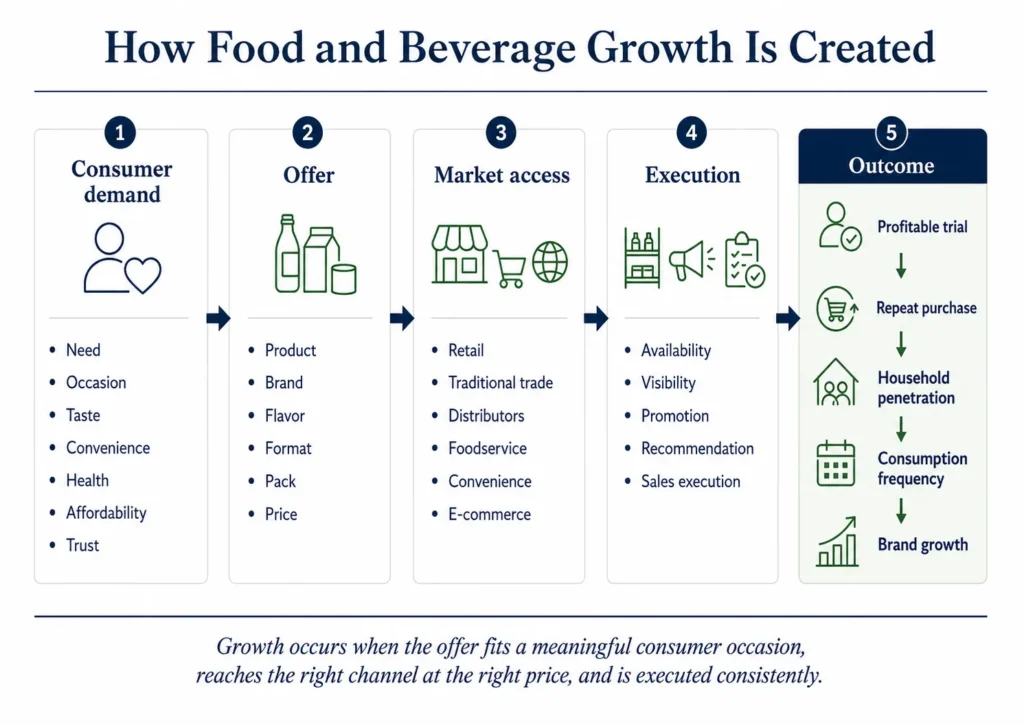
Figure 1. Growth occurs when the offer fits a meaningful consumer occasion, reaches the right channel at the right price, and is executed consistently.
Category Growth Does Not Automatically Become Brand Growth
A growing category can still create difficult economics.
New competitors may enter. Retailers may expand private labels. Consumers may shift toward economy products, smaller packs, larger value formats, or alternative categories. Promotions may increase volume without building loyalty. Innovation may fragment the shelf without expanding consumption.
Your company therefore needs to understand not only whether the category is growing, but also:
- Which segments are growing
- Which consumers are driving the change
- Which brands are gaining
- Which channels are capturing demand
- Whether growth comes from penetration, frequency, price, mix, or inflation
- Which consumption occasions are expanding
- Whether new formats are incremental or cannibalistic
- Whether category growth is profitable
- How retailer and distributor economics affect your opportunity
We help you separate:
- Market growth. Changes in total category consumption or value.
- Share movement. Which competitors, brands, price tiers, and channels are winning or losing.
- Mix effects. Changes among premium, mainstream, economy, formats, packs, flavors, and channels.
- True consumer growth. Increases in household penetration, usage frequency, consumption occasions, or customer retention.
- Nominal growth. Revenue increases driven primarily by price or inflation rather than stronger underlying demand.
- This distinction helps your leadership team avoid confusing higher sales values with stronger competitive performance.
Higher Revenue Can Hide a Weaker Consumer Position
Revenue may rise because of price increases while volumes, penetration, purchase frequency, or market share decline.
We help you identify whether growth is being created by stronger consumer demand, better mix, higher prices, channel expansion, or temporary market conditions.
Begin with the Consumption Occasion
Demographic segments are useful, but they do not always explain why consumers select one product over another.
The same consumer may choose different brands, packs, and price points depending on the occasion.
Examples include:
- Breakfast
- On-the-go consumption
- School lunch
- Family meal
- Workday snack
- Social gathering
- Indulgence
- Hydration
- Energy
- Convenience
- Celebration
- Health-oriented consumption
- At-home entertainment
- Foodservice
- Emergency or stock-up purchase
Each occasion can involve different:
- Needs
- Products
- Competitors
- Pack sizes
- Channels
- Price sensitivity
- Decision criteria
A beverage may compete against another beverage in one occasion and against coffee, water, snacks, or no consumption in another.
A packaged-food product may compete with another brand, a homemade alternative, a restaurant meal, a delivery service, or skipping the occasion entirely.
We help you determine:
- Which occasions your brand currently serves
- Which occasions are growing
- Which occasions are crowded
- Where unmet needs remain
- Which alternatives consumers consider
- What triggers trial
- What creates repeat purchase
- Which packs and price points fit the occasion
- Which channels are most relevant
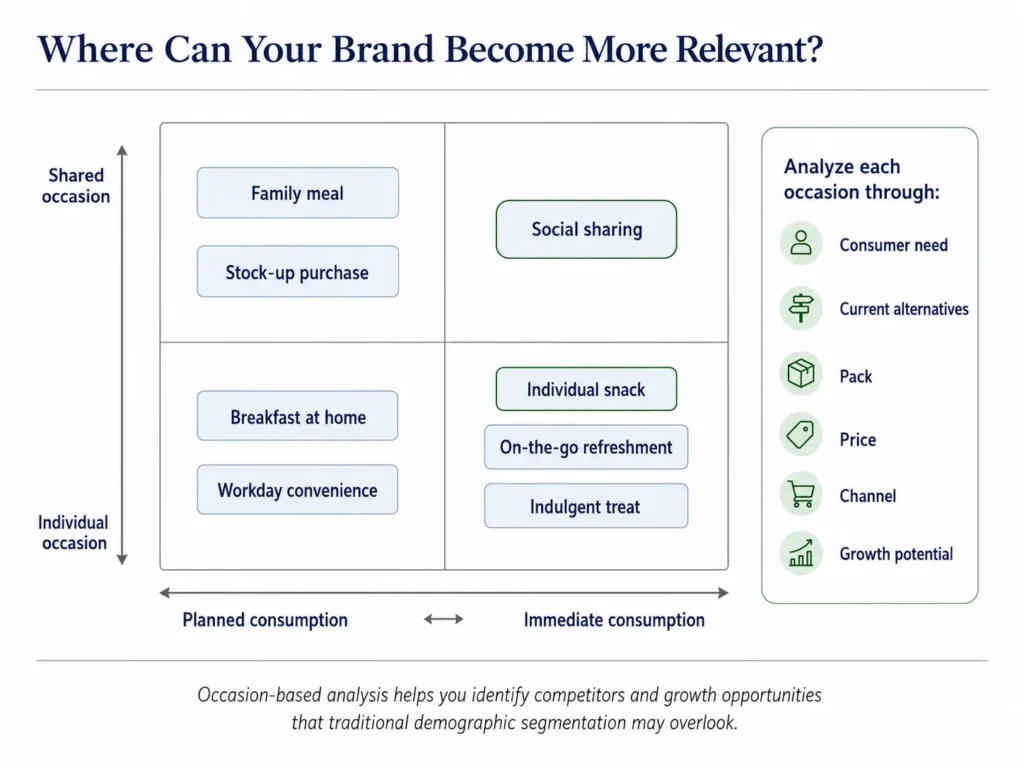
Figure 2. Occasion-based analysis helps you identify competitors and growth opportunities that traditional demographic segmentation may overlook.
Your Portfolio Must Give Consumers a Reason to Choose
Food and beverage portfolios often become more complex over time.
Companies add:
- Flavors
- Variants
- Pack sizes
- Limited editions
- Health-oriented versions
- Economy alternatives
- Premium extensions
- Channel-specific formats
- Country-specific products
Each addition may appear attractive individually.
Together, they can create:
- Consumer confusion
- Retailer resistance
- Cannibalization
- Lower production efficiency
- Forecasting problems
- Slow-moving inventory
- More write-offs
- Fragmented marketing support
- Weak innovation focus
- Insufficient scale behind priority products
Portfolio strategy should clarify the role of each brand and product.
A product may exist to:
- Drive penetration
- Increase frequency
- Serve a specific occasion
- Protect an entry price point
- Strengthen premium positioning
- Enter a new channel
- Attract a new consumer segment
- Defend against a competitor
- Support retailer relationships
- Create seasonal demand
- Provide future growth options
We help you evaluate products according to:
- Consumer relevance
- Differentiation
- Revenue
- Gross margin
- Growth
- Distribution
- Rotation
- Repeat purchase
- Cannibalization
- Production complexity
- Working capital
- Strategic role
- Future potential
Products may then be classified as:
- Invest and accelerate
- Defend and strengthen
- Renovate or reposition
- Simplify or migrate
- Harvest
- Discontinue
The objective is not necessarily to reduce your portfolio.
It is to ensure that every product has a clear consumer, occasion, price, channel, and strategic role.
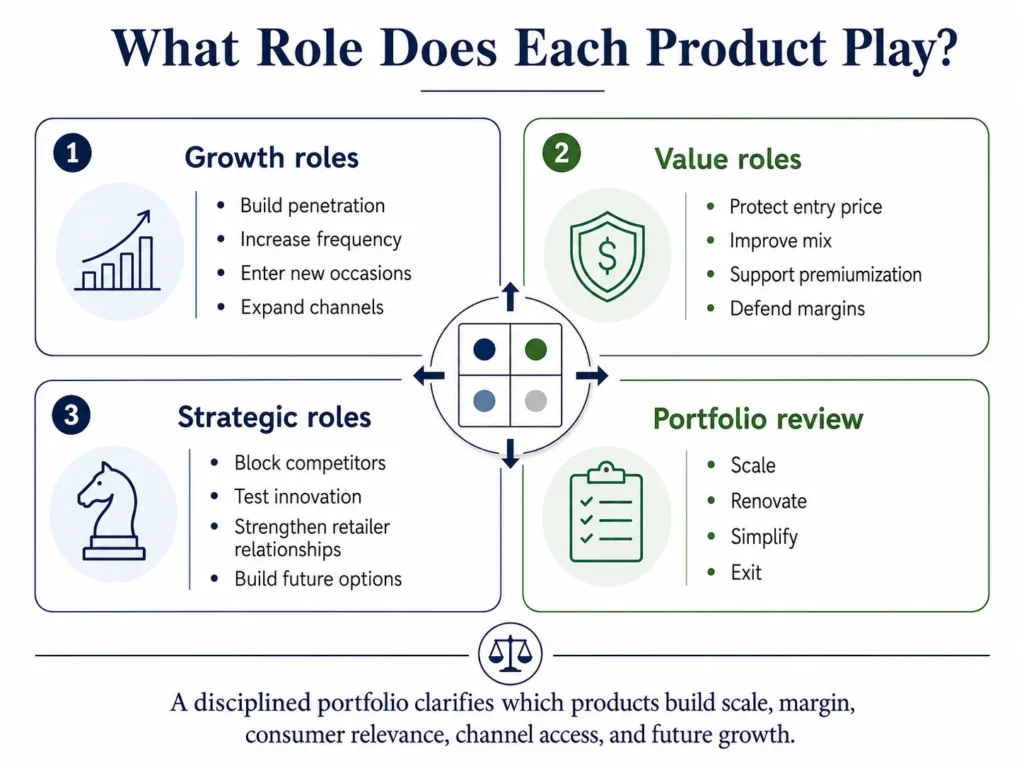
Figure 3. A disciplined portfolio clarifies which products build scale, margin, consumer relevance, channel access, and future growth.
Price-Pack Architecture Is a Growth Strategy
Consumers do not experience price only as a number.
They experience it through:
- Pack size
- Price point
- Purchase occasion
- Channel
- Perceived quality
- Affordability
- Consumption duration
- Promotion
- Comparison with alternatives
When purchasing power declines, consumers may:
- Switch brands
- Choose smaller packs
- Buy less frequently
- Move to economy products
- Purchase larger value formats
- Wait for promotions
- Change channels
- Leave the category
A price increase applied equally across every product may protect short-term margins but weaken accessibility and penetration.
An excessive focus on low price may preserve volume while damaging brand equity and profitability.
We help you evaluate:
- Entry price points
- Pack-price ladders
- Price per unit or volume
- Premium and economy tiers
- Channel-specific formats
- Consumer affordability
- Promotion dependence
- Competitive price gaps
- Pack migration
- Margin implications
- Cannibalization
- Brand positioning
A strong price-pack architecture should answer:
- Which pack recruits new consumers?
- Which pack supports everyday affordability?
- Which pack drives household penetration?
- Which pack supports convenience?
- Which format improves value perception?
- Which products can sustain a premium?
- Which pack serves foodservice or institutional demand?
- Where is the portfolio vulnerable to private label or economy competitors?
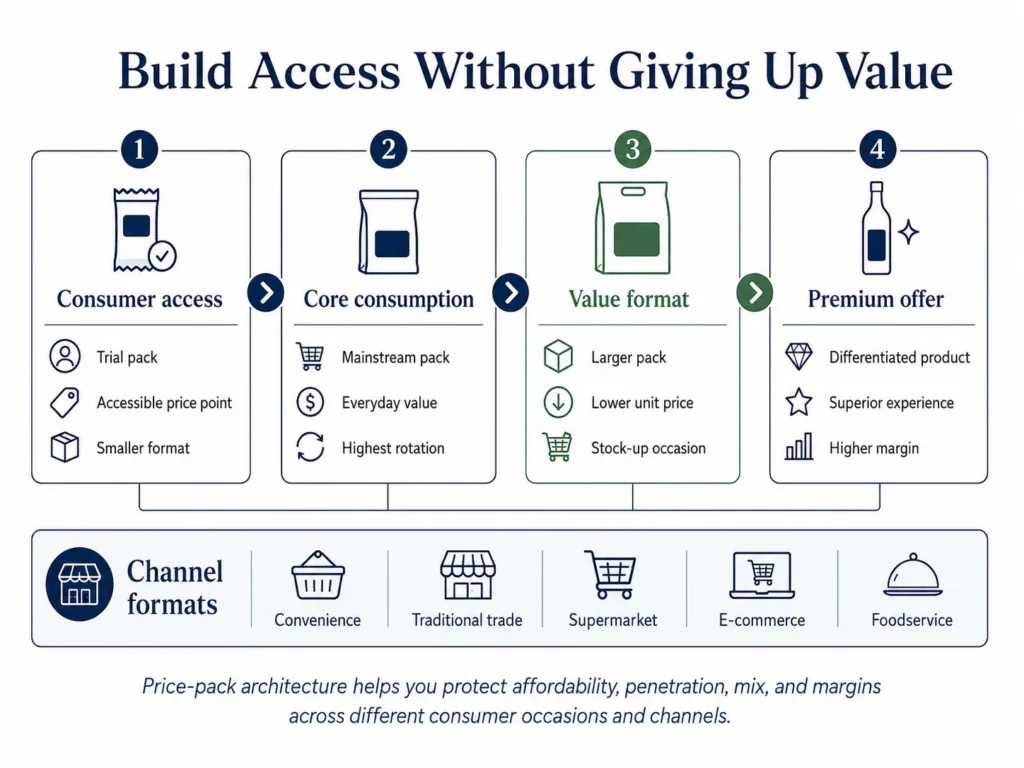
Figure 4. Price-pack architecture helps you protect affordability, penetration, mix, and margins across different consumer occasions and channels.
Channels Do More Than Deliver the Product
Food and beverage companies operate through increasingly complex route-to-market systems.
Relevant channels may include:
- Supermarkets and hypermarkets
- Discount retail
- Convenience
- Traditional stores
- Wholesalers
- Cash-and-carry
- Distributors
- Foodservice
- Restaurants and cafés
- Hotels
- Institutions
- Vending
- E-commerce
- Marketplaces
- Direct-to-consumer models
Each channel may require a different:
- Assortment
- Pack
- Price
- Margin structure
- Promotion
- Service level
- Delivery model
- Sales coverage
- Data capability
- Value proposition
A product that succeeds in supermarkets may be inappropriate for traditional trade because of pack size, price point, shelf life, working capital, or delivery requirements.
A foodservice product may need different performance, packaging, economics, training, and support from the retail version.
An e-commerce assortment may require stronger digital content, multipacks, fulfillment design, and price consistency.
We help you define:
- The customers and occasions each channel should serve
- The product and pack assortment for each channel
- Which accounts require direct coverage
- Where distributors add value
- How margins should be distributed
- Which services each partner should provide
- How channel conflict should be managed
- Which indicators reveal execution quality
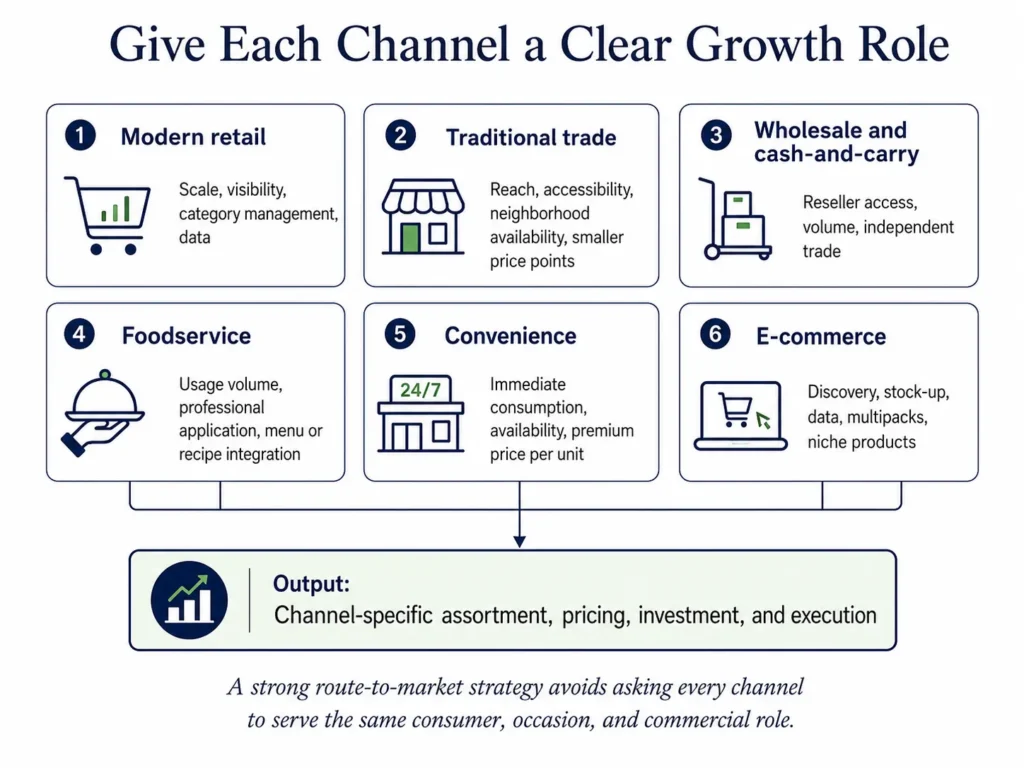
Figure 5. A strong route-to-market strategy avoids asking every channel to serve the same consumer, occasion, and commercial role.
Sell-In Does Not Guarantee Consumer Demand
Shipments to distributors and retailers can create the appearance of momentum.
But sustainable growth depends on what happens after the product enters the channel.
Sell-in may increase because of:
- Promotional loading
- Price increases
- Distributor targets
- Pipeline filling
- New listings
- Anticipated shortages
- Inventory transfers
Sell-out depends on:
- Availability
- Visibility
- Consumer relevance
- Price
- Promotion
- Retail execution
- Recommendation
- Trial
- Repeat purchase
A company may achieve strong sell-in while channel inventories increase and product rotation weakens.
It may also create strong consumer demand but lose sales because the product is unavailable, incorrectly distributed, or absent from priority stores.
We help you connect:
Sell-in → Inventory → Availability → Sell-out → Repeat purchase
This may require analysis of:
- Distributor purchases
- Retailer orders
- Inventory
- Store coverage
- Assortment
- On-shelf availability
- Promotional performance
- Rotation
- Out-of-stocks
- Returns
- Expiration
- Sell-out data
- Consumer repeat
Distribution Is Not the Same as Availability
A product can be listed in a chain and still be absent from priority stores, poorly displayed, or frequently out of stock.
We help you distinguish nominal distribution from effective consumer access.
Revenue Growth Management Must Connect Price, Mix, Promotion, and Channel
Revenue growth is not only a pricing decision.
It reflects the interaction of:
- List price
- Consumer price
- Pack
- Mix
- Discounts
- Promotions
- Trade terms
- Retailer margins
- Distributor margins
- Channel
- Assortment
- Cost to serve
A promotion may increase volume while reducing revenue quality.
A premium innovation may improve mix but fail to reach sufficient scale.
A lower-price pack may protect penetration but cannibalize a more profitable format.
A retailer-specific promotion may shift purchases in time without creating incremental consumption.
We help you examine:
Pricing
- Price positioning
- Competitive gaps
- Willingness to pay
- Price corridors
- Elasticity assumptions
Promotions
- Incremental volume
- Stock-up effects
- Cannibalization
- Post-promotion decline
- Retailer economics
- Promotion dependence
Mix
- Premium versus mainstream
- Channel mix
- Pack mix
- Product mix
- Consumer-segment mix
Trade investment
- Discounts
- Listing fees
- Rebates
- Displays
- Promotional funding
- Distributor incentives
- Commercial conditions
Cost to serve
- Delivery frequency
- Order size
- Returns
- Expiration
- Cold chain
- Custom packs
- Account complexity
The objective is to improve profitable revenue, not simply raise prices or reduce promotions.
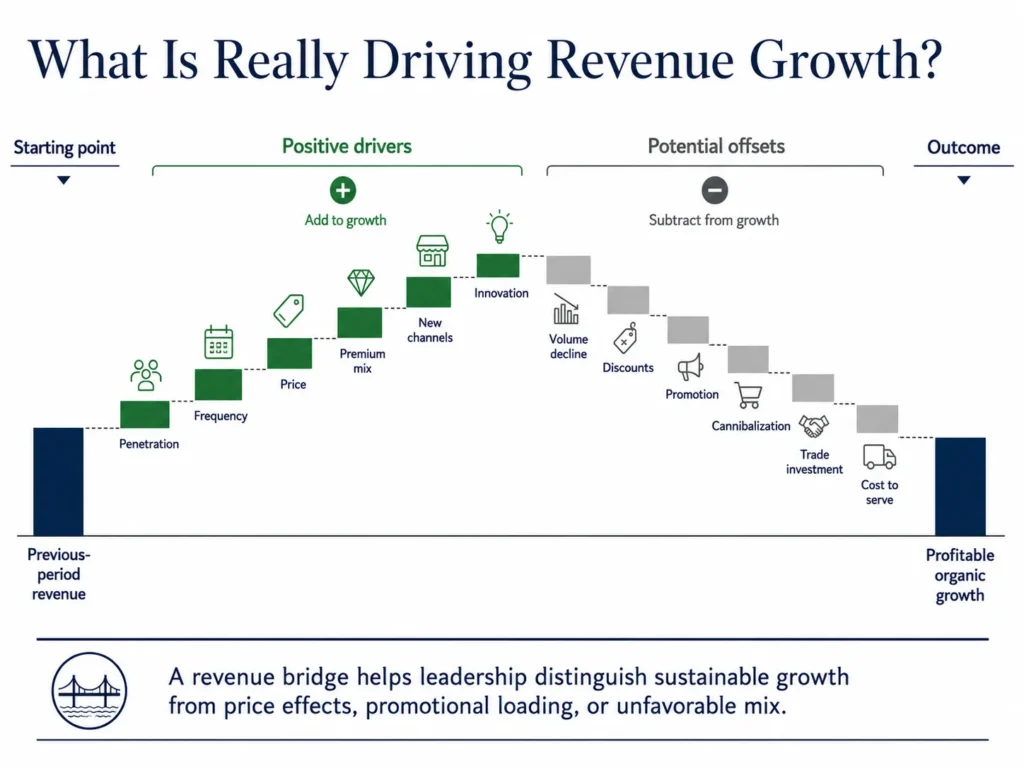
Figure 6. A revenue bridge helps leadership distinguish sustainable growth from price effects, promotional loading, or unfavorable mix.
Innovation Must Create Incremental Consumer Value
Food and beverage companies rarely lack ideas.
The greater challenge is identifying which ideas deserve investment.
Innovation may fail because it:
- Solves a weak consumer need
- Is insufficiently differentiated
- Uses the wrong pack or price
- Requires consumer education
- Does not fit retailer priorities
- Cannibalizes an existing product
- Adds production complexity
- Lacks distribution
- Performs well in research but poorly at the point of purchase
- Creates trial but not repeat
- Arrives after a competitor has established the space
We help you evaluate innovation through five questions:
Is the need meaningful?
Does the product solve a relevant consumer problem or improve an important occasion?
Is it differentiated?
Can consumers understand why it is different and valuable?
Is the proposition credible?
Does the product experience support the promise?
Can the route to market deliver it?
Will retailers, distributors, foodservice customers, or digital channels support the launch?
Is the opportunity incremental?
Will it bring new consumers, occasions, frequency, or value—or mainly shift existing demand?
The analysis may include:
- Consumer needs
- Occasion fit
- Concept evaluation
- Competitor mapping
- Price and pack
- Channel fit
- Retailer perspective
- Cannibalization
- Operational complexity
- Launch sequencing
- Performance indicators
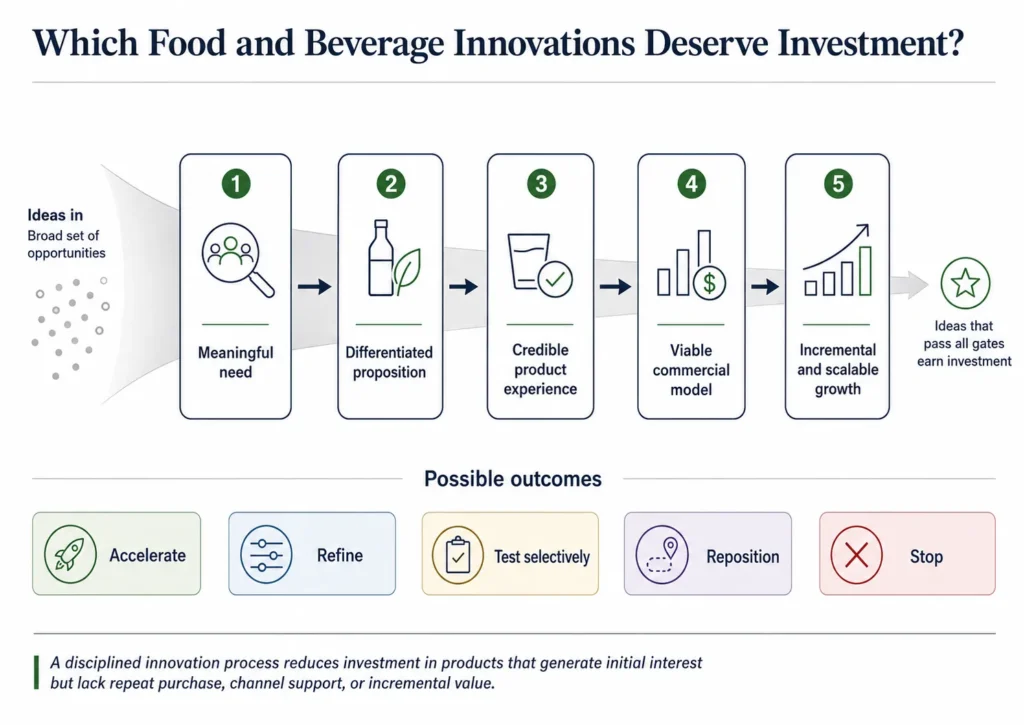
Figure 7. A disciplined innovation process reduces investment in products that generate initial interest but lack repeat purchase, channel support, or incremental value.
Distributor Search Consulting for Food and Beverage Companies
A distributor’s size does not reveal how much attention your brands will receive.
A strong partner should provide the capabilities your strategy requires.
These may include:
- Access to priority channels
- Geographic coverage
- Cold-chain capability
- Foodservice relationships
- Traditional-trade reach
- Modern-retail access
- Warehousing
- Inventory rotation
- Credit and collections
- Sales-force quality
- Merchandising
- Trade marketing
- Sell-out reporting
- Regulatory and import support
- E-commerce capabilities
- Brand-building commitment
A distributor can appear attractive but underperform because:
- Your category is not a priority
- Its salesforce is overloaded
- Portfolio conflicts are significant
- Reporting is weak
- Inventory is concentrated in the wrong products
- It relies on passive order taking
- It lacks modern-trade negotiation capabilities
- Management will not invest behind your launch
We help you:
- Define the ideal partner
- Map and screen candidates
- Validate channel access
- Assess portfolio conflicts
- Evaluate commercial and operational capabilities
- Approach selected companies
- Test interest and commitment
- Compare alternatives
- Prepare for negotiations
- Define governance and indicators
The goal is not to find a company willing to import or purchase your products.
It is to identify a partner capable of building distribution, generating sell-out, protecting your brand, and supporting profitable growth.
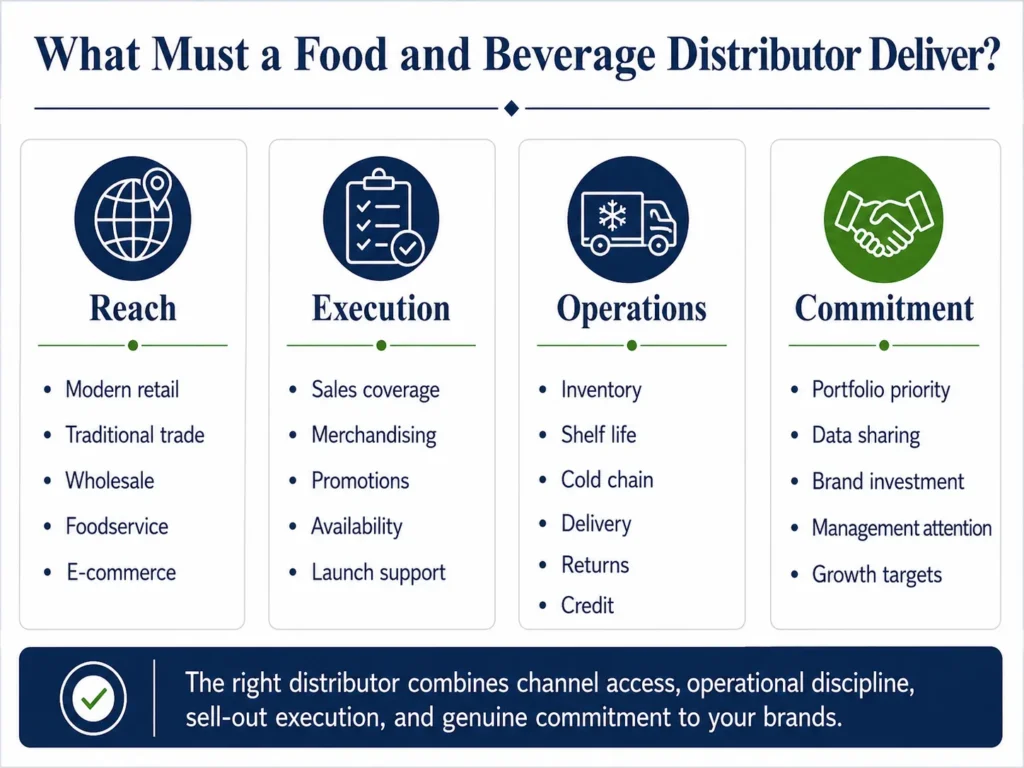
Figure 8. The right distributor combines channel access, operational discipline, sell-out execution, and genuine commitment to your brands.
Go-to-Market Strategy Consulting for Food and Beverage Companies
A go-to-market strategy connects the consumer, occasion, value proposition, product, price, channel, and commercial organization.
For food and beverage companies, it may need to define:
- Priority consumers
- Consumption occasions
- Countries and regions
- Categories and subcategories
- Brand roles
- Product assortment
- Price-pack architecture
- Retail channels
- Traditional trade
- Distributors
- Foodservice
- E-commerce
- Sales coverage
- Trade investment
- Launch priorities
- Performance indicators
The final roadmap may include:
- Priority consumer and shopper segments
- Occasion strategy
- Value proposition
- Portfolio roles
- Pack and pricing architecture
- Channel strategy
- Distributor model
- Key-account priorities
- Trade-marketing activities
- Sales-force responsibilities
- Innovation sequence
- Sell-in and sell-out metrics
- Implementation milestones
A strong go-to-market strategy should make explicit who you will target, why they should choose your brand, which channels can deliver the offer, how the organization will execute, and how the strategy will adapt as evidence emerges.
Market Entry Consulting for Food and Beverage Companies
Latin America should not be treated as one homogeneous consumer market.
Countries may differ in:
- Consumer income
- Taste preferences
- Consumption occasions
- Retail concentration
- Traditional-trade importance
- Distributor structure
- Foodservice development
- E-commerce
- Regulation
- Labeling
- Product registration
- Import duties
- Local manufacturing
- Cold-chain availability
- Pack sizes
- Price points
- Promotional intensity
- Local competition
A product that performs well in one country may require a different:
- Flavor
- Formula
- Pack
- Price
- Brand message
- Channel
- Distributor
- Production model
- Launch sequence
We help you compare markets according to:
- Category attractiveness
- Consumer fit
- Competitive intensity
- Channel accessibility
- Price and margin potential
- Regulatory requirements
- Product adaptation
- Supply-chain feasibility
- Strategic fit
- Ability to win
Potential entry models include:
- Export through a distributor
- Multiple channel partners
- Direct modern-retail relationships
- Foodservice partnership
- E-commerce
- Licensing
- Co-manufacturing
- Local production
- Joint venture
- Acquisition
The right model should balance speed, investment, control, margin, consumer access, brand building, and long-term strategic value.
Benchmarking the Companies That Win
Competitors’ visible market shares do not explain why they are winning.
Their performance may reflect:
- Better price-pack architecture
- Stronger distribution
- Higher on-shelf availability
- Faster innovation
- More productive trade investment
- Stronger retailer relationships
- Better traditional-trade coverage
- Lower cost to serve
- Simpler portfolios
- More effective promotions
- Faster decision-making
- Stronger local adaptation
- Better revenue-growth management
- Superior demand forecasting
Depending on your decision, we may benchmark:
Portfolio and innovation
- Brand architecture
- Category roles
- SKU productivity
- Innovation process
- Launch speed
- Renovation
- Cannibalization management
Pricing and promotions
- Price ladders
- Pack architecture
- Discounting
- Promotional frequency
- Trade investment
- Revenue growth management
Route to market
- Direct and indirect coverage
- Distributor models
- Traditional trade
- Modern retail
- Foodservice
- E-commerce
Commercial execution
- Sales-force structure
- Key-account management
- Distributor management
- Merchandising
- Availability
- Execution metrics
Organization and capabilities
- Decision rights
- Regional and local roles
- Category management
- Shopper insights
- Data and analytics
- Incentives
- Planning processes
We normalize relevant differences in scale, geography, portfolio, category, and channel before drawing conclusions.
The objective is not to copy another company.
It is to identify which capabilities explain the performance gap and what your organization should improve, adapt, or intentionally do differently.
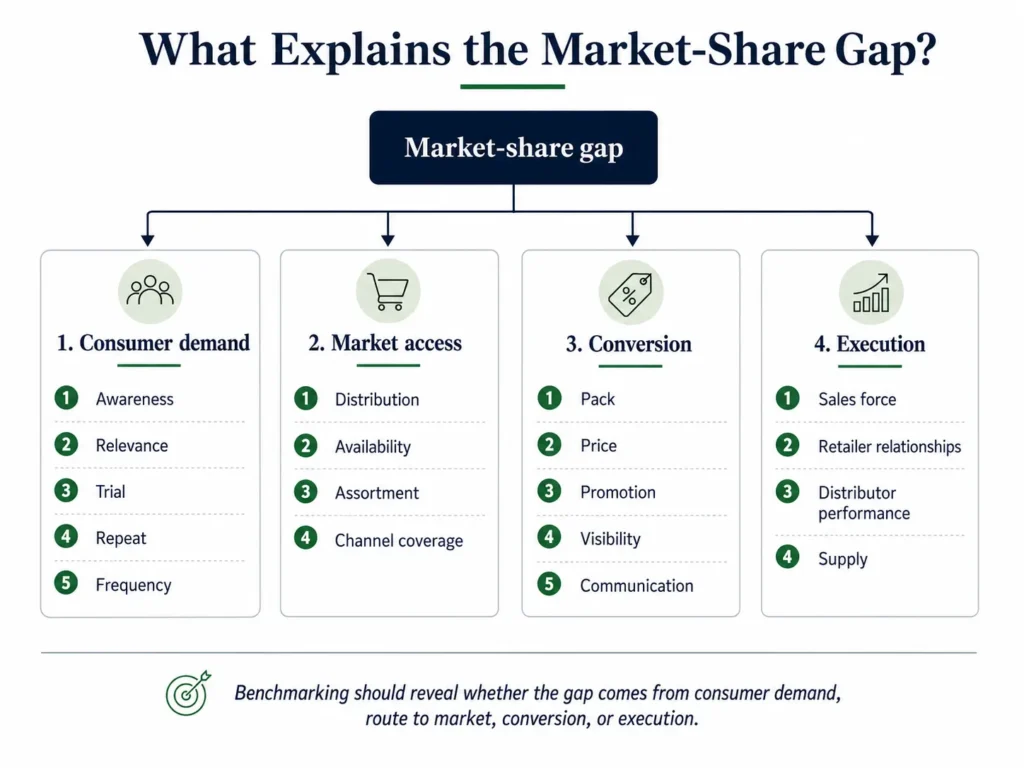
Figure 9. Benchmarking should reveal whether the gap comes from consumer demand, route to market, conversion, or execution.
Ingredient Companies: Connecting Technical Performance with Customer Value
Although the primary audience for this page is food and beverage manufacturers, Midas also supports companies supplying ingredients to them.
Ingredient companies face a different buying process.
Their customers may include:
- Research and development
- Formulation
- Operations
- Quality
- Procurement
- Regulatory
- Marketing
- Senior management
A successful ingredient must do more than meet a technical specification.
It may need to help the customer:
- Improve taste or texture
- Extend shelf life
- Reduce sugar, sodium, or fat
- Support a cleaner label
- Improve nutritional value
- Simplify production
- Reduce cost
- Stabilize supply
- Enable a consumer claim
- Accelerate innovation
We help ingredient suppliers connect:
Ingredient property → Product performance → Consumer or operational benefit → Customer value
Relevant assignments may include:
- Market sizing
- Application prioritization
- Customer segmentation
- Value-proposition development
- Competitor analysis
- Distributor search
- Market entry
- Benchmarking
- Innovation opportunity assessment
Scenario Planning for Consumer and Channel Uncertainty
Food and beverage strategies depend on variables that can change quickly:
- Consumer purchasing power
- Inflation
- Retail consolidation
- Private-label growth
- Health trends
- Regulation
- Input costs
- Exchange rates
- E-commerce
- Foodservice demand
- Competitive innovation
- Sustainability expectations
An illustrative scenario exercise might use:
Critical uncertainty 1: Consumer purchasing power
Weak ↔ Strong
Critical uncertainty 2: Intensity of channel and competitive disruption
Moderate ↔ High
This could produce four environments:
- Premium Recovery. Consumer purchasing power improves while competitive disruption remains manageable, supporting premiumization and portfolio expansion.
- Innovation Race. Stronger demand combines with aggressive competition, faster launches, retailer pressure, and new channel models.
- Value and Essentials. Weak purchasing power increases demand for accessible price points, essential categories, and disciplined portfolios.
- Margin Under Pressure. Consumer constraints combine with intense competition, private-label expansion, promotions, and retailer power.
For each scenario, we identify:
- Consumer implications
- Category effects
- Portfolio priorities
- Price-pack changes
- Channel consequences
- Competitor behavior
- No-regret actions
- Strategic options
- Early-warning indicators
- Decision triggers
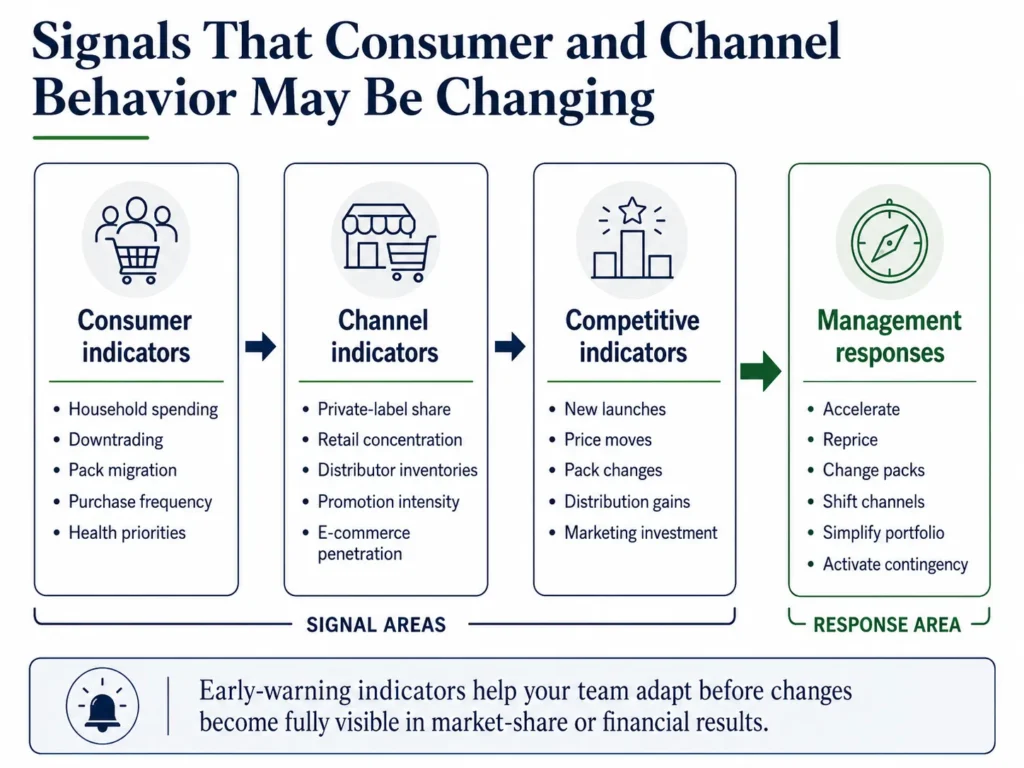
Figure 10. Early-warning indicators help your team adapt before changes become fully visible in market-share or financial results.
Business Wargames Consulting: Prepare for Competitor and Retailer Reactions
Your strategy will change the behavior of others.
A price move, launch, channel expansion, distributor change, promotion, or acquisition may cause competitors to:
- Reduce prices
- Increase promotions
- Launch a similar product
- Introduce a lower-price pack
- Lock in distributors
- Increase retailer investment
- Copy claims
- Expand distribution
- Accelerate innovation
- Attack your core brand
Retailers and distributors may also react by:
- Demanding better terms
- Reducing shelf space
- Prioritizing private label
- Changing assortment
- Increasing inventory requirements
- Supporting another brand
- Resisting channel changes
A business wargame helps your team test these reactions before implementation.
Participants may represent:
- Your company
- Global competitors
- Local competitors
- Emerging brands
- Retailers
- Distributors
- Foodservice customers
- Private-label suppliers
- Consumers or shoppers
The exercise helps uncover:
- Fragile assumptions
- Likely countermoves
- Channel reactions
- Price escalation
- Portfolio vulnerabilities
- Cannibalization
- Alternative strategies
- Early-warning signals
- Prepared responses
Case Example: Regaining Market Share in a Highly Competitive Consumer Market
The challenge
A multinational consumer-goods company had experienced prolonged market-share losses.
A new manager wanted to reverse the decline, but the competitive environment was intense and the company needed to understand how rivals were likely to behave.
The challenge was not simply to generate ideas.
Management needed a strategy that reflected:
- Competitor priorities
- Regional differences
- Likely countermoves
- Commercial execution
- Organizational alignment
The Midas approach
We conducted two connected business wargames.
First round: anticipate the competition
The team stepped into competitors’ positions and explored:
- Strategic objectives
- Portfolio priorities
- Likely market moves
- Channel actions
- Pricing responses
- Potential attacks on the client’s business
Second round: design the response
The company then evaluated alternative actions and countermoves.
The team considered:
- Regional strategies
- Portfolio choices
- Commercial initiatives
- Competitive safeguards
- Required coordination
- Implementation priorities
What changed
The process helped the company:
- Adapt strategies to regional market conditions
- Build consensus around the chosen response
- Improve coordination across the organization
- Move from reacting to competitors toward anticipating them
- Commit to clear commercial actions
The outcome
The company reversed its market-share decline and regained positive momentum.
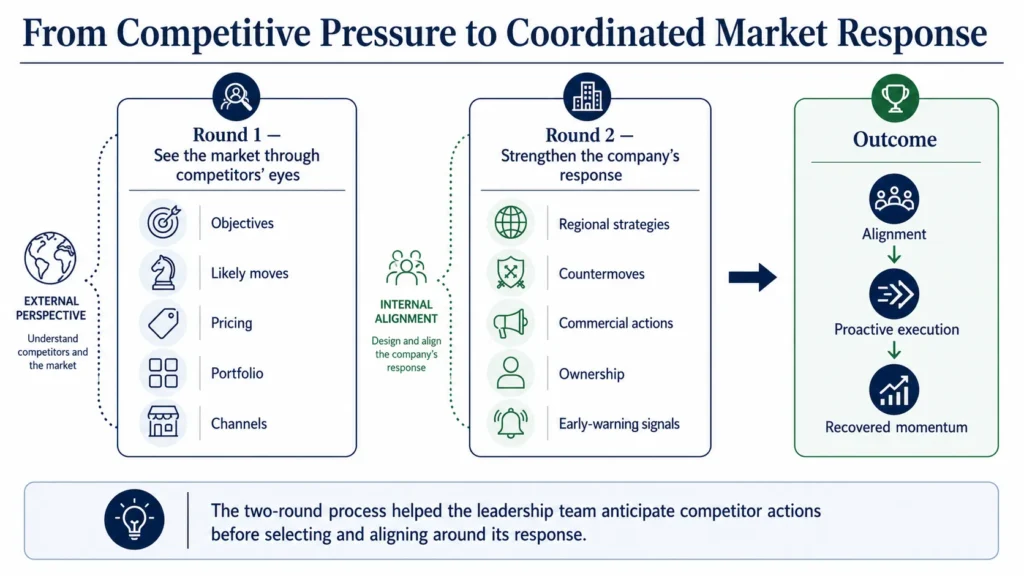
Figure 11. The two-round process helped the leadership team anticipate competitor actions before selecting and aligning around its response.
Important context: The client name, brand, markets, and commercially sensitive details are withheld. The outcome reflects this engagement’s particular circumstances and should not be interpreted as a guarantee of equivalent results.
M&A, Licensing, and Strategic Partnerships Consulting for Food and Beverage Companies
Acquisitions and partnerships can provide faster access to:
- Local brands
- Consumer relationships
- Distribution
- Production
- Product registrations
- Recipes and formulations
- Retail listings
- Foodservice accounts
- Innovation capabilities
- New categories
- Geographic reach
They can also conceal risks:
- Weak brand equity
- Excessive promotional dependence
- Distributor concentration
- Low retailer profitability
- Poor channel data
- Obsolete products
- Excessive SKU complexity
- Manufacturing inefficiency
- Working-capital requirements
- Quality issues
- Regulatory exposure
- Overstated market growth
- Cannibalization
We help companies with:
- Acquisition strategy
- Target-profile definition
- Target identification
- Market and competitor intelligence
- Consumer and channel validation
- Commercial due diligence
- Brand and portfolio assessment
- Distributor and retailer analysis
- Strategic-fit evaluation
- Licensing and partner screening
- Negotiation preparation
- Post-deal growth priorities
Financial, legal, tax, operational, quality, regulatory, and technical due diligence should be completed by appropriately qualified specialists.
Our role is to strengthen the strategic and commercial understanding of the opportunity.
How We Build Reliable Food and Beverage Market Intelligence
Public market reports rarely answer all the questions management needs to resolve.
They may not explain:
- Actual sell-out
- Distributor inventory
- Retailer terms
- Consumer switching
- Local price-pack structures
- Traditional-trade coverage
- Promotional effectiveness
- Foodservice economics
- Competitor profitability
- Innovation pipelines
- Private-label strategies
We may combine:
- Category and retail data
- Household and consumer information
- Import and production data
- Price and pack analysis
- Store checks
- E-commerce analysis
- Distributor interviews
- Retailer interviews
- Foodservice interviews
- Consumer or shopper research
- Former industry executives
- Competitor intelligence
- Midas’s accumulated project experience
Important conclusions are triangulated whenever feasible.
We distinguish among:
- Verified facts
- Supported estimates
- Consumer and market perceptions
- Analytical inferences
- Management hypotheses
- Unresolved information gaps
When precise information is unavailable, we explain the assumptions and provide ranges rather than false precision.
Better Decisions Require More Than One Data Source
Retail data can show what was purchased.
Consumer research can help explain why.
Distributor and retailer interviews can reveal how products reach the market.
Competitive intelligence can indicate what may happen next.
We combine these perspectives to build a decision-ready view of the category.
A Food and Beverage Consulting Approach Built Around the Growth Decision
The engagement is designed around your management question rather than a fixed sector template.
Depending on your requirements, the work may include five connected perspectives.
1. Decode demand
We identify the consumers, occasions, categories, needs, and market conditions that create demand.
2. Clarify the portfolio and value proposition
We determine which products, brands, packs, and benefits deserve priority.
3. Design the route to market
We evaluate retailers, traditional trade, distributors, foodservice, e-commerce, pricing, and channel roles.
4. Test the competitive strategy
We benchmark competitors, evaluate likely reactions, examine scenarios, and challenge assumptions.
5. Mobilize execution
We translate the recommendation into initiatives, owners, milestones, indicators, and management routines.
Your deliverables may include:
- Market and category assessment
- Consumer and occasion segmentation
- Competitor profiles
- Price-pack architecture
- Portfolio recommendations
- Channel map
- Distributor assessment
- Retail and foodservice analysis
- Revenue-growth opportunities
- Value proposition
- Go-to-market strategy
- Market-entry recommendation
- Scenario framework
- Business-wargame conclusions
- Acquisition target profiles
- Implementation roadmap
- Executive workshop
- Supporting data and evidence
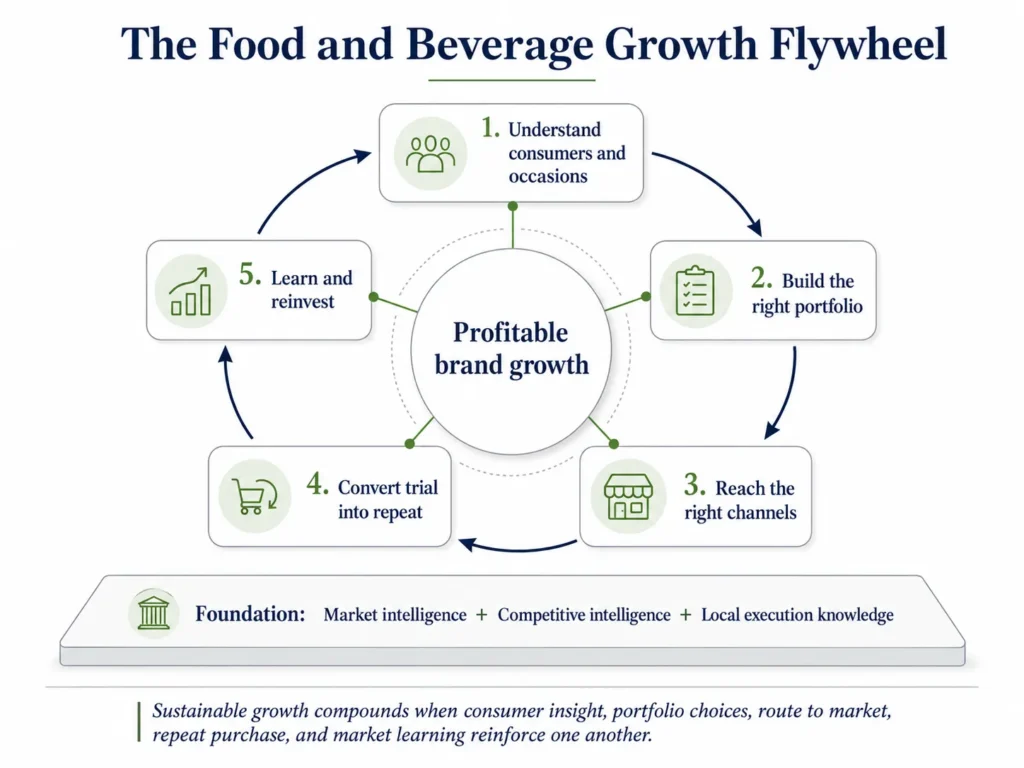
Figure 12. Sustainable growth compounds when consumer insight, portfolio choices, route to market, repeat purchase, and market learning reinforce one another.
Executive Workshops That Align the Organization
Food and beverage growth decisions often require alignment among:
- General management
- Marketing
- Sales
- Revenue growth management
- Trade marketing
- Category management
- Innovation
- Consumer insights
- Supply chain
- Operations
- Finance
- Country teams
- Distributor management
Different functions may see different priorities.
Marketing may favor a stronger brand proposition. Sales may focus on retailer demands. Revenue management may question price-pack economics. Supply chain may highlight complexity. Country teams may resist a regional strategy that does not reflect local behavior.
We design workshops that help your team:
- Build a shared view of the market
- Separate evidence from assumptions
- Compare consumer and channel opportunities
- Resolve portfolio and pricing trade-offs
- Anticipate competitors
- Prioritize growth initiatives
- Assign ownership
- Define metrics
- Translate choices into action
The workshop is built around your decisions and supporting evidence—not a generic agenda.
Why Food and Beverage Companies Work with Midas Consulting
More than 25 years of experience
Since 2000, Midas Consulting has supported companies across consumer, food, beverage, ingredient, distribution, and related markets.
A consumer and commercial perspective
We connect consumer needs with product, portfolio, pricing, channels, retailer economics, distributor execution, and organizational capabilities.
Experience across Latin America
We work across Spanish- and Portuguese-speaking Latin America, as well as Spain, Portugal, and selected international markets.
We understand how consumer behavior, affordability, retail concentration, traditional trade, distribution, regulation, and local competitors differ by country.
Senior involvement
Senior consultants remain directly involved in problem definition, research, strategic interpretation, and management discussions.
Primary market intelligence
When published information is insufficient, we develop evidence through consumers, retailers, distributors, foodservice customers, former industry executives, and other informed market participants.
Collaboration with your team
We combine your internal brand, category, consumer, and commercial knowledge with an independent perspective that challenges assumptions and identifies blind spots.
Transparent limitations
Consumer behavior, channel conditions, and competitive actions can change.
We make assumptions, evidence gaps, and uncertainty visible rather than presenting estimates as established facts.
Selected Food and Beverage Consulting Experience
We have supported food, beverage, consumer-goods, and ingredient companies across different categories, countries, channels, and strategic decisions. Each logo represents a separate client relationship; project scope, timing, and services differed.




What Clients Say About Working with Midas Food and Beverage Consulting
We have an 82.2% Net Promoter Score for feedback collected between 2020 and 2025.
“Midas delivered practical, high-impact ideas that helped us expand market share in a competitive environment.”
Marketing Manager
Food Company
Client identity withheld due to confidentiality
“Midas was highly effective, giving us the insights and tools we needed to co-create a robust strategy for complex markets.”
Chief Financial Officer
Beverage Company
Client identity withheld due to confidentiality
“Midas helped us reassess priorities and focus our efforts where they truly mattered.”
Global Market Segment Leader
Food and Beverage Company
Client identity withheld due to confidentiality
“For more than a decade, Midas has been our trusted partner in Latin America.”
President
Food Company
Client identity withheld due to confidentiality
“Midas combined deep market experience with thorough analysis, collaborating effectively across our teams to deliver actionable results.”
Global Product Manager
Food and Beverage Company
Client identity withheld due to confidentiality
Strategic Intelligence Consulting for Food and Beverage Leadership
Food and beverage markets generate significant data.
But sales, retail, consumer, and channel information do not automatically produce strategic clarity.
Leadership teams still need to understand:
- Why consumer behavior is changing
- Which changes are temporary
- Which competitors are gaining and why
- How retailers and distributors may react
- Which innovations could reshape the category
- What early signal deserves management action
- Which strategy remains attractive under uncertainty
Strategic intelligence connects:
- Consumer insight
- Market data
- Channel behavior
- Competitor strategy
- Pricing
- Innovation
- Scenarios
- Management choices
Midas Consulting’s applied strategic intelligence work brings together:
- Market intelligence
- Competitive intelligence
- Benchmarking
- Go-to-market strategy
- Distributor search
- Scenario planning
- Business wargaming
- Early-warning systems
- Market entry
- M&A intelligence
Frequently Asked Questions
What types of food and beverage companies does Midas Consulting support?
We work primarily with food and beverage manufacturers and branded consumer-goods companies.
Relevant categories may include:
- Packaged foods
- Nonalcoholic and alcoholic beverages
- Dairy
- Snacks
- Confectionery
- Frozen foods
- Convenience foods
- Health-oriented products
- Foodservice products
- Related consumer categories
We also support ingredient companies when the decision involves markets, applications, customers, distributors, value propositions, or growth strategy.
Is this service mainly for ingredient companies?
No. The primary focus is food and beverage companies selling branded or manufactured products to consumers, retailers, distributors, foodservice customers, and other channels.
Ingredient companies are a secondary audience and may benefit from selected services.
Can you help us estimate the size of a category?
Yes, when sufficient evidence is available.
Depending on the category, we may combine:
- Retail and household data
- Consumer penetration
- Purchase frequency
- Consumption per occasion
- Production
- Imports
- Distributor and retailer interviews
- Foodservice information
- Pricing
- Competitor estimates
We explain the methodology and use ranges when the evidence does not support one exact number.
Can you identify consumer growth opportunities with your food and beverage consulting?
Yes. We can analyze:
- Consumer segments
- Consumption occasions
- Unmet needs
- Purchase barriers
- Category alternatives
- Pack and price requirements
- Channel preferences
- Trial and repeat drivers
Can you help us improve our portfolio?
Yes. We can assess product and brand roles, consumer relevance, differentiation, growth, margin, distribution, rotation, cannibalization, production complexity, and strategic importance.
Recommendations may include investing, defending, repositioning, renovating, simplifying, migrating, harvesting, or discontinuing products.
Can you help us design price-pack architecture with your food and beverage consulting?
Yes. We can evaluate entry price points, pack sizes, price per unit, affordability, channel-specific formats, premium tiers, value packs, competitive gaps, margins, and cannibalization.
Can you evaluate our promotions?
Yes. Depending on the available data, we can assess incremental volume, timing shifts, stock-up effects, cannibalization, retailer economics, post-promotion performance, and profitability.
Can you help us find food and beverage distributors?
Yes. We define the ideal partner, map candidates, validate channel access and capabilities, assess portfolio fit, approach selected companies, compare alternatives, and support negotiation preparation.
Can you evaluate our current distributor network with your food and beverage consulting?
Yes. We can assess coverage, inventory, sell-in, sell-out, channel access, availability, sales-force quality, reporting, trade execution, portfolio conflicts, investment, and strategic alignment.
Can you help us enter modern retail?
Yes. We can evaluate retailer priorities, category structure, assortment, price-pack architecture, commercial conditions, promotional requirements, service levels, negotiation factors, and internal capabilities.
Can you help us grow in traditional trade?
Yes. We can analyze wholesalers, distributors, subdistributors, routes, sales coverage, assortment, accessible price points, availability, credit, retailer needs, and execution.
Can you support foodservice growth with your food and beverage consulting?
Yes. We can evaluate restaurants, hotels, cafés, institutions, distributors, professional users, menu or recipe applications, packs, service requirements, pricing, and route to market.
Can you help us develop an e-commerce strategy?
Yes. The work may include online assortment, multipacks, pricing, retailer platforms, marketplaces, direct-to-consumer options, product content, reviews, fulfillment, and channel conflict.
Can you benchmark competitors?
Yes. We may compare portfolios, innovation, price-pack architecture, promotions, distribution, retailer execution, distributor models, commercial organizations, and other relevant capabilities.
Can you help us test a product launch?
Yes. We can evaluate consumer need, occasion fit, differentiation, pricing, pack, channel support, retailer relevance, cannibalization, competitive reaction, and launch indicators.
Can you support an ingredient company with your food and beverage consulting?
Yes. We can help ingredient companies prioritize applications and customers, estimate markets, understand purchasing criteria, develop value propositions, find distributors, benchmark competitors, and enter markets.
Can you support market entry?
Yes. We can compare countries, assess consumers and channels, estimate demand, analyze competitors, evaluate product adaptation, identify distributors, recommend an entry model, and develop a go-to-market roadmap.
Can you support an acquisition with your food and beverage consulting?
Yes. We can help define acquisition strategy, identify targets, validate the market, assess brands and portfolios, examine channels and customers, conduct commercial due diligence, and support negotiation preparation.
Financial, legal, tax, operational, quality, regulatory, and technical due diligence should be completed by qualified specialists.
How long does a food and beverage consulting project take?
A focused category, distributor, portfolio, or channel assessment may require several weeks.
A multicountry go-to-market strategy, benchmarking program, distributor search, scenario-planning engagement, or acquisition-related project may require several months.
The proposal defines the scope, phases, methodology, milestones, deliverables, and expected timing.
What information will you need from us?
Useful inputs may include:
- Brands and products
- Sales and margins
- Market-share information
- Prices and packs
- Channels
- Distributors
- Retail accounts
- Sell-in and sell-out
- Promotions
- Consumer research
- Innovation pipeline
- Competitor hypotheses
- Strategic priorities
- Decision timetable
We begin with the available information and identify which gaps materially affect the decision.
How do you protect confidential information?
We treat client information as confidential and can work under a nondisclosure agreement.
Public case examples, client identities, brands, prices, strategies, and results may be anonymized when disclosure has not been authorized.
Do you guarantee commercial results of your food and beverage consulting?
No responsible consulting firm should guarantee a specific sales, margin, market-share, launch, distributor, retailer, or acquisition outcome.
Results depend on consumer response, product quality, pricing, distribution, execution, retailer and distributor commitment, competitor reactions, supply, regulation, and economic conditions.
Our role is to improve the evidence, choices, preparation, and execution behind your decision.
The Cost of Misreading a Food and Beverage Opportunity
Your company may:
- Confuse price-driven revenue growth with stronger consumer demand
- Enter a category without a meaningful consumption occasion
- Add products that increase complexity without expanding demand
- Lose accessibility through the wrong price-pack architecture
- Increase sell-in while distributor inventories accumulate
- Achieve listings without effective availability
- Spend on promotions that shift purchases rather than create consumption
- Select distributors that lack execution or commitment
- Apply the same portfolio across countries with different needs
- Launch an innovation that creates trial but not repeat
- Underestimate private label or local competitors
- Acquire a brand with weak underlying consumer or channel performance
Better intelligence cannot eliminate consumer volatility or competitive risk.
It can help your team understand where growth comes from, which choices matter, and where investment can create the greatest impact.
Let’s Clarify Your Next Food and Beverage Growth Decision
You may be evaluating a market, category, brand, portfolio, pack, price, channel, distributor, innovation, go-to-market strategy, or acquisition.
We begin with your decision—not with a predetermined consulting package.
Tell us what is at stake
Share the consumer, category, brand, channel, market, or investment choice your company is considering.
Define the evidence
Together, we determine which consumer, occasion, competitor, retailer, distributor, pricing, portfolio, and market questions must be answered.
Develop the strategy
We compare alternatives, make relevant assumptions visible, and recommend the strongest path supported by the evidence.
Prepare for execution
You receive clear priorities, actions, responsibilities, milestones, indicators, and decision triggers.
About Midas Consulting
Midas Consulting is a strategy and market intelligence consulting firm that helps companies grow, compete, enter markets, select partners, evaluate investments, and make stronger decisions across Latin America and selected international markets.
For more than 25 years, we have supported companies through market entry, go-to-market strategy, distributor search, benchmarking, strategy consulting, scenario planning, business wargaming, and M&A-related decisions.
Our work combines local market research, competitive intelligence, executive experience, and collaborative strategy development.